Rode’s New Video Console: Smaller, Cheaper, All-in-One
▼ Summary
– The Rodecaster Video S is a new smaller and cheaper version of the Rodecaster Video, not a replacement, offering similar video and audio mixing and chroma keying functionality.
– It costs $499, less than half the original’s $1,199 price, and is aimed at established podcasters wanting an affordable all-in-one video production solution.
– The Video S has reduced connectivity with three HDMI inputs, one USB-C port, and one HDMI output, compared to the original’s four HDMI inputs and two USB-C ports.
– It retains professional audio inputs and wireless mic receivers but removes the dedicated speaker outputs and reduces the number of scene-switching buttons from 14 to 10.
– Features include 1080p video, automatic camera switching, livestreaming to platforms, and recording to external USB drives for later editing.
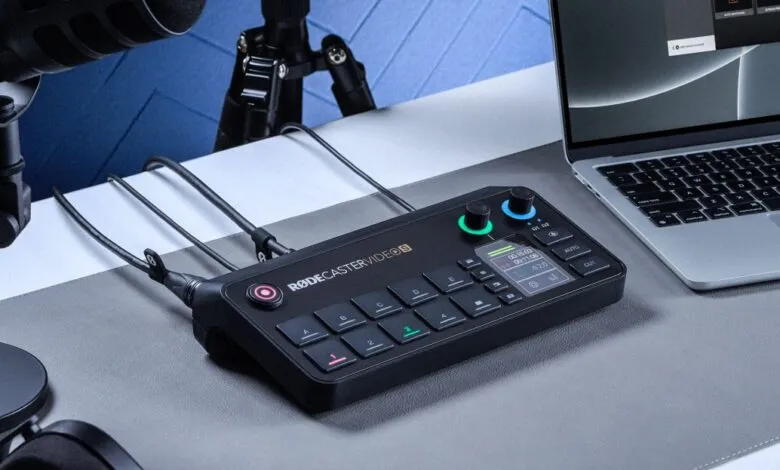
Rode has just unveiled the Rodecaster Video S, a more compact and budget-friendly version of its popular all-in-one production console. This new model retains core capabilities like multi-source video and audio mixing, along with built-in chroma keying for green screen replacement, but delivers them in a smaller package at a significantly lower cost. Aimed at content creators stepping into video production, the Rodecaster Video S makes professional streaming and recording features more accessible than ever.
Priced at $499, the Rodecaster Video S comes in at less than half the cost of the original model, which launched at $1,199. While not an impulse buy for beginners, this price point is compelling for established podcasters and streamers ready to expand into video without the complexity and expense of high-end studio equipment. The device serves as an integrated solution, eliminating the need for multiple separate pieces of hardware.
Physically, the Video S is a couple of inches shorter and nearly 400 grams lighter than its predecessor, enhancing its portability for creators on the move. This streamlined design does involve some trade-offs in connectivity. Where the original console offered four HDMI inputs, the S model provides three HDMI video inputs, a single multifunction USB-C port for connecting devices like webcams, and one HDMI output. It is powered by the same high-performance octa-core processor, supporting video resolutions up to 1080p.
Audio connectivity remains robust for professional use. The unit includes two combo XLR/1/4” jack inputs for connecting studio microphones. It also supports USB microphones and features two built-in wireless receivers compatible with Rode’s Series IV wireless microphone systems. For monitoring, there are two 1/4” headphone jacks for creating separate custom mixes, though the dedicated speaker outputs found on the larger model have been removed.
The control interface has been slightly simplified to match the console’s smaller footprint. You still get a responsive two-inch touchscreen accompanied by a dial for navigating menus and making adjustments. However, the number of large, tactile buttons for switching video sources and triggering up to five preset scenes has been reduced from 14 to 10. These scenes are configured through Rode’s dedicated desktop application, allowing for detailed show preparation.
Full production features are carried over, enabling users to livestream directly to platforms such as YouTube, Twitch, and Facebook or into desktop broadcasting software. For post-production, the console can record the entire program or individual video and audio tracks separately directly to an external USB drive. A particularly useful feature for solo operators is the automatic camera switching function, which intelligently cuts to the camera of the person who is speaking, simulating a multi-camera production without needing a dedicated video director.
(Source: The Verge)