Samsung Galaxy XR Hands-On: A Budget Apple Vision Pro Launches Today
▼ Summary
– The Samsung Galaxy XR headset offers a comparable experience to Apple’s Vision Pro at nearly half the price ($1,799 vs. $3,499) and includes a free “explorer pack” with subscriptions.
– It is significantly lighter and more comfortable than the Vision Pro, with a cushioned design and even weight distribution that reduces tension during extended use.
– The headset features high-resolution passthrough, hand gesture controls, and a Google-flavored interface similar to the Vision Pro, but includes a cursor for easier navigation.
– Google’s Gemini AI is deeply integrated, enabling features like Circle to Search and interactive queries during media consumption, though it has occasional inaccuracies.
– While lacking the Vision Pro’s premium materials and Mac-level power, the Galaxy XR excels as a personal theater and productivity tool with access to Google apps and content, making it a strong value alternative.
Watching the opening scenes of KPop Demon Hunters on the new Samsung Galaxy XR headset immediately raises questions about the future of Apple’s Vision Pro. This isn’t because Samsung’s offering dramatically outperforms its premium competitor, but because it delivers a remarkably similar experience at a fraction of the cost. Priced at just $1,799 compared to the Vision Pro’s $3,499, the Galaxy XR presents a compelling value proposition that launches today in the United States and Korea. To sweeten the deal, Samsung and Google are bundling an “explorer pack” with every headset, including a full year of Google AI Pro, Google Play Pass, YouTube Premium, discounted YouTube TV, and a complimentary season of NBA League Pass.
Comfort emerges as another significant advantage. The Galaxy XR feels noticeably lighter and more comfortable during extended wear than the Vision Pro. It also arrives with a native Netflix application pre-installed. While Apple loyalists deeply integrated into that ecosystem might still opt for the Vision Pro, many consumers will likely find Samsung’s alternative far more appealing.
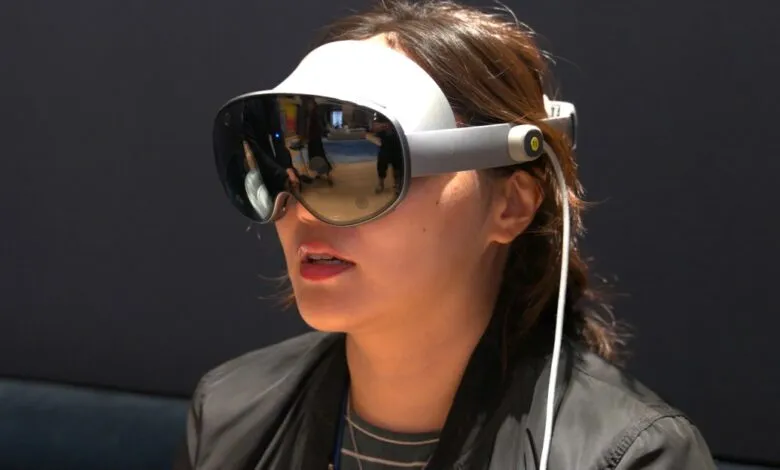
These impressions solidified during a recent hands-on session with the final production model, previously known under the codename Project Moohan. The latest iteration features a more generously cushioned front piece and introduces a removable bottom light seal, though the overall design remains consistent with earlier prototypes.
Visually, the hardware blends elements of the Vision Pro with cues from the Meta Quest 3. The front panel omits the Vision Pro’s controversial “creepy eyes,” instead utilizing a glass surface that houses environmental cameras and hand-tracking sensors. Inside, mini-LED displays deliver 4K resolution with refresh rates up to 90Hz, ensuring smooth visuals for scrolling and gaming. Battery performance matches the Vision Pro at approximately 2.5 hours per charge.
The headset utilizes a non-removable strap constructed from lightweight plastic, featuring a cushioned rear section and an adjustable dial for fit customization. While the materials don’t convey the same premium feel as Apple’s offering, the plastic construction proves easier to maintain than fabric alternatives. More importantly, the weight distribution feels significantly more balanced, reducing pressure points that often accompany extended VR sessions.
The user experience closely mirrors the Vision Pro’s interface, complete with high-resolution passthrough viewing and intuitive pinch-to-select gestures. A distinctive cursor appears when navigating menus, providing clearer visual feedback about selection targets. The overall interface represents Google’s interpretation of spatial computing, familiar yet distinctly Android-flavored.
Feature parity extends across spatial photography, immersive environments, and multi-window productivity setups. The system automatically spatializes existing 2D content, during testing, a standard YouTube video transformed into a three-dimensional presentation where the host appeared to emerge from the screen.
Google and Samsung have positioned Gemini AI as a cornerstone feature of this Android-based XR platform. During the product unveiling, executives repeatedly emphasized “AI at the core” of the device’s functionality. The power button doubles as a Gemini activator, enabling features like Circle to Search for physical objects viewed through passthrough mode. While testing this capability, the AI correctly identified a llama in a photograph during a Machu Picchu virtual tour, though it later misidentified an Icelandic volcano as being located in Hawaii, highlighting that the technology still has room for improvement.
The fundamental question remains whether mainstream consumers will embrace high-end XR headsets, particularly as attention shifts toward smart glasses. For those committed to headset technology, however, the Galaxy XR presents undeniable value. The entertainment experience proves nearly identical to more expensive alternatives, the comfort level supports longer usage sessions, and the content ecosystem benefits from full Google application integration.
Where AI functionality serves as a deciding factor, Gemini integration feels more deeply embedded than Siri’s implementation in the Vision Pro. These devices also function more naturally as standalone products compared to phones or tablets. The most popular application currently involves personal theater experiences, and while the Galaxy XR lacks the Vision Pro’s premium finish and Mac-level computing power, its immersive content capabilities meet most users’ needs.
Productivity features include screen mirroring from Samsung Galaxy Book laptops, call management, and cross-device file sharing. For those preferring traditional input methods, optional handheld controllers are available separately.
It’s important to remember that controlled demonstrations differ from real-world usage. Comprehensive testing may reveal aspects where the Vision Pro maintains superiority. The upcoming M5 Vision Pro model scheduled for October release will undoubtedly influence the competitive landscape. Should the Galaxy XR perform as reliably in everyday use as it does during preview sessions, however, the justification for purchasing Apple’s premium headset becomes increasingly difficult to articulate.
(Source: The Verge)