Ubisoft pushed PS5 to its limits for Black Flag Resynced

▼ Summary
– The remake is a ground-up technical reimagining built on the Assassin’s Creed Shadows version of the Anvil engine, with all original assets rebuilt from scratch for a modern physically-based rendering pipeline.
– Scene density and crowd complexity have been significantly increased, with Havana now doubling AC Shadows in asset density and crowd count, while optimization had to work within the constraints of the original level design.
– Gameplay systems have been modernized, including a new “crouch anywhere” stealth system with light/shadow mechanics and destructible environments, moving beyond the original’s static props and stalking zones.
– The Caribbean world has been rebuilt as a seamless open world, removing the original’s loading screens between cities and the open ocean, requiring subtle reshaping of city footprints to fit a continuous layout.
– Ray tracing is used across all consoles and modes, with aggressive resolution reduction and improved denoisers to maintain performance, while water tech features a new compute-driven tessellation system and improved foam, caustics, and subsurface scattering.
We recently sat down with technical director Jussi Markkanen and technical architect Nicolas Lopez from the team behind Assassin’s Creed Black Flag Resynced. They made a compelling case for this project being a true ground-up technical reimagining rather than a simple remaster, and one that pushes the PlayStation 5 to its absolute limits.
“We really squeezed the PS5 as much as we could,” Lopez explained, going so far as to suggest it will be “very difficult to extract more from these platforms” when planning the next mainline Assassin’s Creed title. “We’ll have to work hard for the next game,” he added with a laugh, “unless there are new consoles!” This immense challenge stems from the team’s ability to dramatically enhance ray tracing performance, implementing RTGI across all consoles and modes while boosting scene density beyond even Assassin’s Creed Shadows. They also achieved a locked frame-rate target for each mode.
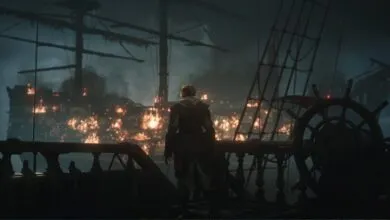
Based on what we’ve seen, their efforts have clearly succeeded. Let’s break down the project from the beginning. As you may know, Resynced is built on the improved Assassin’s Creed Shadows version of the Anvil engine, but nearly all original content has been rebuilt for a fully modern PBR (physically-based rendering) pipeline. Original Black Flag assets weren’t designed with physically based shading, ray tracing, or micro-polygon detail in mind. Tests showed that selective upgrades wouldn’t work. Instead, artists reconstructed meshes and materials from scratch, using the 2013 game as a guide rather than a constraint, targeting dense geometry and PBR-correct materials that still honor the original art direction.
A defining shift is in scene density and crowd complexity. The Havana cityscape, already a technical standout in the original, has been reworked into an exceptionally dense environment that actually doubles AC Shadows in terms of asset density and crowd count. This makes maintaining reasonable frame-rates a tough challenge for current-gen consoles, especially since Black Flag‘s world and missions were already fixed. With no freedom to change layouts or simplify sightlines, all optimization had to happen within the constraints of existing level design and quest structure. The solution was a quest for systems-level scalability across both CPU and GPU.
Gameplay systems have been modernized alongside the renderer. Stealth has been overhauled with “crouch anywhere” support and light/shadow stealth mechanics, moving away from the original’s reliance on dedicated stalking zones that feel outdated by 2026 standards. This required revisiting old level design setups and tuning them for a stealth model that reacts to illumination rather than fixed volumes. Destructible environments are another major change: where Black Flag relied on static props, Resynced uses technology proven in AC Shadows to make small environmental elements physically destructible, with gameplay hooks like kicking enemies through destructible clutter for staggers. In short, the game’s systemic layer has been updated to take advantage of new simulation and rendering features, not just visuals.
Character work has received similar attention. The strand-based hair system from Assassin’s Creed Shadows returns, but it’s better optimized and more widely deployed, including on crowd characters. The team found the system “didn’t work so well” with blonde hair, which is more common in Black Flag‘s setting than in Japan, so specific shading and lighting adjustments were made to handle that material correctly. On the facial side, the brief was to preserve the original motion capture performances, regarded internally as iconic, while driving much more detailed face meshes with complex shaders, wrinkle maps, and layered deformation. A simple retarget of the old mocap to the new rigs only got them “maybe to 60, 70 percent… and the end result was not great,” according to Markkanen. The answer was building a multi-stage transfer pipeline and relying heavily on manual artist work to restore nuance, particularly around the mouth and eyes, adding new micro-expressions without violating the iconic original performances. The eyes were easy, Markkanen said, but the mouth movements required a lot of extra attention.
Rendering-wise, a central challenge was reconciling the look of a pre-PBR, seventh-generation title with a physically based, ray traced pipeline. Lopez talks explicitly about trying to be “faithful” to the original, while acknowledging this can only go so far. Many of the maps and tricks used in the 2013 release simply don’t map directly to a modern BRDF-based system, and volumetrics and shadowing have evolved significantly since then. The solution was to chase the intent and memory of the original rather than the literal implementation: the remake is designed to look like you remember Black Flag looking, rather than how it actually renders when you go back. That philosophical stance informs decisions about lighting, fog, and material response across the board.
At the world level, the Caribbean playspace has been rebuilt into a seamless open world. In the original, docking into major cities like Havana triggered loading screens and effectively segmented the world. Anvil now supports a large, continuous world, so the team removed those boundaries and streamed the entire experience. However, the footprints of cities in the original didn’t line up perfectly with the open-world shell, so designers had to subtly reshape and tweak these spaces to make everything fit into a single continuous layout, including folding DLC islands into the same global map. Streaming systems in Anvil do the heavy lifting at runtime, but that work sits on top of a substantial world-integration pass.
The water and ship technology is clearly a point of pride. The original Black Flag water tech still holds up surprisingly well, which seems to have motivated the remake team to surpass it. Tessellation has been rewritten around a compute-driven, persistent mesh based on Intel’s Combined Binary Tree work, replacing classic hardware tessellation. This allows fine-grained control over geometry density without re-tessellating from scratch every frame, and produces better-distributed polygons. On top of that, there is a new foam system that spawns and advects foam particles at wave crests over nested, clipmap-like grids, plus improved shoreline wetting and drying. Subsurface scattering through the body of waves has been reworked to recover that iconic bluish translucency, with parameters tuned so that wave thickness directly affects translucency and glow.
Caustics have been redesigned to better conserve energy and respond to wave shape, darkening where fewer light rays concentrate and projecting moving wave shadows on the seafloor, with a simple shallow-water simulation in swimmer-accessible areas driven from depth buffer interactions.
Ray tracing is a key pillar, and the team has clearly focused on making RTGI and reflections viable across all current consoles and modes. Diffuse RTGI now runs in all console modes, including Series S, with the team aggressively reducing resolution down to one-sixteenth in some cases, then relying on improved denoisers, bilateral upscalers, and temporal filtering to hide the loss of raw sampling density. According to Lopez, they were “really inspired” by SIGGRAPH talks by id Software about how they implemented extremely low-cost RTGI in Doom, and retooled their pipeline accordingly.
Specular RT has also been brought down to quarter-res, supported by new anti-aliasing logic within the denoiser and additional temporal treatment. The RT stack remains hybrid: screen-space rays are used where they can fully resolve, with hardware rays filling the gaps and distant water falls back to cubemaps to avoid excessively long rays. In performance modes, the game leans on conventional SSR and cubemaps, with the RT featureset dialed in for each mode and platform.
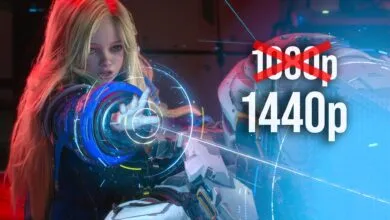
Underpinning all of this is a highly granular, data-driven platform manager that controls hundreds, if not thousands, of tunables per platform, per graphics mode, and even per gameplay context. Everything from RTGI resolution and BVH quality through shadow cascade update rates, hair strand activation distances, water tessellation, LOD ranges, cloth simulation tiers, skeleton update frequency, and hanging prop simulation can be adjusted. The same system is used to differentiate ground gameplay, naval sections, menus, and photo mode. Interestingly, vendors like AMD, Nvidia, Sony, and Microsoft were given access to tweak profiles and suggest changes. On PS5, target internal resolutions are 1080p for performance, 1280p for balanced, and 1440p for quality, all reconstructed to 4K via an improved TAAU solution; PS5 Pro pushes PSSR and higher RT resolutions. The team notes that dynamic resolution scaling alone can’t save you when micro-polygon counts rise this aggressively: they had to both improve TAA and raise baseline internal resolution to avoid geometric flicker, especially under weather-driven PBR modulation.
On PC, the build broadly maps to a fully uncapped variant of the PS5 Pro feature set, with higher RT resolutions, extended BVH ranges, and boosted shadow fidelity including contact-hardening shadows at the top end, plus more generous deployment of strand hair and high-end water presets. RT options allow players to toggle diffuse-only or diffuse-plus-specular bundles, but specular cannot be enabled without diffuse, as the specular tracing is designed to lean on the diffuse solution for efficiency. RT BVH quality settings govern inclusion and distance, and all the major upscalers are supported. Shader compilation is handled through an internal logging and pre-warming system inherited from Valhalla and Shadows: QA playthroughs record all PSOs actually used by the game, and that curated set is then precompiled on first boot after driver or OS changes.
The intent is to avoid both the combinatorial explosion of naive precompilation and the hitches associated with just-in-time compilation, and the team believes this has largely eliminated shader-related stutter, though they’ve not “yet” supported advanced shader delivery, hinting it might arrive in the future.
Ultimately, the Resynced development team considers a remake of this depth to be functionally equivalent to building a new game. Ships, faces, water, animation systems, stealth mechanics, and the world structure have all been re-authored or significantly reworked.
One recurring theme is consistency: the dev team explicitly took criticism of Shadows‘ cross-mode presentation to heart and aimed for a much tighter visual alignment between Series S, base consoles, and premium modes, even if that meant heroic optimization on the memory-constrained Series S. Finally, they emphasize that the goal with Resynced is to deliver a Black Flag that feels exactly like the game players remember, but rebuilt with the fidelity, responsiveness, and technical ambition expected of a flagship current-generation release.
(Source: Digitalfoundry.net)