Linux bug: Single errant character causes high-severity flaw

▼ Summary
– A high-severity Linux vulnerability, CVE-2026-23111, allows unprivileged users to escalate to root by exploiting a single errant exclamation point in kernel code.
– The bug is located in the nf_tables subsystem, which handles packet filtering and firewall rules, replacing older subsystems like iptables.
– The errant character introduces a use-after-free vulnerability, corrupting memory by allowing malicious code to be placed in improperly freed memory addresses.
– Exploitation disrupts the deletion of verdicts within nf_tables, which determine if a packet matches a rule for a specific action.
– The process involves catchall elements, which act as wildcards when a lookup fails to match any other set element.
Researchers have uncovered a high-severity Linux vulnerability that lets unprivileged users escalate their access to root-level control, all triggered by something remarkably simple: a single misplaced character deep within the kernel’s codebase.
The flaw, officially designated CVE-2026-23111, resides in nf_tables, the Linux kernel subsystem responsible for packet filtering and firewall rule management. This modern framework has largely replaced older tools like iptables, ip6tables, arptables, and ebtables.
!!! WTF!!!
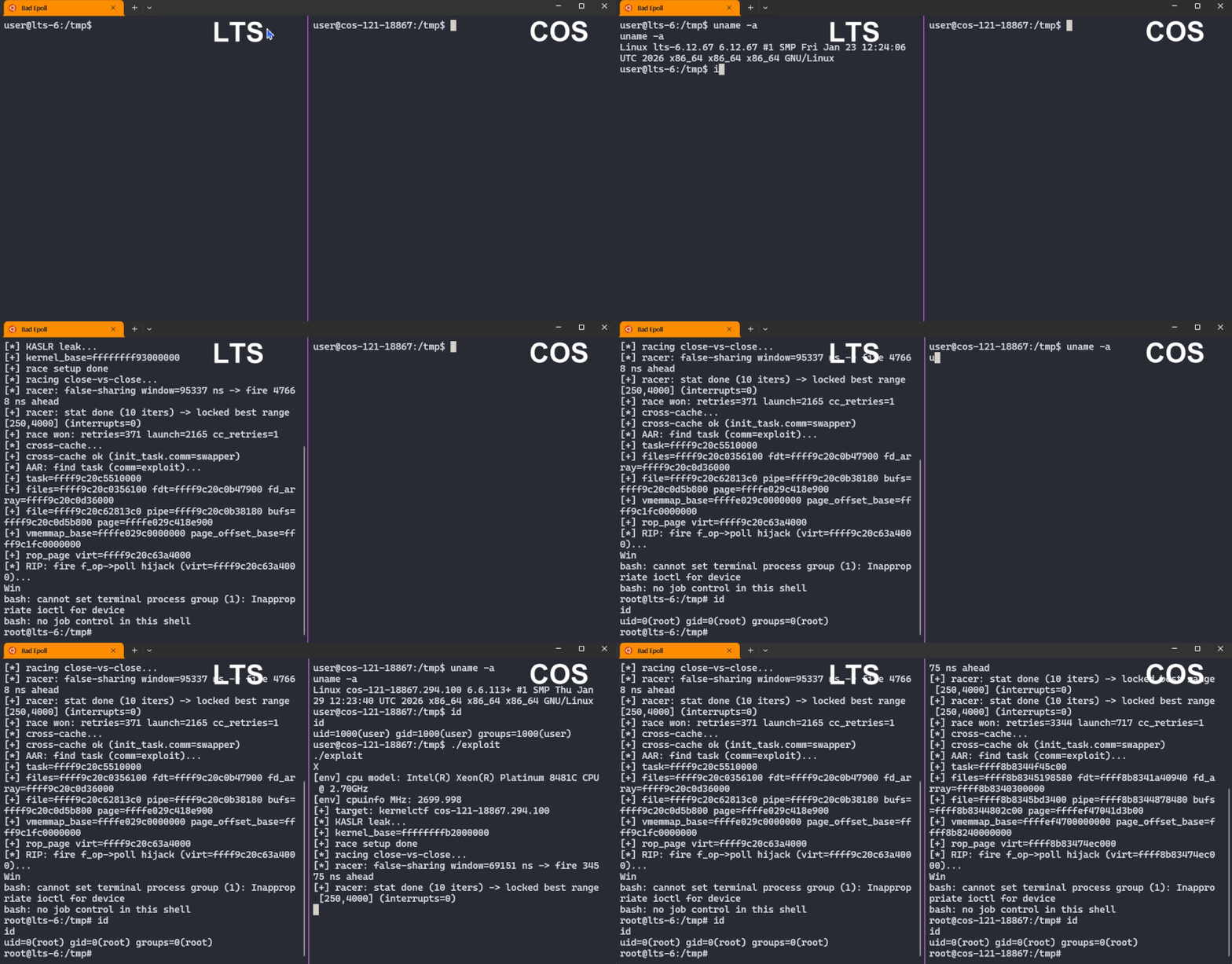
A lone, misissued exclamation point in the code that implements nf_tables inadvertently created a use-after-free bug. This class of memory corruption vulnerability allows attackers to plant malicious code at memory addresses that were not properly cleared after use. Through CVE-2026-23111, any unprivileged user or process can elevate system privileges to root, gaining full administrative control.
The exploitation technique disrupts the deletion of verdicts,the internal determinations within nf_tables that decide whether a packet matches a rule and triggers a specific action. The process relies on catchall elements, which function as wildcards when a lookup fails to match any other element in the set. That single errant character throws the entire mechanism out of balance.
(Source: Ars Technica)