Windows’ classic Space Cadet pinball is getting a physical version
▼ Summary
– 3D Pinball for Windows – Space Cadet was a free, authentic-feeling virtual pinball game included with Windows through XP, though it was originally part of Maxis’s Full Tilt! Pinball collection.
– Hobbyists have long discussed creating a physical Space Cadet table, but previous attempts, including a reskinned prototype by Deeproot Pinball, failed due to the company’s collapse amid fraud allegations.
– Hobbyist CNCDan is now attempting to build a physical Space Cadet table, having already created 3D-printed flippers, pop bumpers, slingshots, and a raised playfield to match the original game.
– Translating the on-screen perspective to a real table has caused size issues: the playfield is only 56 cm wide and its bumpers are 53 mm wide, smaller than any commercially available parts.
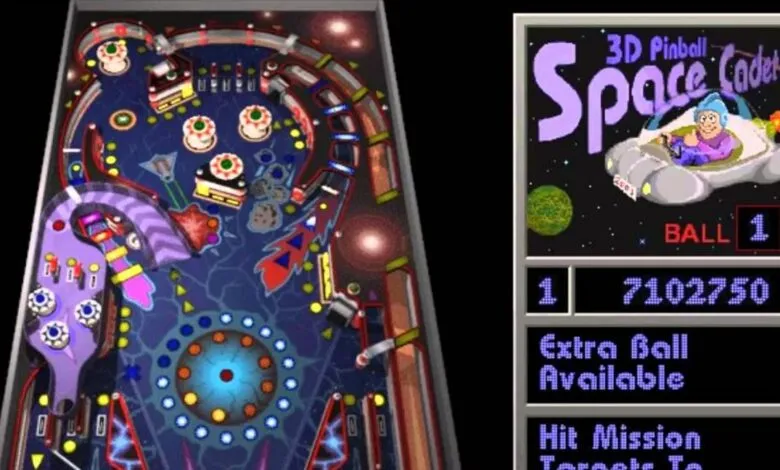
If you grew up clicking through a late-90s or early-2000s Windows PC, you likely logged hours on 3D Pinball for Windows – Space Cadet. That free, surprisingly polished virtual table shipped with multiple Microsoft operating systems, including Windows XP, and became a desktop classic. But despite its authentic pinball physics, Space Cadet was never based on a real-world machine. It originally appeared as part of the Full Tilt! Pinball collection, published by Maxis in 1995.
Over the years, fans have floated the idea of building an actual, physical Space Cadet table. Yet those discussions rarely moved beyond the theoretical. One company, Deeproot Pinball, came close: they developed a reskinned prototype of the Space Cadet layout for a planned 2021 release, but the company collapsed amid fraud allegations before production ever began.
Now, a hobbyist known as CNCDan is taking on the challenge where Deeproot fell short. In a recent video, he documents the early stages of constructing a real, playable Space Cadet table. His build already features 3D-printed mechanical flippers, pop bumpers with embedded LEDs, slingshots, and a raised playfield , all meticulously designed to replicate the look and feel of the original Windows game.
Translating a purely digital table into physical form, however, comes with real-world constraints that Space Cadet never had to consider. CNCDan quickly discovered issues with element sizing and positioning. After scaling and skewing the on-screen, perspective-shifted playfield onto a 1-meter-tall table, he ended up with a rectangular surface just 56 cm wide. That’s narrow for commercial pinball tables. The playfield bumpers measure only 53 mm across , far smaller than any prebuilt bumpers available on the market today.
(Source: Ars Technica)