Kagi Launches ‘Small Web’ Mobile App for Human-Curated Browsing
▼ Summary
– Kagi has launched mobile apps and browser extensions to promote its curated “Small Web,” a collection of over 30,000 non-commercial, human-authored websites like personal blogs and webcomics.
– The initiative aims to help users discover content from the early, independent web that is now often overshadowed by corporate platforms and AI-generated material.
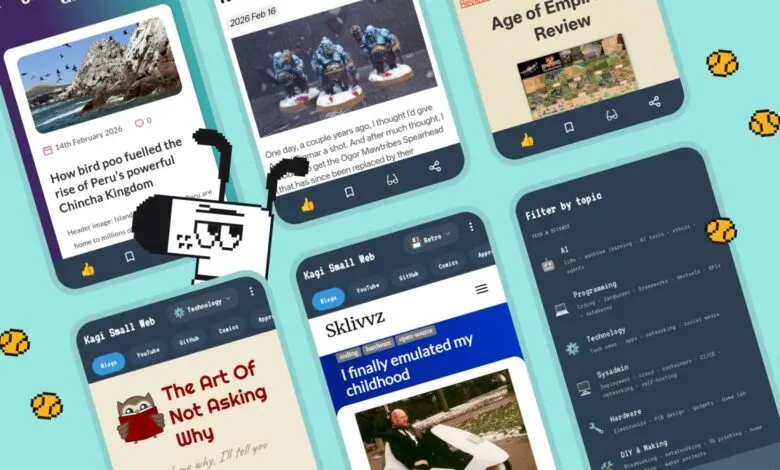
– The Small Web website functions like a modern StumbleUpon, randomly displaying sites and allowing users to browse by category or save favorites in a distraction-free mode.
– Some users criticize the initiative for being too limited, as it excludes sites without recent RSS feeds and may still include some AI-generated content.
– Kagi’s Small Web represents an alternative vision for web discovery, potentially serving as a new focus if its premium search engine model does not succeed.
In an online world increasingly saturated with automated content, the search engine Kagi has introduced a mobile application designed to spotlight authentic, human-created websites. This new “Small Web” app for iOS and Android offers a curated portal to personal blogs, independent webcomics, and other non-commercial sites authored by individuals. The initiative aims to recapture the spirit of the early internet, a time before corporate platforms and ad-driven algorithms came to dominate the digital landscape.
Kagi defines the “Small Web” as a collection of properties built by people, not corporations. These are the personal projects and passion sites that often get buried under the weight of optimized, AI-generated material in mainstream search results. The company first launched this concept in 2023, promoting such content within its search engine and through a dedicated website. The recent expansion into mobile apps and browser extensions marks a significant step in making this curated web more accessible for everyday discovery.
The experience is reminiscent of the classic web discovery tool StumbleUpon. Users are presented with a random site from Kagi’s index and can click a “next” button to serendipitously explore another. The goal is to facilitate the joy of stumbling upon hidden corners of the internet that algorithm-driven feeds often overlook. With the addition of categorical filters, users can now tailor this exploration to specific interests like videos, code repositories, or comics, browsing from a pool of over 30,000 approved sites.
Within the new mobile apps, users can select their preferred content types, view lists of popular or recently visited sites, and read articles in a clean, distraction-free mode. A handy feature allows people to save their favorite finds for later return. This push to give independent, low-traffic websites a platform is particularly relevant as the line between human and machine-generated content continues to blur.
However, the project is not without its critics. Some users on forums like Hacker News have pointed out limitations in Kagi’s curation process. The current selection criteria reportedly require sites to have active RSS feeds with recent posts, which may exclude unique, single-purpose, or experimental web pages. Others have expressed frustration upon encountering sites within the “Small Web” collection that still appear to be potentially AI-authored, highlighting the challenge of perfecting human curation at scale.
Despite these growing pains, the vision of a human-curated web filled with genuinely human-written content presents a compelling alternative. For Kagi, which has built its business model around a premium, subscription-based search engine, the Small Web could represent an important pillar of its identity as a challenger to larger, ad-supported platforms. The company continues to refine the collection, inviting public suggestions for new sites to include via its GitHub page, ensuring this curated corner of the internet can continue to grow and evolve.
(Source: TechCrunch)