Ancient Peru’s Elite Imported Parrots Centuries Before the Inca
▼ Summary
– Centuries before the Inca Empire, the Ychsma kingdom in Peru imported live parrots from the Amazon rainforest across the Andes.
– Analysis of ancient feathers from a noble’s tomb revealed the parrots were wild-caught but kept in captivity for at least a year on the coast.
– The parrots’ diet of local maize during captivity indicates a sophisticated, long-distance trade network spanning hundreds of kilometers.
– This trade network, which existed before the famous Inca roads, was necessary to transport live birds over the steep Andes mountains.
– The Ychsma and other Andean cultures highly valued parrot feathers, using them in items like ceremonial headdresses.
Centuries before the Inca Empire dominated the Andes, a lesser-known Peruvian kingdom maintained a surprisingly extensive trade network. The Ychsma people, based at the coastal city of Pachacamac, successfully imported live parrots from the distant Amazon rainforest, transporting them across the formidable Andes mountains. This feat, revealed through modern scientific analysis of ancient artifacts, highlights a sophisticated pre-Inca economy and a deep cultural fascination with exotic birds.
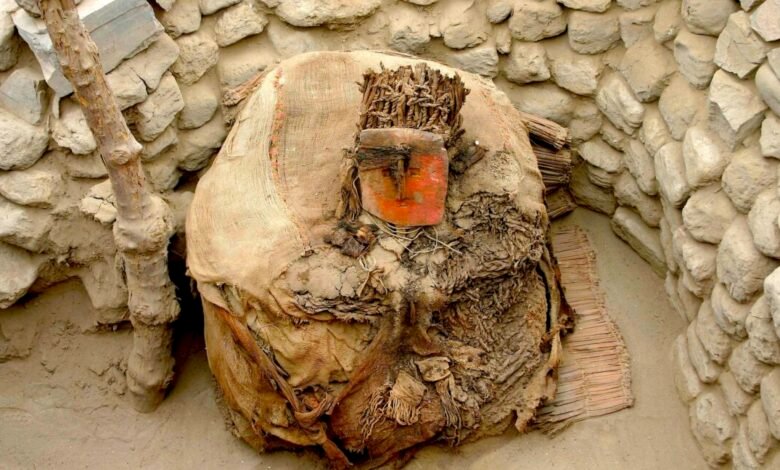
A recent study led by researchers from the Australian National University examined feathers from a noble’s burial headdress dating to between 1100 and 1400 CE. The team analyzed mitochondrial DNA and stable isotopes from the feathers, which retained vibrant blue, yellow, and green hues. The genetic and chemical signatures told a compelling story. The parrots were born in the wild on the eastern slopes of the Andes, in the Amazon region, but were later kept in captivity on the arid Pacific coast. Isotopic evidence indicates the birds lived for at least a year in captivity, fed a diet of local maize. This confirms they were not merely traded feathers, but live animals that undertook an incredible journey.
Transporting live, tropical birds across hundreds of kilometers of steep mountain terrain required a well-organized and far-reaching trade network. This system predated the famous Inca road system by several hundred years. The Ychsma kingdom, which emerged from the remnants of the earlier Wari Empire, was centered at Pachacamac. There, they constructed pyramids and developed irrigation to farm in dry river valleys. Their ability to orchestrate such a complex import operation speaks to a high level of social organization and economic reach.
The cultural motivation for this effort appears clear. Andean societies, including the Ychsma, placed a high value on colorful parrot feathers for ceremonial regalia and status symbols. The feathers studied were meticulously sewn into funeral headdresses, indicating their importance in rituals and as markers of elite identity. Acquiring these exotic items from a distant, ecologically different realm likely enhanced the prestige and spiritual authority of the nobility. This practice underscores how pre-Columbian societies in the region connected vast geographic areas through trade, driven by both material desire and cultural tradition.
(Source: Ars Technica)
