Intel Panther Lake CPU Review: A Stunning Comeback
▼ Summary
– The Intel Core Ultra X9 388H Panther Lake chip in the Asus Zenbook Duo delivers strong performance for intensive work, 1080p gaming, and offers excellent battery life, lasting over a full workday.
– In benchmarks, Panther Lake generally outperforms AMD’s Strix Point and Intel’s own Lunar Lake and Arrow Lake chips, though Apple’s M5 and AMD’s Strix Halo lead in most categories.
– The chip enables the laptop to perform nearly as fast on battery power as when plugged in, a significant advantage for content creation that matches a key strength of modern MacBooks.
– For gaming, Panther Lake’s integrated graphics can handle demanding titles at 1080p with high settings, supporting features like XeSS upscaling and multi-frame generation for smoother gameplay.
– While Panther Lake is a strong contender, the author notes upcoming competition from AMD and Qualcomm and looks forward to testing more affordable versions of the chip in future devices.
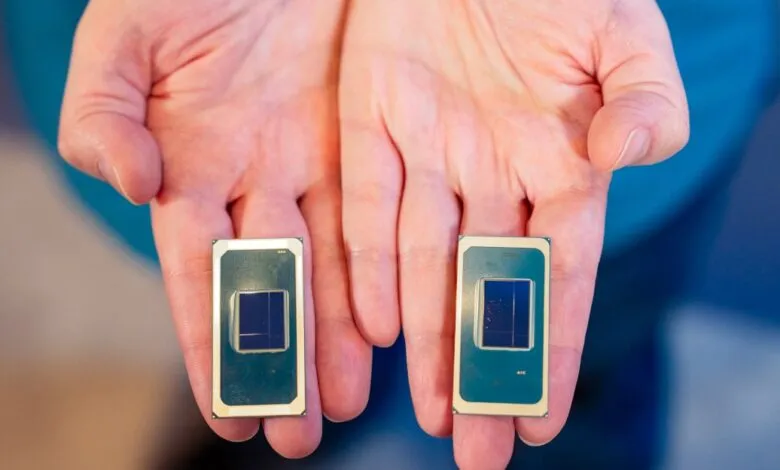
Testing the flagship Intel Core Ultra X9 388H Panther Lake processor inside the 2026 Asus Zenbook Duo has been a revelation. This chip delivers the complete package: serious speed for demanding workloads, capable 1080p gaming, and battery life that comfortably survives a full workday. Intel isn’t just making promises with Panther Lake, it’s delivering tangible performance that changes what we expect from a Windows laptop.
Our evaluation used the $2,300 Asus Zenbook Duo. Panther Lake processors are available in 8-core and 16-core configurations, blending Cougar Cove performance cores with Darkmont efficiency cores. The top-tier Core Ultra X9 388H in this laptop packs 16 cores, an Intel Arc B390 GPU with 12 Xe graphics cores, and a power range from 25W to 80W. Intel positioned it as offering greater efficiency than Lunar Lake while surpassing the raw power of Arrow Lake chips found in bulkier machines.
In direct comparisons, Panther Lake doesn’t sweep every category. Apple’s M5 and AMD’s high-end Strix Halo lead many benchmark results. However, the Intel 388H decisively outperforms AMD’s flagship Strix Point chip in almost every test we conducted. This represents a significant jump for Intel, especially considering Strix Point itself outperformed Lunar Lake just last year. Panther Lake also easily surpasses our examples of both Lunar Lake and Arrow Lake-H processors.
While Apple remains the overall speed leader, one result stood out: the Panther Lake system slightly beat a MacBook Pro in a 4K video export test using Adobe Premiere Pro. That’s a clear demonstration of the power housed in those 12 graphics cores.
| Processor / System / RAM / Storage | CPU Cores | Graphics Cores | Geekbench 6 CPU Single | Geekbench 6 CPU Multi | Geekbench 6 GPU (OpenCL) |
|---|---|---|---|---|---|
| Intel Core Ultra X9 388H (Panther Lake) / Asus Zenbook Duo / 32GB / 1TB | 16 | 12 | 3009 | 17268 | 56839 |
| Apple M5 / MacBook Pro 14 / 16GB / 1TB | 10 | 10 | 4208 🏆 | 17948 | 49059 |
| AMD Ryzen AI 9 HX 370 (Strix Point) / Asus Zenbook S16 / 32GB / 1TB | 12 | 16 | 2828 | 13565 | 35991 |
| AMD Ryzen AI Max Plus 395 (Strix Halo) / Asus ROG Flow Z13 / 32GB / 1TB | 16 | 40 | 2986 | 19845 🏆 | 80819 🏆 |
| Intel Core Ultra 7 258V (Lunar Lake) / Acer Swift 14 AI / 32GB / 1TB | 8 | 8 | 2609 | 10690 | 28984 |
| Intel Core Ultra 7 255H (Arrow Lake) / Lenovo Yoga Book 9i / 16GB / 1TB | 16 | 8 | 2802 | 11976 | 39643 |
(Table continues with Cinebench, PugetBench, and gaming scores)
During everyday use, Panther Lake’s responsiveness is immediately noticeable. Working with a large Adobe Lightroom Classic catalog full of 50-megapixel RAW files felt nearly as fluid as on a MacBook Pro. Applying intensive edits and navigating between images proceeded smoothly, avoiding the typical slowdowns common on many Windows machines. Even processor-heavy tasks like subject detection and using the healing brush remained snappy.
Crucially, this photo editing was done on battery power. The Zenbook Duo maintains nearly identical performance whether plugged in or not, a feature often limited by other Windows laptop designs. This parity is a major victory for mobile content creation on Windows, finally matching a key advantage of modern MacBooks. It’s a practice all Windows manufacturers should adopt.
Battery life is another strong suit for Panther Lake, especially impressive given it’s driving two bright OLED screens. The Zenbook Duo lasted over 14 hours in a standardized rundown test. In practical use, it easily powered a nine-hour workday of dual-screen multitasking, with reserve power left for evening use.
For gaming, Intel compares the 12 Xe graphics cores to a discrete Nvidia RTX 4050 laptop GPU. Early third-party testing suggested performance close to a desktop RTX 3050 at 1080p. My own limited scripted benchmarking included Cyberpunk 2077, which averaged 40fps at 1920×1200 on Ultra settings without ray tracing or Intel’s XeSS upscaling. While AMD’s Strix Halo retains a graphics performance lead, Panther Lake is certainly no slouch.
Spending more time actually playing games revealed a capable experience. Titles like Cyberpunk 2077 and Helldivers 2 typically hit around 60fps at 1920×1200 on High settings with XeSS Balanced enabled. Pushing for ray tracing or higher visual fidelity will lower frame rates, but targeting 40-60fps unlocks Intel’s new XeSS multi-frame generation. This feature can boost perceived smoothness well above 120fps. Control is handled through the Intel Graphics Software app, offering 2x, 3x, or 4x frame generation options. It worked smoothly in Battlefield 6, though I disabled it for multiplayer to avoid potential input latency. Intel’s implementation here is robust and currently ahead of AMD’s offerings.
The arrival of Panther Lake marks a compelling return to form for Intel. It’s the first major new chip out this cycle and sets a high bar for Windows laptops. While future competition from AMD and Qualcomm is imminent, and more affordable Panther Lake configurations are eagerly awaited, this flagship debut proves Intel is back as a serious contender in the mobile processor space.
(Source: The Verge)