Ring denies providing ICE with camera access
▼ Summary
– A social media backlash is urging people to destroy Ring cameras over concerns about a partnership with Flock, an AI surveillance company linked to ICE, though Ring denies any direct relationship with ICE.
– Ring’s Community Requests tool allows local law enforcement to ask users for footage, and while a Flock integration is announced, only the partnership with Axon is currently active.
– Users can opt out of Community Requests in the app settings and can enable end-to-end encryption to prevent Ring or authorities from accessing their footage, though this disables several smart features.
– For greater privacy, alternatives to cloud-dependent cameras exist, such as Apple’s HomeKit Secure Video or systems from Eufy and others that process and store video locally.
– The article emphasizes that any internet-connected camera carries a risk of unauthorized access, advising careful consideration before installing home surveillance.
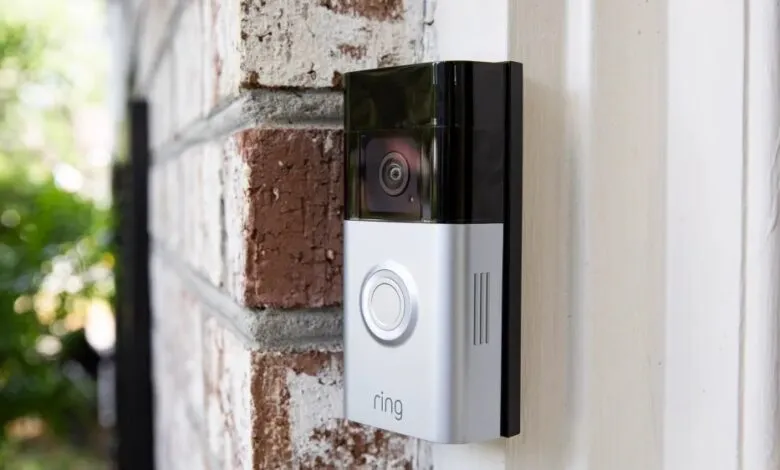
A recent online campaign urging people to destroy their Ring cameras has brought fresh attention to the company’s partnerships, specifically with surveillance firm Flock. This backlash stems from concerns that footage could be accessed by Immigration and Customs Enforcement (ICE). Ring has explicitly denied any such relationship, stating it has no partnership with ICE and does not share video, feeds, or back-end access with the agency. The controversy highlights ongoing public anxiety about the reach of home security networks and how video data might be used beyond its original intent.
The focal point is Ring’s Community Requests tool, which allows local law enforcement to ask nearby users for footage during active investigations. Last year, Ring announced an integration with Flock, a company known for its AI-powered surveillance cameras used by various government agencies. However, a Ring spokesperson clarified that this specific Flock integration is not yet operational. The feature is designed strictly for local public safety agencies at the city and county level. Once video is handed over to authorities, however, Ring no longer controls how it is used, raising valid questions about the potential for a widespread local surveillance system.
Community Requests itself is a rebranded version of an older, discontinued feature. It now works through integrations with third-party evidence management platforms. Currently, only the partnership with Axon, a company known for Tasers and body cameras, is active. When a local agency makes a request, it appears in the Ring and Neighbors apps for users in a specific area. Individuals can choose to share relevant footage or simply ignore the alert, with no notification sent if they decline.
For those uncomfortable with this system, opting out is straightforward. Within the Ring or Neighbors app, users can navigate to settings, find Neighbors Settings, and under Feed Settings, simply uncheck the box for Community Requests. This disables participation without affecting the camera’s basic functionality. It’s important to note that Ring, like many companies, reserves the right to provide footage to law enforcement without a warrant in cases it deems an emergency.
A more robust step for privacy is enabling end-to-end encryption (E2E). When activated, video can only be viewed on the mobile device used to set up the camera; not even Ring can access it. This also means the footage cannot be used for Community Requests. The trade-off is significant, as E2E disables cloud-dependent features like person detection, rich notifications with snapshots, and new AI-powered video descriptions.
For homeowners seeking alternatives that avoid the cloud entirely, several options exist. Some security camera systems process video locally on a hub before any encrypted data is sent to the cloud. Apple’s HomeKit Secure Video service provides fully encrypted storage, with analysis done on a local home hub like a HomePod. Compatible cameras are required from brands like Eve, Aqara, and Eufy.
Eufy, owned by Anker, offers local storage and processing through its HomeBase hardware for many of its cameras and doorbells. Other brands like TP-Link’s Tapo, Aqara, and Reolink have also introduced local hubs for storage and processing. Many of their products also support local storage via microSD cards. The growing Matter smart home standard now includes support for security cameras, which may further expand choices for local, secure video handling.
The core issue remains that any internet-connected camera carries inherent risks. Data could potentially be accessed by unintended parties regardless of a company’s stated policies. This makes it crucial for consumers to carefully weigh the benefits of convenience and community safety against the importance of personal privacy before installing any surveillance system.
(Source: The Verge)