Pompeii’s Public Baths: How a Water Switch Boosted Hygiene
▼ Summary
– The 79 CE eruption of Mount Vesuvius released energy equivalent to 100,000 atomic bombs and preserved Pompeii’s structures, including its water system.
– Researchers analyzed calcium carbonate deposits from Pompeii’s baths, aqueduct, and wells to study the city’s water supply history and changes.
– Pompeii initially relied on rainwater from cisterns and deep wells, later building a complex aqueduct system between 27 BCE and 14 CE.
– The layers of calcium carbonate deposits contain chemical and physical information that reveals seasonal changes and water composition over time.
– The study focused on four key historical periods, using samples collected in 2016 and 2017, while noting that post-eruption changes may affect modern water comparisons.
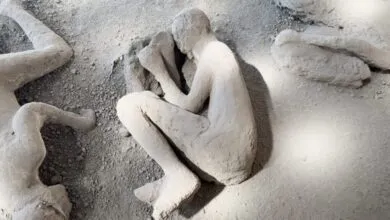
The catastrophic eruption of Mount Vesuvius in 79 CE, an event of staggering destructive power, preserved the Roman city of Pompeii in a layer of ash and pumice. Among the structures frozen in time were the city’s public baths, aqueduct, and water towers, offering a unique window into ancient urban life. A recent scientific study has analyzed mineral deposits from these very structures, uncovering a significant shift in the city’s water management that directly improved public hygiene.
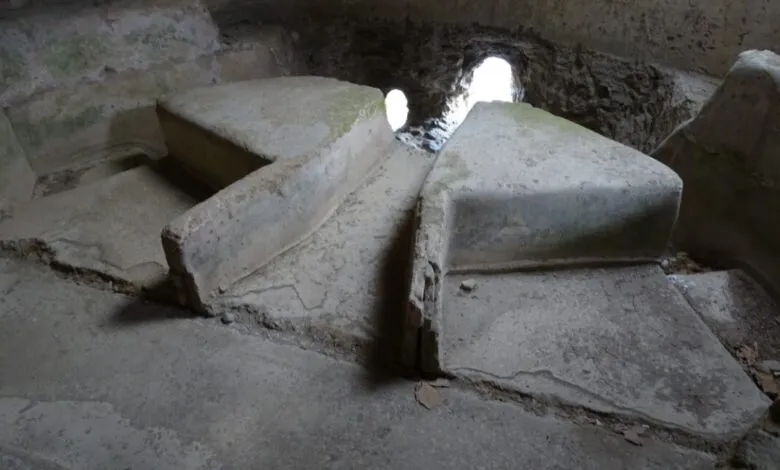
Pompeii’s origins date back to the sixth century BCE. Early archaeological evidence shows the settlement initially depended on collecting rainwater in cisterns and drawing water from deep wells, some reaching forty meters. The public baths of this era used complex weight-lifting machinery to haul water up from these shafts. As the city grew and prospered, its infrastructure became more sophisticated. The most transformative development was the construction of an aqueduct between 27 BCE and 14 CE, which would fundamentally change how water flowed through the city.
Researchers turned their attention to the layers of calcium carbonate, or limescale, left behind by flowing water in the well shafts, baths, and aqueduct channels. These mineral deposits act as a historical record. Each layer possesses distinct chemical and isotopic signatures, along with variations in crystal size and shape. By analyzing these properties, scientists can decode information about past water temperature, seasonal cycles, and long-term changes in the water’s chemistry. This allows for a reconstruction of the water system’s operational history, shedding light on maintenance practices and how the Romans adapted their infrastructure over decades.
The investigation focused on four key periods in Pompeii’s development: the era from the second century to 80 BCE; the period after 80 BCE when Pompeii became a formal Roman colony; the reign of Emperor Augustus from 31 BCE to 14 CE; and the years following a major earthquake in 62 CE. Collecting the calcium carbonate samples during fieldwork was straightforward. To complete the picture, the research team also gathered samples from modern groundwater and local springs, which are thought to be the original sources for the ancient aqueduct. They carefully noted that the properties of these contemporary water sources may have changed dramatically over two millennia, especially after the cataclysmic volcanic eruption.
The analysis revealed a clear technological transition. The data showed that early in the city’s history, the baths relied on calcium-rich groundwater drawn from the deep wells. This water left behind thick, distinct layers of deposit. However, after the aqueduct became operational, the mineral record changed. The baths began using softer, magnesium-rich water sourced from the aqueduct, which originated from local springs. This switch to a reliable, high-volume aqueduct supply meant the baths could maintain a constant flow of cleaner water for public use. The improved water quality and consistent supply would have significantly enhanced the bathing experience and overall public sanitation, reducing the risk of waterborne illnesses and allowing for more effective cleaning. This shift represents a deliberate municipal investment in public health and urban comfort, showcasing the advanced engineering priorities of Roman society.
(Source: Ars Technica)