$8.50 vs $35 PC Fan: Can Arctic Beat Noctua?
▼ Summary
– PC fan selection involves a trade-off between cooling performance, noise, and cost, where you can typically only prioritize two of these three factors.
– The Noctua NF-A12x25 G2 is a high-end, over-engineered fan known for exceptional quiet operation and performance, but it costs approximately $35 per unit.
– The Arctic P12 Pro is a budget-friendly fan, costing as little as $8.50 each, that delivers surprisingly competitive performance for its price.
– Testing revealed that while the Noctua fan offers superior acoustic refinement and performance at low speeds, the Arctic fan provides most of Noctua’s cooling capability for a fraction of the cost.
– The Arctic P12 Pro is an excellent value for most users, though the Noctua NF-A12x25 G2 remains the top choice for those prioritizing absolute quietness and refinement, especially during idle or low-use periods.
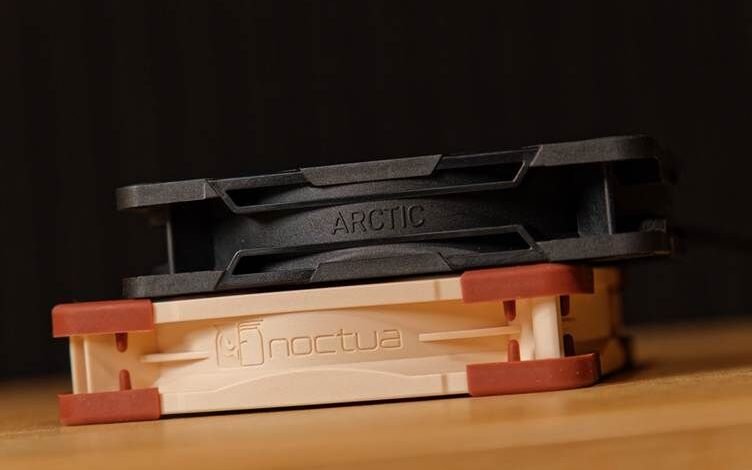
Choosing the right cooling fan for your computer often feels like navigating a three-way compromise. You typically have to prioritize two out of three key factors: exceptional cooling performance, whisper-quiet operation, or a low price point. This fundamental trade-off sets the stage for a fascinating showdown between two celebrated but wildly different products. On one side sits the Noctua NF-A12x25 G2, a fan renowned for its engineering and acoustic refinement, carrying a premium price tag of around $35. On the other is the Arctic P12 Pro, a budget contender that costs a mere $8.50 per fan, challenging the notion that high performance must come at a high cost.
The Noctua NF-A12x25 G2 represents a pinnacle of fan design. As a second-generation all-rounder, it’s built to excel both as a case fan and on restrictive radiators. Its engineering is meticulous, featuring a self-stabilizing SSO2 bearing for longevity and quiet operation. The fan blades are crafted from a special Sterrox LCP material and are positioned with an incredibly tight 0.5mm clearance from the frame, a design choice aimed at maximizing static pressure. Noctua includes thoughtful accessories like a low-noise adapter and employs sophisticated PWM programming to ensure consistent performance. For users who demand the utmost in acoustic polish, especially at very low speeds, the Noctua presents a compelling, if expensive, argument.
In stark contrast, the Arctic P12 Pro takes a pragmatic approach. Constructed from standard plastics, it forgoes exotic materials for a simple yet effective reinforcement ring around its blades. This design provides the structural integrity needed to handle speeds up to 3000 RPM. While it lacks the minute refinements of its competitor, the P12 Pro has garnered a reputation for punching far above its weight class in terms of raw cooling capability. The value proposition is staggering; a five-pack of these fans costs less than a single Noctua NF-A12x25 G2.
To evaluate these fans beyond basic specifications, testing focused on real-world performance across three scenarios: unrestricted airflow, mounted on a radiator, and positioned behind a restrictive mesh intake filter. Acoustic measurements were taken in a quiet office environment, and airflow was then measured at the specific RPM levels determined during noise testing.
The results were revealing. In unrestricted testing, the Arctic P12 Pro could spin significantly faster than the Noctua at the same noise level. However, spinning faster does not automatically mean moving more air. When measuring actual airflow generated per decibel, the Noctua NF-A12x25 G2 consistently took the lead, demonstrating superior aerodynamic efficiency. The Arctic fan had to work harder (spin faster) to achieve similar results.
The gap between the two fans became more nuanced under restriction. On a radiator, the Noctua G2 exhibited a remarkable trait: it could actually spin slightly faster while maintaining the same noise level compared to its unrestricted test. The Arctic fan suffered a small RPM penalty but still managed to push more air through the radiator than Noctua’s previous-generation model. The most challenging test was the mesh intake simulation. Here, the Noctua’s advantage grew more pronounced, though the Arctic P12 Pro remained highly competitive, outperforming other mid-range options.
Beyond the decibel readings, the acoustic character of each fan differed. The Noctua produced a smooth, gentle whoosh of air that was virtually inaudible at low speeds. The Arctic P12 Pro, while quiet, introduced a subtle motor tone and a slightly more turbulent sound profile. This characteristic became more noticeable when the fan was placed too close to an intake mesh, a scenario where ensuring adequate clearance is advisable for optimal noise levels.
So, which fan wins? The answer depends entirely on your priorities and budget. The Noctua NF-A12x25 G2 is the undisputed champion of acoustic refinement and efficient performance. It is the clear choice for silent computing enthusiasts, workstations that idle often, or anyone for whom absolute noise quality is paramount.
The Arctic P12 Pro, however, delivers a shocking proportion of Noctua’s cooling performance for a fraction of the cost. It is an outstanding value for gamers and builders who need effective cooling without breaking the bank. The compromises involve slightly higher minimum noise, a less refined sound signature, and the need for mindful placement as an intake fan. For most users, these are minor trade-offs for such monumental savings.
Ultimately, this comparison proves that the fan market offers excellence at both ends of the spectrum. You can pay a premium for engineering artistry and silent operation, or you can invest minimally and receive spectacular performance that defies its price. Both of these fans have rightfully earned their stellar reputations.
(Source: Tom’s Hardware)


