Unlocking Amiga’s Power: The Many-Sprites Interpretation
▼ Summary
– The invention of sprites was a major advancement in video game design, enabling richer graphics and independent moving objects on early hardware.
– Game developers for the Commodore Amiga, like [Coding Secrets], used a clever method to display far more sprites than the hardware’s stated limit of eight at once.
– They exploited a coprocessor that could redraw sprites at different screen positions, allowing many sprites as long as no single line displayed more than eight.
– This technique required deep system knowledge and came at a cost, as the coprocessor’s use stole processing time from other game tasks.
– The hack demonstrates how intimate hardware understanding could overcome limitations to create more immersive gaming experiences.
The clever manipulation of hardware sprites was a defining technique for pushing the graphical limits of classic gaming systems. Programmers often found ingenious ways to make these machines produce visuals far beyond their advertised specifications. One standout example comes from the Commodore Amiga, a platform renowned for its advanced graphics architecture yet still bound by certain constraints. While the Amiga’s hardware was typically limited to displaying eight sprites simultaneously, developers discovered a method to effectively multiply that number, creating richer and more complex game worlds.
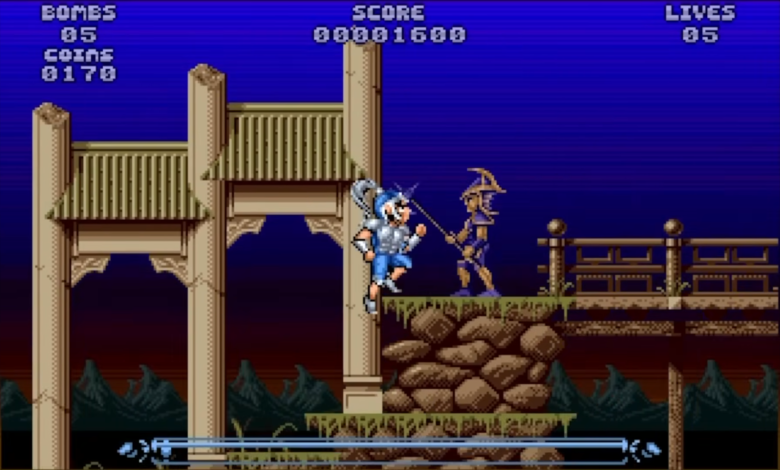
This approach was masterfully demonstrated in the game Leander. The technique hinges on the Amiga’s dedicated graphics coprocessor, known as the Copper. This component can be programmed to wait for specific positions on the screen and then execute instructions in sync with the monitor’s electron beam. By carefully timing these commands, a programmer can reuse the same hardware sprites multiple times across different screen areas. The key limitation is that no more than eight can appear on any single horizontal line, but by repositioning them line-by-line, the overall effect is one of dozens of independent objects.
This method allowed Leander to feature detailed information bars, intricate background elements, and numerous character sprites all moving concurrently. It wasn’t a simple trick, however. Utilizing the Copper in this intensive manner came at a cost, consuming precious processing cycles that would otherwise be available for game logic or sound routines. It required a deep, intimate understanding of the system’s timing and a delicate balancing act to ensure the game remained smooth and responsive. This kind of low-level optimization was a hallmark of elite programming on constrained hardware, similar to the ingenuity required to build a functional game within an extremely tight code footprint. Such feats transformed perceived limitations into opportunities for innovation, directly shaping the immersive experiences of the era.
(Source: Hackaday)