QNX 8.0 Developer Desktop Launches with Wayland & Xfce
▼ Summary
– QNX has released a Self-Hosted Developer Desktop, providing a full desktop environment that runs on QNX 8.0 for native development.
– This environment eliminates the need for cross-compilation, simplifying the process of developing software for the QNX real-time operating system.
– It is available under a free personal license for non-commercial use by hobbyists, students, and professionals.
– The current version is distributed as a QEMU-based virtual machine, tested on Ubuntu Linux, to overcome hardware compatibility limitations.
– The desktop includes the Xfce environment, GCC/LLVM toolchains, Python, and various code editors, with a native Raspberry Pi image being explored.
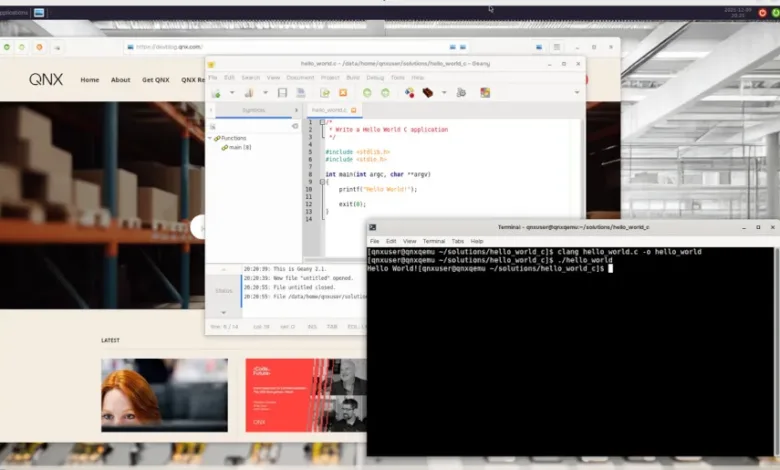
A new self-hosted development environment for the QNX real-time operating system has launched, offering developers a streamlined way to build applications directly on the platform. This QNX Self-Hosted Developer Desktop eliminates the traditional need for cross-compilation, allowing programmers to work natively within a full desktop environment running on QNX 8.0. Available under a free personal license for non-commercial use, it provides an accessible entry point for students, hobbyists, and industry professionals exploring the embedded systems OS.
The desktop experience is powered by the Xfce desktop environment running on the Wayland display server protocol. This combination delivers a modern, responsive graphical interface for development tasks. The system comes equipped with comprehensive compiler toolchains, including both GCC and LLVM/Clang, ensuring broad compatibility for various programming needs. Essential build utilities and Python are pre-installed, alongside popular code editors and IDEs such as Emacs, Geany, and Neovim, creating a ready-to-use workstation for software creation.
Currently, the distribution model centers on virtualization for ease of access and hardware compatibility. The initial release is distributed as a QEMU image and has been validated running as a virtual machine on Ubuntu Linux. This approach cleverly sidesteps potential driver and hardware support challenges, as QNX traditionally targets specific embedded hardware rather than the wide array of components found in standard PCs. Looking ahead, the development team has indicated plans to explore a native image for Raspberry Pi hardware, which would provide a low-cost, physical platform for hands-on experimentation.
This environment represents a significant shift in the QNX development workflow. By moving away from cross-compilation on a separate host system, developers can expect a more integrated and potentially less error-prone process. Compiling, testing, and debugging can occur within the same QNX instance, which is particularly valuable for real-time and system-level programming where timing and hardware interaction are critical. The inclusion of standard desktop tools and a familiar interface lowers the barrier to entry for those new to the platform while increasing productivity for experienced users.
For those interested in further details, the project is documented on the official QNX blog, which provides the latest information on availability, setup instructions, and future development plans.
(Source: Phoronix)