▼ Summary
– A new study reveals Roman soldiers guarding Hadrian’s Wall likely suffered from parasitic infections causing chronic nausea and diarrhea.
– Archaeologists frequently analyze ancient feces and soil samples to identify intestinal parasite eggs and learn about past health and living conditions.
– Prior research includes identifying parasites in a 7th-century BCE Jerusalem toilet and confirming a 5th-century CE Roman pot’s use as a chamber pot.
– These parasite studies also reveal broader historical shifts, such as dietary and settlement changes with the rise of agriculture.
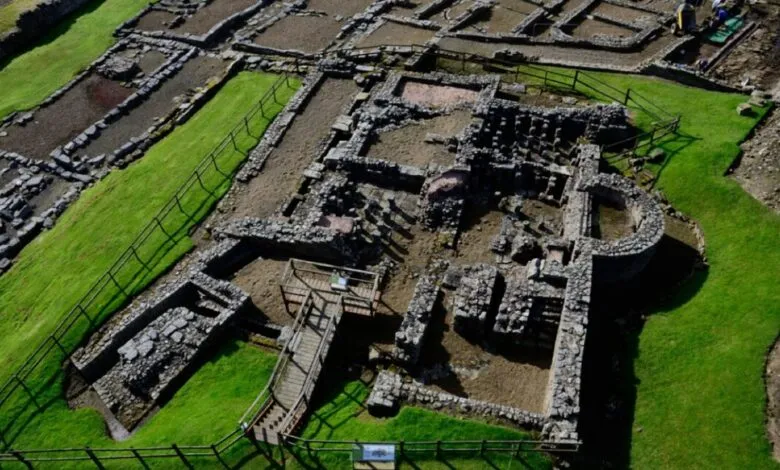
– The latest analysis focused on sediment from sewer drains at Vindolanda, a Roman fort south of Hadrian’s Wall known for its archaeological significance.
Life for a Roman soldier stationed at Hadrian’s Wall in the third century CE was undoubtedly harsh. Beyond the biting wind and relentless rain, new research reveals these troops also endured debilitating parasitic infections, adding chronic nausea and severe diarrhea to their list of daily struggles. A study published in the journal Parasitology analyzed ancient sediment and confirms that parasites were a persistent health issue for the frontier garrison.
Archaeologists frequently turn to ancient fecal matter to uncover details about past health and diet. By examining the remains of intestinal parasites, they gain insights into sanitation, food sources, and living conditions. For example, a 2022 analysis of soil from a luxurious seventh-century BCE villa near Jerusalem identified eggs from four parasitic species: whipworm, tapeworm, roundworm, and pinworm. This finding marked the earliest known record of roundworm and pinworm in that region.
In another project that same year, researchers examined residue on a ceramic pot from a fifth-century CE Roman villa in Sicily. The discovery of intestinal worm eggs provided strong evidence that the 1,500-year-old vessel was actually a chamber pot. Studies like these often compare parasites between different ancient communities, such as hunter-gatherers and early farmers, revealing significant shifts in diet and social organization with the advent of agriculture.
This latest research focused on the Roman fort of Vindolanda, situated just south of Hadrian’s Wall. Scientists analyzed sediment collected from the fort’s ancient sewer drains. The site of Vindolanda has a long history of exploration. Its ruins were first documented in 1586, with subsequent visitors uncovering a military bathhouse in 1702 and various altars. Serious archaeological work began in the 1930s. Vindolanda is renowned for the Vindolanda tablets, some of the oldest handwritten documents found in Britain, and for a contentious 2023 artifact that some argued was an ancient dildo, though others believed it was a phallus-shaped tool for spinning yarn.
The analysis of the sewer sediment provided direct evidence of the parasitic burden shouldered by the soldiers. The findings paint a vivid picture of the unsanitary conditions within the fort, where close quarters and primitive waste management likely facilitated the spread of these infections. This persistent health challenge would have significantly impacted the soldiers’ physical readiness and overall morale on the remote northern frontier of the Roman Empire.
(Source: Ars Technica)