New MacBook Pro Delivers Blazing Speed
▼ Summary
– The 2026 16-inch MacBook Pro features new M5 Pro and M5 Max processors, Wi-Fi 7, and significantly faster storage starting at higher capacities.
– Benchmark tests show the M5 Max offers substantial performance gains over M1-generation models, with CPU improvements up to 161% and GPU scores nearly doubling.
– The article suggests owners of M1 Pro or M1 Max models should only upgrade if their current laptop limits their work, such as needing to edit higher-resolution video.
– New connectivity features for upgraders include Thunderbolt 5, Wi-Fi 7, Bluetooth 6, an improved webcam, and an optional anti-glare display.
– For some users, the M5 MacBook Air or a 14-inch MacBook Pro with a regular M5 chip present lighter or cheaper alternatives that still outperform an M1 Pro.
Since its 2021 redesign with Apple Silicon, the 16-inch MacBook Pro has been the definitive choice for creative professionals. The formula has seen consistent, incremental updates each year. For 2026, the latest models introduce the M5 Pro and M5 Max chips, bringing substantial performance gains, Wi-Fi 7 connectivity, and significantly faster storage. This evolution prompts a key question for many users: is it finally time to upgrade from an M1 Pro or M1 Max machine?
We tested the new flagship against those original M1-generation laptops to find out. The results show a dramatic leap in capability, making a compelling case for users whose workflows are pushing the limits of their older hardware. The base M5 Pro model starts at $2,699 with an 18-core CPU, 20-core GPU, 24GB of RAM, and 1TB of storage. Stepping up to the M5 Max for $3,899 doubles the storage to 2TB and increases the GPU to 32 cores, while also offering double the memory bandwidth. Our fully-loaded review unit featured a 40-core GPU, 128GB of unified memory, and a 4TB SSD, showcasing the platform’s peak potential at a price of $6,149.
In benchmark comparisons, the performance delta is unmistakable. Against the M1 Max, the M5 Max delivers single-threaded CPU improvements between 65 and 76 percent. Its multi-threaded performance is even more impressive, showing gains from 124 to 161 percent. For graphics-intensive tasks, the 40-core GPU in the M5 Max nearly doubles the scores of the 32-core M1 Max GPU in standard tests. The gap is even wider compared to the M1 Pro, where the M5 Max more than triples GPU performance and scores nearly twice as high in application-based tests like PugetBench for Photoshop and Premiere Pro.
A major highlight is the storage speed. Apple’s claim of doubled SSD performance holds true in our testing, with read and write speeds for the M5 Max more than twice as fast as those on the M1 Pro and M1 Max models. This translates to noticeably snappier file operations and application loading. Beyond the core silicon, upgrading from an M1 machine also brings modern connectivity like Thunderbolt 5 and Bluetooth 6, along with a much-improved 12-megapixel webcam.
Yet, for many current owners, an upgrade may still be premature. The M1 Pro and M1 Max laptops remain exceptionally capable for a wide range of professional work, including 1080p video editing, graphic design, and audio production. Users not routinely handling native 4K or 8K footage or massive computational workloads may find their existing machines are perfectly adequate. The new performance tier is designed for those who have genuinely outgrown their current systems.
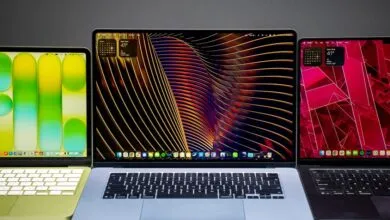
Interestingly, the performance of the new M5 chip in more affordable models also reshapes the upgrade landscape. The 14-inch MacBook Pro with a standard M5 offers a clear step up from an M1 Pro, while the fanless MacBook Air with M5 now delivers performance that is competitive with the older Pro chip. This presents a viable “downgrade” path for users who originally bought more power than they needed and now prioritize portability and cost.
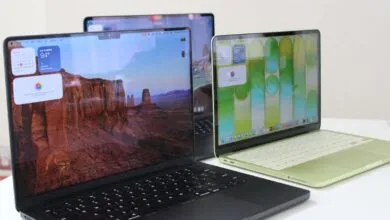
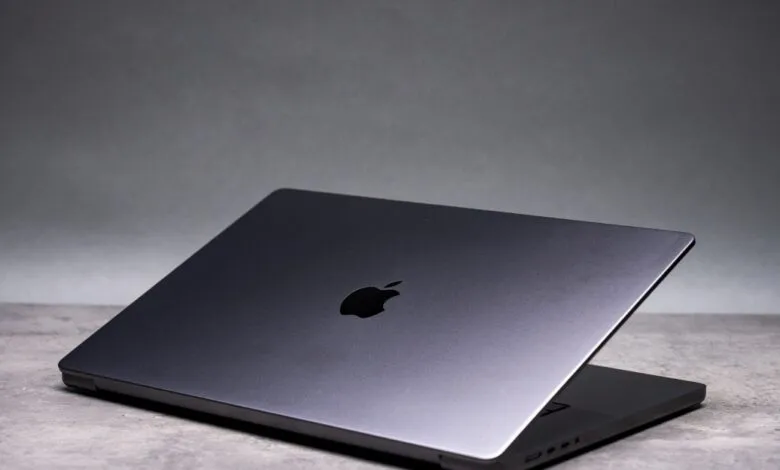
The 2026 MacBook Pro retains the beloved design, excellent mini-LED display, and robust port selection, including three Thunderbolt 5 ports, HDMI, and an SDXC card slot. The only noticeable external change is the updated keyboard with symbolic legends for keys like Return and Backspace, adopting a style familiar from iOS.
For the small percentage of users whose demanding projects are bottlenecked by their M1 systems, the M5 generation represents a significant and worthwhile performance jump. However, persistent rumors of a future redesign with a touchscreen OLED display may give some reason to wait. For everyone else, the existing M1 Pro and M1 Max MacBook Pros continue to be powerful, reliable tools. The latest models solidify Apple’s lead in pro laptops, but they specifically serve those who need the absolute fastest chip, memory, and storage available today.
(Source: The Verge)