TCL’s RayNeo Air 4 Pro Smart Glasses Launch at $249
▼ Summary
– TCL has released the RayNeo Air 4 Pro smart glasses, which are the world’s first with an HDR display and are designed for movies and gaming.
– These AR glasses are priced at $299, significantly undercutting competitors like Xreal and potentially disrupting the market.
– The glasses feature premium micro-OLED displays with high brightness and resolution, creating a virtual screen up to 201 inches.
– While excellent for entertainment, the RayNeo glasses lack some features of rivals, such as screen anchoring and adjustable screen size/distance.
– For productivity or advanced AR features, competitors like Xreal are better, but for pure entertainment value, the RayNeo Air 4 Pro offers a compelling option.
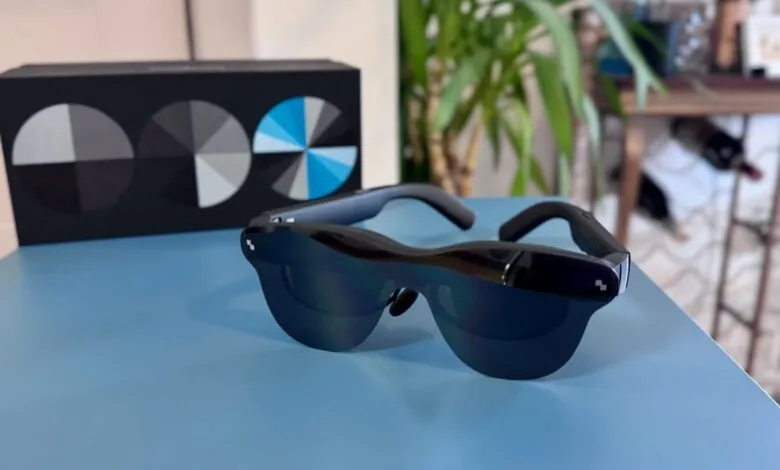
TCL has officially launched its RayNeo Air 4 Pro smart glasses, positioning them as a compelling and affordable entry into the augmented reality space. Priced at an introductory $249, these glasses aim to disrupt the market by offering high-end display technology at a fraction of the cost of many competitors. Alongside the standard model, TCL introduced two limited-edition Batman-themed versions, adding a collectible twist for fans. The core proposition is straightforward: these are devices designed primarily for immersive entertainment, functioning like a personal, wearable television.
The technical specifications are impressive for the price point. The glasses utilize dual micro-OLED displays powered by a Vision 4000 processor to project a virtual screen that feels up to 201 inches in size. A key selling point is the display’s peak brightness of 1,200 nits and support for HDR10, a combination previously unseen in smart glasses at this level. This results in vibrant, high-contrast visuals ideal for watching films or gaming. Audio is handled by a Bang & Olufsen surround sound system with four integrated speakers, aiming to complete the immersive experience without needing headphones.
In practical use, the visual quality for media consumption is a major strength. Watching high-action films or streaming video content delivers a crisp, engaging picture that largely lives up to the “head-mounted TV” description. The experience is not without its drawbacks, however. Some users may notice a slight flicker in the display under certain conditions. Furthermore, the glasses lack some advanced features found in rivals, such as the ability to anchor the virtual screen in a fixed position in your environment or to adjust the screen’s perceived distance.
This highlights the main trade-off with the RayNeo Air 4 Pro. For pure entertainment purposes, movies, gaming, and video streaming, they offer exceptional value. Their visual performance rivals or exceeds that of more expensive options like the Xreal 1S, which retails for a significantly higher price. The comfortable, relatively lightweight design makes them suitable for extended viewing sessions when connected to a compatible phone, laptop, or gaming console via the included USB-C cable.
However, if your goal extends beyond entertainment into productivity or a more fully-featured augmented reality experience, other options may be more suitable. Competing glasses often provide more sophisticated spatial computing features, such as multiple virtual screens for multitasking or stable screen anchoring, which the Air 4 Pro models do not support. For users who need a portable monitor replacement or more interactive AR applications, the feature set here is intentionally focused.
Ultimately, the RayNeo Air 4 Pro smart glasses carve out a clear niche. They make advanced display technology accessible to a broader audience, prioritizing a high-quality cinematic experience above all else. For early adopters and media enthusiasts curious about smart glasses but hesitant about a four-figure investment, this product represents a low-risk, high-reward entry point. The limited-time launch discount further sweetens the deal, making a compelling case for choosing immersion without overspending.
(Source: Mashable)