Resident Evil: Requiem Remains Terrifying on Switch 2
▼ Summary
– The author found *Resident Evil Requiem* to be a great, terrifying game and a solid experience on the Nintendo Switch 2.
– The game successfully merges two *Resident Evil* styles, allowing seamless swapping between a third-person action character and a first-person horror character.
– On the Switch 2, the game performs well functionally with no major technical issues in either portable or TV mode.
– The primary compromise on the Switch 2 is visual, with noticeably blurry textures and some odd physics that reduce immersion but aren’t game-breaking.
– This successful port is a positive sign for the Switch 2’s library, demonstrating its viability for major third-party titles despite graphical compromises.
The experience of playing Resident Evil: Requiem on the Switch 2 is a testament to how far portable gaming has come, delivering a genuinely terrifying and technically competent version of a major cross-platform release. My own playthrough was punctuated by a moment of pure dread, hunched over the handheld screen with headphones on, as a monstrous figure gave relentless chase through a shadowy corridor. The need to pause afterward wasn’t just for effect; it was a necessary breather, proving the game’s power to unsettle and its successful adaptation to Nintendo’s hardware.
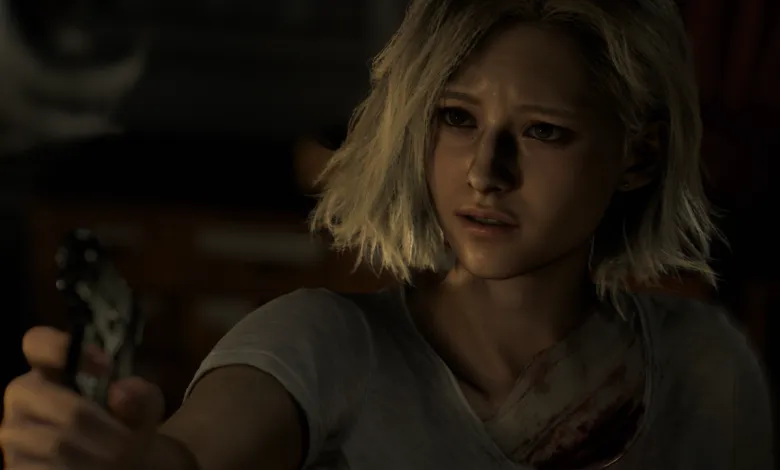
This launch is particularly significant. While titles like Tony Hawk’s Pro Skater 3+4 showed promise, Requiem represents the most substantial simultaneous multi-platform test for the Switch 2 to date. As a major action-horror title arriving on PS5, Xbox, PC, and Nintendo’s console all at once, it provides a clear look at the compromises and capabilities involved. The game itself ingeniously merges two distinct Resident Evil styles: the over-the-shoulder action of RE4 and the immersive first-person horror of Biohazard and Village. Players can switch seamlessly between grizzled veteran Leon Kennedy and rookie agent Grace, altering the perspective, and the panic level, on the fly.
From a performance standpoint, the Switch 2 version holds up remarkably well. I encountered no major frame rate drops or disruptive glitches during my time with it. One brief moment where an enemy corpse vanished did startle me, but it was an isolated incident. The game runs smoothly in both handheld and docked modes, which is the most crucial foundation for any port.
Visually, however, the concessions become apparent. The game does not match the sharp clarity or detailed textures found on more powerful systems. Environments and objects can appear noticeably fuzzy, especially when examined up close in Grace’s first-person view. Some awkward visual quirks, like hair physics occasionally defying gravity, can momentarily puncture the atmosphere. These aren’t deal-breakers, but they do remind you that this isn’t the definitive way to see the game’s grim artistry.
The release week underscored this point further, as Capcom also brought Biohazard and Village to the Switch 2. Revisiting the opening of Biohazard confirmed a similar pattern: solid, reliable performance paired with a noticeable softness in visual fidelity. Given the known power gap between the Switch 2 and its competitors, this outcome is arguably the best one could hope for. A port that is “good enough” and fully playable is a victory, significantly enriching the console’s library and offering the irreplaceable benefit of taking such intense experiences on the go.
Requiem is a positive indicator for third-party support on the platform, but its true impact depends on whether such releases become commonplace. The next major benchmark arrives soon with Capcom’s Pragmata in April, another multi-platform launch including the Switch 2. If it maintains this standard of playable compromise, the future for blockbuster games on Nintendo’s hybrid system looks promising, fuzzy textures and all.
(Source: The Verge)