2025 Phishing Trends: Protect Your Security Strategy Now
▼ Summary
– Phishing attacks in 2025 became truly omni-channel, with roughly one in three attacks occurring outside of email via platforms like LinkedIn DMs and Google Search.
– Criminal Phishing-as-a-Service kits, which enable sophisticated attacks like real-time MFA bypass, have become dominant and widely accessible to attackers.
– Attackers are employing advanced evasion techniques, such as bot protection and multi-stage page loading, to bypass traditional security tools and remain undetected.
– They are circumventing phishing-resistant authentication and other controls through methods like consent phishing, device code phishing, and new techniques like ConsentFix.
– Security teams must adapt by recognizing that email-only protection is insufficient and that detection in the browser is critical, as modern attacks primarily target users there.
The landscape of digital threats is constantly shifting, and phishing attacks in 2025 demonstrated a dramatic leap in sophistication and reach. Cybercriminals have fully embraced identity-focused strategies, making these social engineering schemes more potent and dangerous than ever before. Security professionals must now confront a reality where traditional defenses are increasingly inadequate against these evolving methods.
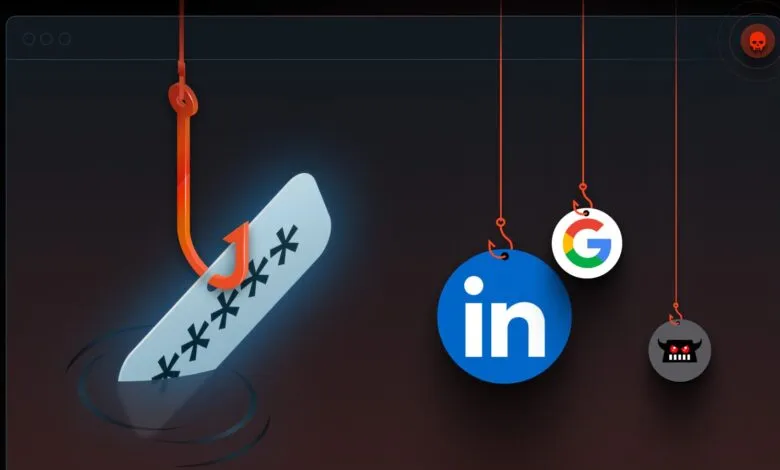
A primary shift has been the move toward omni-channel phishing operations. While email remains a significant vector, attackers are aggressively exploiting other platforms. Our data indicates that approximately one-third of all detected phishing attempts now originate outside the inbox. LinkedIn direct messages and manipulated Google Search results have become favored channels. This approach offers clear advantages: it bypasses well-established email security filters, requires no sender reputation, and targets users on platforms where they are less suspicious. A corporate executive might be more inclined to trust a message from a seemingly legitimate LinkedIn profile than an unsolicited email. Furthermore, search engines provide a fertile ground for attackers through compromised high-traffic sites, malicious advertisements, or specially crafted websites designed to rank well. This facilitates broad “watering hole” attacks aimed at harvesting credentials that are often sold within the criminal ecosystem or used to launch larger breaches.
The technical backbone of modern phishing is increasingly powered by criminal Phishing-as-a-Service kits. Tools like Tycoon, NakedPages, and various Evilginx derivatives enable real-time, Attacker-in-the-Middle attacks that can bypass multi-factor authentication by stealing active sessions. This commercial model lowers the barrier to entry, allowing less skilled criminals to deploy advanced campaigns. The competitive market drives constant innovation, making MFA bypass a standard feature and pushing attackers to find ways around even phishing-resistant authentication through downgrade attacks. To evade detection, these kits employ sophisticated methods such as custom bot protection to block security crawlers, complex redirect chains that hide malicious pages among legitimate sites, and client-side JavaScript that only loads phishing content under specific conditions. This creates an environment where malicious pages can operate undetected for long periods, rendering simple URL blacklisting nearly useless.
Attackers are also developing novel methods to circumvent security controls, looking beyond the standard login process. Techniques like consent phishing and device code phishing trick users into authorizing malicious OAuth applications. Another significant threat is the rise of attacks like ClickFix, where users are socially engineered into running malicious code locally to deploy info-stealing malware. We have also identified a new, browser-native technique called ConsentFix, which tricks a user into pasting a URL containing OAuth key material, establishing a malicious connection without any executable file, thereby bypassing endpoint detection tools entirely. These methods underscore that phishing is no longer just about stealing passwords and MFA codes; it’s about exploiting any available trust mechanism to gain account access.
For security teams preparing for 2026, a fundamental shift in perspective is required. Defenses must acknowledge that protecting email alone is insufficient, network monitoring tools often fail against modern phishing pages, and even perfectly implemented phishing-resistant authentication is not a silver bullet. Detection and response capabilities are now paramount, yet most organizations lack visibility into a critical attack surface: the web browser. Since these advanced attacks predominantly occur within the browser as users work online, it represents both the primary threat vector and a major visibility gap. A browser-focused security approach can provide the necessary detection and response against AiTM phishing, malicious extensions, and session hijacking, while also enabling proactive measures to harden the identity attack surface across all business applications.
(Source: Bleeping Computer)