▼ Summary
– The CDC has suffered severe damage, including funding cuts, staff reductions, and a physical attack where its headquarters was shot at with over 500 rounds.
– Health Secretary Robert F. Kennedy Jr., an anti-vaccine activist, has sidelined and overruled the agency’s scientists to advance an anti-science agenda.
– CDC Director Susan Monarez was fired by Kennedy after refusing to approve vaccine recommendations from a panel of skeptics he selected.
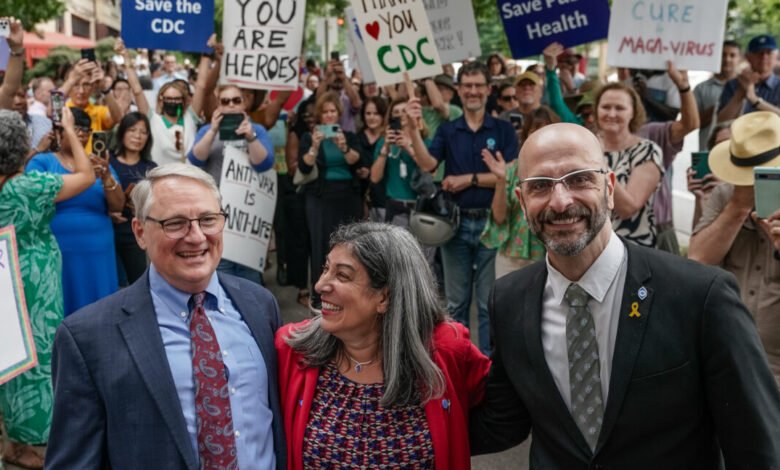
– Following Monarez’s firing, three top CDC leaders—Drs. Demetre Daskalakis, Debra Houry, and Daniel Jernigan—coordinated their resignations.
– Dr. Daskalakis, who led the National Center for Immunization and Respiratory Diseases, managed responses to major diseases including mpox, measles, and COVID-19.
The Centers for Disease Control and Prevention (CDC) faces a profound crisis, its foundational role in American public health under direct assault from political leadership. A severe reduction in funding and staffing has crippled operations, while the agency’s very headquarters became a target, sustaining hundreds of bullet rounds in an attack symbolizing the hostility its experts now confront daily. This physical and budgetary damage is compounded by systematic efforts from Health Secretary Robert F. Kennedy Jr. to dismantle scientific integrity, sidelining career professionals to advance a personal agenda hostile to established medical science.
Kennedy, a longtime activist against vaccination, has moved decisively to reshape the agency. The most dramatic signal came with the abrupt termination of CDC Director Susan Monarez in late August, merely weeks after her Senate confirmation. Her dismissal followed a principled stand; she refused to rubber-stamp vaccine guidance drafted by a panel Kennedy personally assembled, a group noted for its skepticism toward mainstream immunology. Her firing did not occur in isolation but triggered an immediate leadership exodus, plunging the agency into operational disarray.
In a coordinated protest, three of the CDC’s most senior officials submitted their resignations simultaneously. Dr. Demetre Daskalakis, director of the National Center for Immunization and Respiratory Diseases, departed alongside Dr. Debra Houry and Dr. Daniel Jernigan. Daskalakis’s exit represents a staggering loss of expertise; he was the operational leader managing national responses to mpox, measles, seasonal influenza, avian flu, COVID-19, and RSV. His departure, and that of his colleagues, strips the agency of critical institutional knowledge and leadership during ongoing public health threats.
The mass resignation underscores a broader pattern where scientific judgment is being overruled by ideological directives. Kennedy’s appointments to key advisory roles have consistently favored individuals who share his controversial views on vaccines, effectively creating an echo chamber that marginalizes decades of epidemiological research. This environment has demoralized the remaining workforce, who see their recommendations ignored and their authority undermined by political appointees with scant public health credentials.
Former directors of the CDC have voiced grave concerns, warning that these actions represent an existential threat not just to the agency, but to the nation’s health security. They argue that degrading the CDC’s capacity and corrupting its scientific process leaves the country dangerously vulnerable to emerging infectious diseases and undermines public trust in health guidance. The current trajectory, they caution, risks repeating the worst failures of past health crises, where political interference led to preventable suffering and death.
The consequences of this institutional dismantling are already becoming tangible. Morale among career scientists has plummeted, with many fearing retaliation for upholding evidence-based practices. Critical surveillance programs for tracking disease outbreaks face delays and data gaps, while long-standing partnerships with state health departments and global allies are strained by uncertainty and mistrust. The agency’s ability to mount a coherent, swift response to the next pandemic is now in serious doubt.
This standoff transcends typical political disputes over budgeting or policy. It is a fundamental clash between empirical science and ideological conviction, with the nation’s primary health defense mechanism caught in the crossfire. The resignations of seasoned leaders like Daskalakis, Houry, and Jernigan are not merely personnel changes but a stark alarm about the integrity of American public health. Without a course correction that restores autonomy and respect for scientific expertise, the CDC’s capacity to protect the population will continue to erode, with potentially dire costs for national and global health.
(Source: Ars Technica)