Lawmakers: NASA Delays Need Consequences as China Advances
▼ Summary
– US lawmakers are concerned that China may land humans on the Moon before the US returns with the Artemis Program.
– A House subcommittee is reviewing NASA policy due to worries about Chinese competition in civil spaceflight.
– Former NASA Administrator Mike Griffin strongly criticized the Artemis Program’s reliance on unproven, refuelable lunar landers.
– Griffin argued the current architecture is unlikely to work, stating “it cannot work” due to its technical complexity.
– Some legislators noted China’s success stems from sticking to long-term plans, unlike NASA’s whipsawed programs.
A growing sense of urgency is taking hold among U.S. lawmakers as they confront the possibility that China may achieve a crewed lunar landing before NASA’s Artemis program returns American astronauts to the Moon. While recent budget discussions have not directly addressed the funding needed for a near-term landing, congressional scrutiny is intensifying. A House subcommittee on space and science recently held a hearing to examine NASA’s strategy and express serious concerns about maintaining U.S. leadership in space amid rapid Chinese advancements.
During the session, experts were pressed on how NASA could bolster its position and accelerate the Artemis timeline. The most pointed critique came from former NASA Administrator Mike Griffin, who has consistently questioned the program’s foundational architecture. Griffin took aim at the plan’s reliance on a complex, unproven method of sustainability involving reusable landers that require multiple refueling missions in orbit.
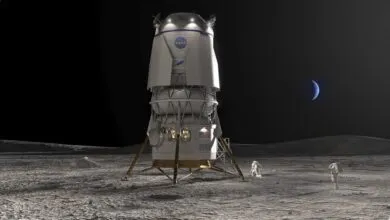
“The bottom line is that an architecture which requires a high number of refueling flights in low-Earth orbit, no one really knows how many, uses a technology that has not yet ever been demonstrated in space, is very unlikely to work, unlikely to the point where I will say it cannot work,” Griffin stated. While he did not name specific companies, his comments clearly referenced systems like SpaceX’s Starship and Blue Origin’s Blue Moon lander, which are central to NASA’s current approach.
Several representatives observed that China appears more disciplined in setting and adhering to long-term exploration goals, whereas NASA’s objectives often shift with changing political administrations. They questioned whether consistency itself was the key to success. Griffin countered that commitment is only valuable if the underlying plan is sound. He argued that China’s methodical, Apollo-like strategy is logical and proven, while persisting with an unworkable plan for the critical Artemis III mission and beyond serves no purpose. The hearing underscored a pivotal moment for U.S. space policy, highlighting a demand for accountability and results as international competition reaches new heights.
(Source: Ars Technica)