Airlines and Airports Rebound From Shutdown
▼ Summary
– The longest US government shutdown ended, raising hopes it would resolve airport delays and cancellations ahead of the busy Thanksgiving travel period.
– Aviation experts warn of scattered delays and cancellations as airlines and crews recover from weeks of acute staffing shortages caused by the shutdown.
– The FAA had required airlines to cancel up to 6% of flights at 40 busy airports to maintain safety as air traffic controllers missed paychecks.
– Residual effects from the shutdown could last for days or longer, compounded by existing controller shortages and halted hiring processes.
– Federal workers, including controllers, may wait weeks for back pay, and the shutdown may deter future recruitment due to job instability.
The recent conclusion of the longest government shutdown in US history brings a collective sigh of relief for air travelers, yet the aviation system faces a challenging recovery period just as the busy Thanksgiving holiday approaches. While federal operations have resumed, airlines and airports are now working to stabilize schedules and restore full staffing levels after weeks of disruption.
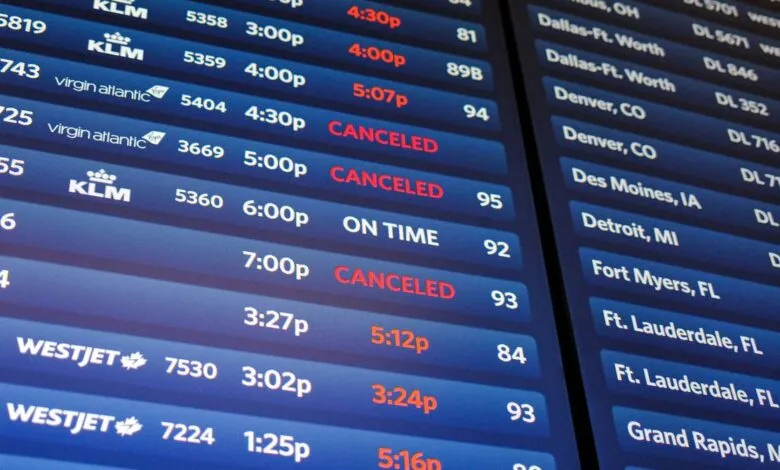
Passengers should brace for scattered flight cancellations and delays in the coming days. Aviation specialists point out that carriers need time to reposition aircraft and crew members following severe staffing shortages. Last week, the Federal Aviation Administration mandated that airlines cancel up to six percent of their flights at roughly forty of the nation’s busiest airports. Officials cited airspace safety concerns, noting that many air traffic controllers and security personnel had gone without pay for two consecutive pay periods. These cancellations, combined with an insufficient number of controllers on duty, triggered widespread travel interruptions nationwide.
Distinguishing shutdown-related delays from typical holiday travel snarls won’t be straightforward over the next several days. Tim Kiefer, a former air traffic controller now teaching at Embry-Riddle Aeronautical University, observes that restoring normal operations quickly is a complex task. He adds, “Even without a government shutdown, you would still encounter delays due to weather, mechanical problems, or routine staffing shortages.”
Chris Sununu, president and CEO of Airlines for America, emphasized in a statement that airlines cannot simply “flip a switch” to return to normal immediately after a government funding bill passes. He warned that residual effects from the shutdown will linger for days.
Some consequences may persist even longer as aviation workers cope with yet another interruption to their income and work routines. Federal employees have endured four shutdowns over the past twenty years. Air traffic controllers, in particular, have faced extended work hours amid staffing shortfalls for nearly fifteen years. Factors like years of under-hiring, mandatory retirement at age fifty-six, and COVID-related training pauses have slowed the pipeline for certifying and placing new controllers. Training a new air traffic controller typically takes about two years, and can extend to five.
Unlike during previous government closures, the FAA’s training academy in Oklahoma City remained open, allowing trainees and instructors to continue, albeit without pay. However, the hiring process for new controllers was suspended throughout the shutdown. The FAA has not provided details on when or how it plans to restart recruitment.
Kiefer raises concerns about the shutdown’s impact on future recruitment, asking, “Does this deter people from applying? There’s a real risk that potential candidates will decide they don’t want a job where their paycheck depends on the appropriations process every sixteen months.”
When it comes to back pay, federal employees may wait weeks to receive their full compensation. Reflecting on the 2019 shutdown, Kiefer noted that he did not receive his complete paycheck until approximately five weeks after the government reopened.
(Source: Wired)