Polestar owners stranded after EV brand exits US market
▼ Summary
– Polestar announced it will stop selling vehicles in the US starting with the 2027 model year after the federal government denied authorization due to a rule banning cars with Chinese-made connected vehicle software.
– Owners and dealers face uncertainty about service, software updates, lease returns, and vehicle value, with some owners feeling unfairly burdened by the sudden market value loss.
– Volvo, also majority-owned by China’s Geely, received Commerce Department authorization to continue US sales, creating frustration among Polestar owners.
– Dealers have ongoing legal obligations for warranties and leases despite the sales halt, and some may downsize or close due to the financial strain of having no new vehicles to sell.
– Polestar states it will honor warranties and maintain service support, but the long-term dealer network and service map remain uncertain as some facilities may shut down.
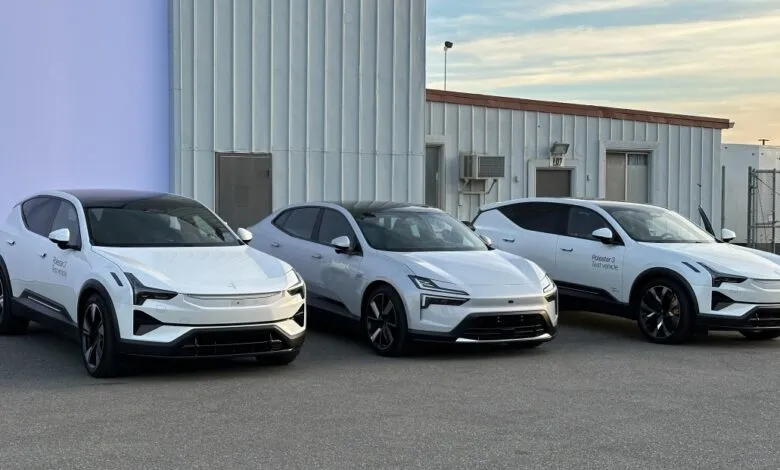
Last month, the automotive world was caught off guard when Polestar abruptly announced its withdrawal from the US market. The decision stemmed from the federal government’s denial of authorization to continue selling vehicles, triggered by a rule that bans cars equipped with Chinese-made connected vehicle software. Though headquartered in Sweden, Polestar is majority-owned by China’s Geely, and the company will stop US sales starting with the 2027 model year.
For thousands of Polestar owners and dozens of American dealers, this news sparked a wave of anxiety. Questions flooded in: Who will service these vehicles? Will software updates continue? And at a time when EV depreciation is at record highs, what happens to the resale value of their cars? Many are searching for someone to blame, but clear answers remain elusive.
“It feels like we’re the ones left holding the bag, with no compensation for the sudden loss in market value on cars we just bought or leased,” said DL Byron, a Washington state inventor and content creator. He picked up a certified pre-owned Polestar 2 just days before the company’s exit announcement. “At this point I have to trust that Polestar will honor its warranty and service commitments. We deserve better.”
Adding salt to the wound, Volvo , also majority-owned by Geely , received authorization from the Commerce Department to keep selling in the US despite its Chinese ties. That discrepancy stings for Polestar loyalists.
“The ‘brand-within-a-brand’ model failed in the U. S., and that’s on Polestar , not on the owners who bought in,” Byron told The Verge.
Matthew Haiken, who runs a Polestar dealership in Short Hills, New Jersey, explains that state franchise laws typically protect dealers when an automaker goes bankrupt or voluntarily exits the US. Those safeguards exist because dealers invest heavily in exclusive signage, long-term leases, and specialized parts. But this case is unprecedented: Polestar isn’t failing financially or leaving due to poor sales. It’s being forced out by a Biden-era rule banning connectivity software from “countries of concern,” including China, Russia, and Iran.
“This is the first time that anyone has said, ‘Hey, this is not us. It’s outside our control. It’s the government,’” Haiken told The Verge. “So we’re left very vulnerable.”
Even if new vehicle sales stop, Haiken’s dealerships face ongoing obligations. New Jersey mandates an eight-year battery warranty, while California requires 10 years or 150,000 miles. Dealers must remain available for warranty repairs years into the future, even after sales cease. They also manage lease portfolios, meaning they’ll need to accept returns, buy back vehicles, and resell them used.
“It’s still too new to know what the future holds,” Haiken said. “We have to be here for our customers, but what does that mean? How does it work? I don’t know at this point.”
Polestar insists it’s working with retail partners to manage the transition. “Existing Polestar owners and lease customers will continue to receive the same level of support and access to service as they do today,” spokesperson Michael Ofiara said in a statement. “All existing warranties remain in effect and will continue to be honored in accordance with their terms and conditions.”
This situation has almost no precedent. Unlike Fisker, which went bankrupt and left customers stranded, Polestar will continue operating in other countries. The company claims that “94 percent of retail sales volumes in the first quarter of 2026 originated from markets outside the US,” though some US dealers dispute that figure.
Haiken intends to stay in business as long as possible, especially since deep discounts , up to $25,000 off on Polestar 3 and Polestar 4 models , have boosted sales. He sees this as proof that customers still trust the dealer network. But other dealers may close. On Reddit, a Polestar lessee reported that service centers in San Francisco and San Jose are dissolving, potentially forcing him to drive over 300 miles to Los Angeles to return his vehicle. (A dealer responded that Volvo locations in Marin County might accept it.) Polestar told Reuters it has 32 service centers in the US, many shared with Volvo.
“If more dealer groups walk away, what does the service map look like?” Byron asked. “Polestar’s statement promises a maintained service network. The open question is whether they’ll run it themselves, the way Rivian and Tesla do.”
Haiken says his dealership will need to repurpose some facilities, and others face tough choices. A million-dollar dealership with no cars to sell becomes a liability. Volvo, which spun off Polestar, is unlikely to share retail and service space with a defunct brand forever.
“I don’t think there’s excess capacity there,” Haiken said. “Nor does a brand that invests millions of dollars in building equity and marketing want another brand infringing on their footprint.”
He predicts many Polestar dealers will downsize or close entirely. It’s a bleak moment for the brand and for EVs in general. Automakers are struggling to pivot to cheaper, more profitable battery-powered vehicles amid policy shifts, and US EV sales dropped 22 percent year over year in the second quarter of 2026.
Still, Haiken remains optimistic about electric vehicles.
“EV , the drive, the instant torque, the lower costs of ownership over the life of the car , is a superior tech,” he said. “And at the end of the day, I know it’s gonna win.”
(Source: The Verge)