Instagram & TikTok: Your Content Sells Products
▼ Summary
– Instagram added a “Shop the look” feature to an influencer’s posts without her consent, linking to cheap knockoffs instead of her promoted items.
– Meta claims this is a limited test to help users explore products and does not take a commission, but it damages influencer trust and income.
– TikTok has a similar “Find similar” feature that uses AI to recommend products from videos, which has even been applied to sensitive content from Gaza.
– The creator economy now exploits non-influencers through user-generated content ads, turning everyday social media users into unwitting product promoters.
– Social media algorithms have made everyone a potential influencer, often without their knowledge or consent, fundamentally changing online advertising.
The line between personal content and commercial advertising on social media is vanishing, with platforms like Instagram and TikTok now automatically attaching shopping links to user posts. This shift transforms everyday photos and videos into unsanctioned product promotions, raising serious questions about consent, creator income, and the fundamental nature of our online feeds. What began as a space for connection has increasingly become a shopping recommendation engine, often operating without the knowledge of the people whose content is being used.
A recent incident involving influencer Julia Berolzheimer highlighted this intrusive new reality. With over a million followers, Berolzheimer discovered that Instagram had added a “Shop the look” button to her posts without her permission. The links did not connect to the specific brands she partners with and earns commission from. Instead, they directed her audience to cheap knockoffs from unfamiliar companies, falsely associating her image and credibility with products she did not endorse. For influencers whose livelihoods depend on trusted recommendations, this kind of automated feature can damage reputations and divert crucial income.
Meta, Instagram’s parent company, described the button as a “limited test” intended to help users explore products. A spokesperson stated that Meta does not take a commission on these sales and is refining the feature based on feedback. However, the business implications are significant. When a platform intervenes to place its own product links, it effectively inserts itself as a middleman, potentially siphoning revenue away from the content creator. This dynamic disrupts the established economic relationship between influencers, their audiences, and the brands they choose to promote.
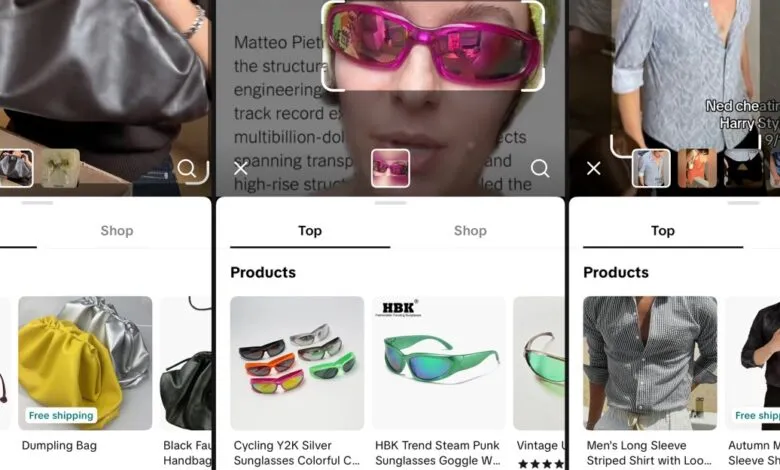
The issue extends far beyond professional influencers. TikTok has rolled out a nearly identical feature called “Find similar.” When a viewer pauses a video, the button appears, using AI to scan the content and suggest lookalike items for sale on TikTok Shop. In testing, the tool generated product recommendations from a wide range of videos, from a stranger’s sunglasses to children’s entertainment content. Most alarmingly, it was even applied to videos documenting the conflict in Gaza, crassly generating shopping prompts from scenes of devastation. Users typically have no idea their videos are being used this way, and the option to disable the feature is often buried deep within account settings.
This automated commercial layer reflects a broader transformation in digital marketing. The traditional model of brands partnering with influencers for their large, engaged audiences is being supplemented, and sometimes supplanted, by strategies that leverage anyone’s content. A growing sector known as user-generated content (UGC) hires individuals not for their follower count, but simply to produce authentic-looking photos and videos. Platforms like Fiverr are filled with offers to create such content for as little as twenty dollars, turning creation into a form of gig work. In extreme cases, even personal photos snatched from the web can end up promoting products, as one journalist discovered when a picture of her and her husband was used to sell picture frames.
The early promise of the creator economy suggested that anyone could achieve influence and income. While success still requires considerable luck, the underlying mechanics have shifted. Recommendation algorithms now treat all content as potential ad space, regardless of the creator’s intent or following. The massive growth of influencer marketing, especially during the pandemic, created an insatiable demand for promotable content. Features like “Shop the look” and “Find similar” represent a cynical fulfillment of the “everyone is an influencer” idea. Our personal posts, our casual videos, and even documentation of global events can be co-opted to drive sales, often without our knowledge or consent, fundamentally changing what it means to share anything online.
(Source: The Verge)