▼ Summary
– Ultrahuman launched the Ring Pro, a new smart ring with up to 15 days of battery life and a redesigned form factor priced at $479, available for global pre-order (excluding the U.S.) with March shipments.
– The launch aims to revive its U.S. business, which was disrupted in late 2025 after a patent dispute with Oura led to an import ban on new inventory, despite the U.S. accounting for 45% of its daily active users.
– Alongside the ring, Ultrahuman introduced Jade, a real-time “biointelligence” AI system that provides personalized health insights and recommendations, available to all users without a subscription.
– The company is operating at a $150 million annual revenue run rate and remains profitable, though margins are expected to narrow due to litigation costs, tariffs, and product redesign efforts.
– Ultrahuman holds the second position in the growing global smart ring market, which saw shipments surge nearly 80% in 2025, with leadership defined by sensor accuracy and AI-driven insights.
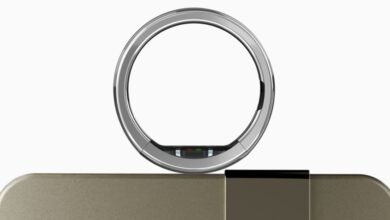
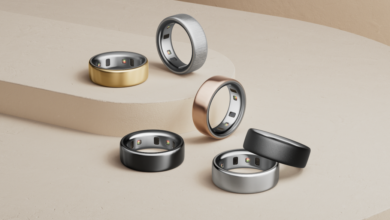
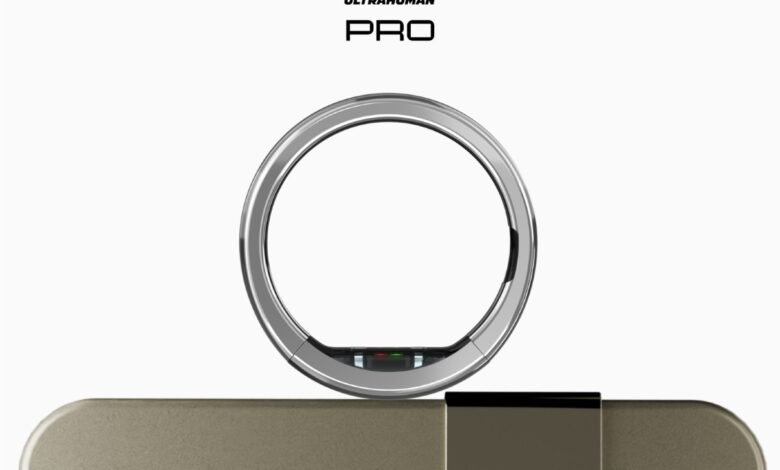
Ultrahuman has launched its latest smart ring, the Ring Pro, marking a strategic push to regain its footing in the crucial U.S. market. This third-generation device boasts a significantly extended battery life of up to 15 days and introduces a completely redesigned form factor, engineered specifically to navigate past a recent patent dispute that temporarily halted its American operations. Priced at $479, the Ring Pro is now open for global pre-orders, with shipments slated to begin in March, though U.S. availability awaits final regulatory clearance.
The company’s expansion into the United States faced a major obstacle in October 2025. A ruling by the U.S. International Trade Commission in favor of competitor Oura in a patent case blocked Ultrahuman from importing new inventory. This was a substantial setback, as the U.S. represented approximately 45% of Ultrahuman’s global user base of around 700,000 daily active users. In response, the Bengaluru-based startup developed the Ring Pro with a novel design to work around the contested patents. Co-founder and CEO Mohit Kumar confirmed the device has been submitted to U.S. Customs and Border Protection for evaluation to ensure its legal importation.
Despite the challenges, Ultrahuman maintains strong financial health, operating at an annualized revenue run rate of about $150 million. The company reported $64 million in operating revenue for the fiscal year ending March 2025 and remains profitable after tax, though Kumar notes margins may tighten due to litigation expenses, tariffs, and the costs associated with the product redesign.
Accompanying the new hardware is the launch of Jade, a real-time “biointelligence” system. This platform analyzes user health data across Ultrahuman’s ecosystem to generate personalized insights and actionable recommendations. Unlike many AI tools that primarily review past data, Jade is built to provide immediate guidance. Kumar emphasized that Jade will be available to all users, including those with the older Ring Air model, and does not currently require a separate subscription fee.
The Ring Pro itself incorporates several technical upgrades. It features a redesigned heart-rate sensing architecture aimed at improving signal quality during sleep and a new dual-core processor to boost data accuracy and on-device computing power. The device can store up to 250 days of health data and is slightly heavier than its predecessor, the Ring Air. To complement the ring, Ultrahuman introduced a Pro Charger with an impressive 45-day battery life, supporting on-the-go charging and enabling faster updates through a direct connection. This charger also supports universal Qi wireless charging.
Ultrahuman’s user base is notably skewed toward women, who now account for about 68% of users, up from 65% the previous year. This growth reflects strong adoption of the company’s dedicated women’s health features. Beyond hardware, Ultrahuman offers several subscription services, including a coaching program called PowerPlugs, the Blood Vision metabolic panel, and continuous glucose monitoring. These subscriptions contribute roughly 16% of total revenue, with Blood Vision alone making up 5% to 6% of the business.
Looking at the broader market, Ultrahuman identifies the UK, Canada, Australia, and India as its key growth regions. Investment in local customer support in India has helped that market contribute 8% to 9% of overall revenue. Industry data underscores the smart ring segment’s rapid expansion. Counterpoint Research reported that global shipments grew nearly 80% year-over-year in 2025, with Oura maintaining a dominant market share and Ultrahuman holding the second position. Separate data from IDC indicated shipments rose about 30% in Q3 2025, with Ultrahuman capturing approximately a quarter of the market during that period.
Founded in 2019, Ultrahuman has raised about $55 million from investors such as Alpha Wave Incubation, Blume Ventures, Steadview Capital, and Nexus Venture Partners. To meet anticipated demand for the Ring Pro, the company is currently scaling up its production capacity for the months ahead.
(Source: TechCrunch)