VR Developers Stunned by Sudden Platform Shifts
▼ Summary
– The VR industry is experiencing a significant shift, with developers facing distress due to a lack of new consumer hardware releases and declining investment, forcing many to diversify their platforms.
– Several studios, like Resolution Games, are finding success through cross-platform releases, while others, such as Cloudhead Games, have undergone major layoffs and strategic resets.
– Subscription services from Sony and Meta provide some revenue, but developers worry about becoming overly dependent on them as overall income shrinks without new hardware driving growth.
– Developers face critical decisions about input methods and design, such as whether to build for hand-tracking or new controllers, and whether to create spatial volumes or fully immersive worlds.
– The future distribution of major VR exclusives is uncertain, with high-profile games like Half-Life: Alyx and Batman: Arkham Shadow facing different platform pressures, as studios recalibrate for a smaller near-term market.
The virtual reality development landscape is entering a period of significant transition, marked by a surprising lack of new consumer hardware during a critical sales season. This shift has left many experienced creators reassessing their strategies and financial stability within an industry that feels increasingly uncertain. Conversations with numerous developers reveal a community grappling with the overwhelming cost of reaching a fragmented audience and concerns over where major platform holders are directing their investments.
Several studio heads expressed their views cautiously, preferring to remain unnamed to protect ongoing business relationships. Tommy Palm of Resolution Games offered a more public perspective, noting a clear market shift. “We are definitely seeing a shift in the market and a need to diversify in terms of platforms,” Palm stated. His company’s strategy of launching titles like Demeo across multiple systems has provided a buffer, helping it exceed sales goals despite the broader industry challenges.
Other studios are feeling the pressure more acutely. Doug North Cook of Creature described an environment that “leaves no room for error.” He observed that while holiday sales occurred, they failed to match the surge a new headset generation typically inspires. “I fully expect most studios will have a difficult time finding a positive path forward this year as industry trends, lack of investment, and declining per-developer revenue hit everyone hard,” he warned. Despite this, his label continues to push forward with ambitious projects.
The strain has led to painful downsizing. Cloudhead Games, known for Pistol Whip, recently laid off 40 employees. Founder Denny Unger spent the first week of the new year restructuring the now 16-person team and assisting former colleagues in finding new work. The studio confirmed its upcoming title will be available on the anticipated Steam Frame platform.
A growing reliance on subscription services from Sony and Meta provides a revenue stream for some, but others worry it represents a larger share of a shrinking overall pie. With Meta’s third-party Horizon OS program shelved and no new Quest headset in 2025, developers dependent on these ecosystems face tough choices about sustainability and creative independence.
These platform uncertainties force difficult technical decisions. Should developers prioritize controller-free hand tracking or design for new input devices like Valve’s different controllers? Do they build spatial computing volumes or fully immersive worlds? The promise of ubiquitous eye tracking in future headsets offers hope for more responsive software, but its adoption timeline remains unclear.
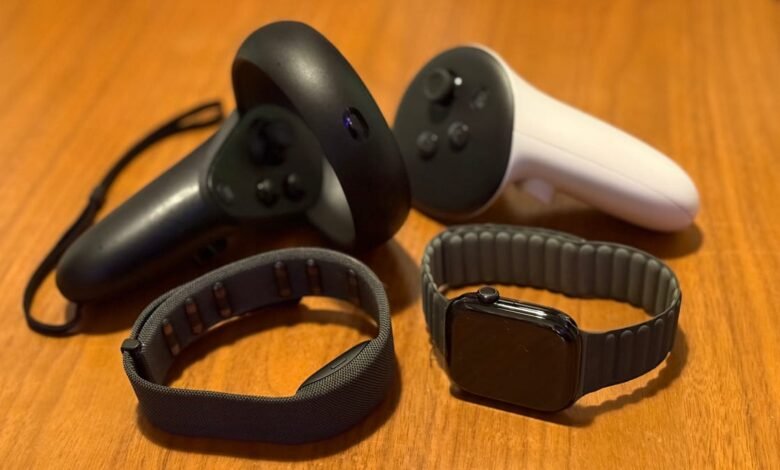
The future of high-end VR content is also in question. Ryan Payton of Meta’s Camouflaj studio expressed a passionate desire to create a Wolverine VR game, envisioning an experience powered by neural wristbands for precise gesture control. This highlights a divergence between Meta’s apparent focus on lightweight AR glasses for everyday tasks and the deep, presence-driven VR experiences developers want to build. Without third-party Horizon OS headsets to expand the ecosystem, developers are left wondering what role they will play in Meta’s long-term plans.
The paths of two flagship titles, Batman: Arkham Shadow and Half-Life: Alyx, illustrate the coming platform conflicts. Efforts are underway to optimize Alyx for the standalone Steam Frame, while Batman may face pressure from PC users and complex publishing politics regarding storefront availability. This creates a scenario where exclusive, platform-owned software finds itself at the center of competing distribution pressures.
As Nintendo prepares to relaunch the Virtual Boy and Apple iterates on visionOS, the market awaits coherent strategies from Sony and a final review of Valve’s Steam Frame. For now, veteran VR studios remain committed but are soberly recalibrating expectations for a smaller, more challenging market in the immediate future, weighing difficult decisions on where to focus their increasingly precious resources.
(Source: Upload VR)