Private Equity Deal Signals Decline of U.S. Legacy Rockets
▼ Summary
– Rocketdyne was the dominant US manufacturer of large liquid-fueled rocket engines for decades, powering iconic vehicles like the Saturn V and the Space Shuttle.
– Its historical dominance began to erode after the Cold War, with the company developing only one major new engine design (the RS-68) from the 1990s onward.
– The company underwent multiple ownership changes, starting as part of North American Aviation and eventually being sold by Boeing to Pratt & Whitney in 2005.
– The rise of the commercial space industry, led by companies like SpaceX, accelerated Rocketdyne’s decline as NASA ended the Space Shuttle program.
– New competitors like SpaceX and Blue Origin emphasized vertical integration and building their own engines, contrasting with Rocketdyne’s business model of selling ready-made engines.
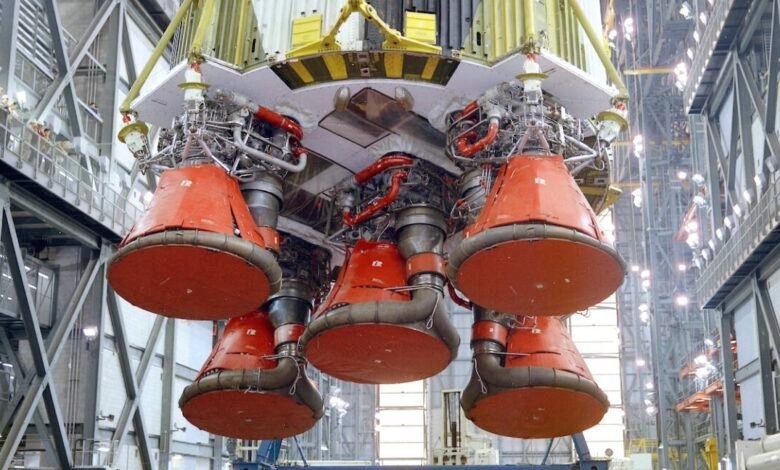
The story of Rocketdyne is a powerful lens through which to view the seismic shifts in the American space industry over the last seventy years. For those who followed spaceflight before the era of billionaire-backed ventures, the name carries immense historical weight. This company was once the undisputed powerhouse behind the nation’s most formidable rocket engines, powering everything from the monumental Saturn V missions to the Moon to the Space Shuttle and a host of military and commercial launch vehicles.
Its journey began in 1955 as part of North American Aviation, later moving under the Rockwell International umbrella before Boeing’s acquisition in 1996. For decades, Rocketdyne’s engineering prowess was unmatched, continuously designing and testing new large engine designs through the 1980s. However, the landscape began to change after the Cold War. The company’s pace of innovation slowed dramatically; since that prolific period, it has developed only one entirely new large engine, the RS-68, which itself was retired from service earlier this year.
The steepest decline coincided with the explosive growth of the commercial space sector. In 2005, Boeing sold Rocketdyne to Pratt & Whitney for $700 million, a deal worth roughly $1.2 billion in today’s dollars. This transaction occurred just before SpaceX’s inaugural launch and several years prior to the retirement of NASA’s Space Shuttle program, events that would fundamentally reshape the market Rocketdyne depended on.
As ownership of the legacy firm continued to change hands, a new competitive paradigm emerged. Companies like SpaceX and Blue Origin, backed by deep-pocketed founders, championed a vertically integrated model. Their strategy was not just about technical breakthroughs like reusability; it was about controlling the entire supply chain to drive down costs and accelerate development. These modern aerospace leaders were determined to build their own propulsion systems from the ground up, showing little interest in purchasing engines from an external supplier. This fundamental shift in philosophy left Rocketdyne, whose entire business model relies on selling finished engines to other companies, in an increasingly precarious position. The private equity deal for Rocketdyne’s current owner, Aerojet Rocketdyne, serves as a stark signal that the era of the standalone, legacy rocket engine supplier is fading into history.
(Source: Ars Technica)


