Government Reveals Official Flying Disc Guidelines

▼ Summary
– Four DiskSat satellites were successfully launched into orbit from Virginia aboard a Rocket Lab Electron rocket on a government-funded technology demonstration mission.
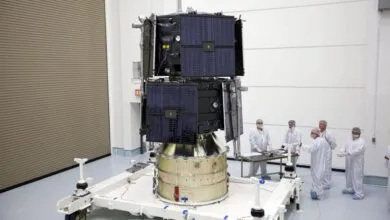
– The satellites, designed by the Aerospace Corporation, are a new flat, disc-shaped form factor intended to optimize rideshare launch opportunities.
– The project is jointly financed, with NASA funding the DiskSat’s development and the US Space Force paying for its launch.
– Each lightweight DiskSat is one meter wide, 2.5 centimeters thick, and equipped with solar cells, avionics, and an electric thruster for orbital maneuvers.
– The Aerospace Corporation developed the DiskSat concept to address emerging government needs in spaceflight, building on its long history of supporting US space and military programs.
A new type of satellite, shaped like a flat disc, has successfully reached orbit following a launch from Virginia. This mission, funded by NASA and the U.S. Space Force, aims to demonstrate the viability of a novel spacecraft design optimized for modern launch opportunities. The four experimental satellites, known as DiskSats, were carried into space aboard a Rocket Lab Electron rocket, which lifted off from NASA’s Wallops Flight Facility in the early hours of Thursday morning.
The launch proceeded flawlessly, with the rocket’s upper stage deploying each of the four satellites individually into an orbit approximately 340 miles above Earth. This deployment marks the beginning of a critical technology demonstration to validate the DiskSat design concept. Developed by The Aerospace Corporation, a federally funded research center, these satellites represent a significant departure from traditional box-shaped spacecraft.
DiskSats are lightweight, compact, and flat, resembling a disc roughly one meter in diameter and only one inch thick. This unique form factor, about twice the width of a large pizza, is engineered specifically to maximize efficiency during rideshare launches, where multiple small satellites share a single rocket. Constructed from composite carbon fiber, each unit is equipped with solar panels, control systems, reaction wheels for orientation, and an electric propulsion system for orbital maneuvers.
“The launch went perfectly, and the DiskSat dispenser worked exactly as designed,” stated Darren Rowen, the project’s chief engineer. Mission controllers have successfully established communication with all four spacecraft, setting the stage for the upcoming phases of the demonstration. The project is a joint effort, with NASA funding the satellite’s development and the U.S. Space Force covering the launch costs.
The genesis of the DiskSat concept came from engineers at The Aerospace Corporation, which has supported U.S. national space efforts since 1960. They identified a growing government need for more efficient and adaptable satellite platforms. This mission serves as a practical test to see if this innovative flat-panel architecture can meet the demanding requirements of future space operations, potentially opening the door to new mission profiles and more cost-effective access to orbit.
(Source: Ars Technica)