iRobot CEO: Bankruptcy Is a Reboot, Not the End

▼ Summary
– iRobot, the maker of Roomba, has filed for bankruptcy, a move its CEO frames as a necessary step to secure the company’s long-term future and keep it operational.
– As part of a pre-packaged bankruptcy, iRobot will be purchased by its China-based contract manufacturer and main creditor, Picea Robotics, and will become a privately held company.
– The partnership with Picea allowed iRobot to rapidly launch new products and close a technology gap, though these initial products have been criticized as underwhelming and similar to competitors.
– CEO Gary Cohen is shifting iRobot’s culture from a tech-first to a consumer-led approach, resolving prior strategic missteps like being late to adopt features such as lidar navigation and combo mopping robots.
– The company’s future hinges on combining its brand and innovative ideas with Picea’s manufacturing efficiency, but risks losing its distinctive vision and becoming just another competitor in a crowded market.
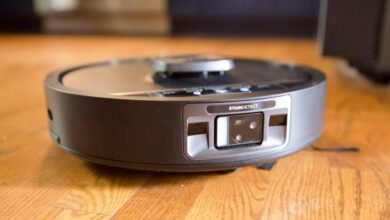
The recent Chapter 11 filing by iRobot, the company behind the iconic Roomba, marks a pivotal moment rather than a final curtain call. CEO Gary Cohen frames the bankruptcy as a necessary reboot, a strategic move to secure the company’s future and preserve its Boston-based operations. With a pre-packaged plan to be acquired by its primary contract manufacturer and creditor, Picea Robotics, iRobot aims to emerge as a private entity, maintaining its workforce and continuing product development without interruption for customers. This drastic step follows a year of financial warnings and a collapsed Amazon deal, positioning what many see as a failure as the foundation for a ambitious comeback.
Cohen, who took the helm in early 2024, is adamant this process is positive. “This is good news for us. It keeps us alive for the long term,” he stated, emphasizing that it safeguards hundreds of jobs and the global brand. The arrangement with Picea, which became iRobot’s main manufacturer and creditor after the Amazon deal fell apart, is central to his turnaround strategy. Cohen credits the partnership with enabling a dramatic acceleration in development, closing what he describes as a four-year technology gap with competitors in just one year. This speed led to the launch of eight new robots earlier this year, iRobot’s largest-ever lineup, which finally incorporated features consumers had been requesting, like lidar navigation and combo mopping-vacuuming models.
The initial products from this collaboration have received mixed reactions, often bearing a resemblance to other mid-range vacuums from Picea’s portfolio. However, they introduced notable innovations such as an onboard dust-compacting bin and a retracting mop cover, features developed by Picea. When questioned about iRobot’s direct contribution to the new line, Cohen described it as a partnership, highlighting the cultural shift he is driving. His focus is on moving iRobot from a “tech-first” philosophy to a “consumer-led” approach, prioritizing marketable products over pure, uncommercialized innovation. He points to past struggles, including a warehouse full of non-commercialized robotic lawnmowers, as evidence that the old model was unsustainable.
A significant part of this shift involved abandoning iRobot’s long-held commitment to vSLAM camera-based navigation for the faster-mapping lidar technology in many new models. “Customers want to map their homes in 20 minutes, not two hours,” Cohen explained. This decision put him at odds with the vision of founder Colin Angle, who believed deeply in the camera-based path. Cohen acknowledges Angle’s visionary role but argues the company lacked the execution capability to bring that vision profitably to market. The drawn-out Amazon acquisition process, he notes, further stifled innovation during a critical period.
The strategy carries inherent risks. By aligning so closely with a contract manufacturer to match the pace of Chinese competitors, iRobot risks diluting its distinctive brand identity into a sea of similar products. The loss of Angle’s pioneering, if difficult-to-execute, vision is palpable for an industry pioneer. Yet, Cohen believes this pragmatic partnership is the necessary first step. He hints that iRobot’s own “DNA,” including a treasure trove of shelved ideas from the Angle era, will feature more prominently in future generations, with next-gen products targeted for 2026.
Looking ahead, Cohen sees potential for growth beyond robotic vacuum cleaners (RVCs), suggesting the home and outdoor spaces remain ripe for innovation. The fate of projects like the advanced but stalled Terra robot lawnmower could be revisited. However, his own future with the company, along with other leadership roles, remains undecided as the new ownership structure is finalized.
The challenge ahead is monumental. Resurrecting a pioneer in a now-crowded market seems a long shot. Yet, iRobot retains two potentially powerful assets: its globally recognized brand and a partnership with a manufacturing partner that possesses proven efficiency. If this bankruptcy reorganization successfully merges American robotics innovation with streamlined production, a comeback is not impossible. The entire smart home industry will be watching to see if this reboot truly sparks a new beginning.
(Source: The Verge)