Ring Doorbells Now Use AI Facial Recognition
▼ Summary
– Amazon’s Ring doorbells are rolling out a new AI-powered “Familiar Faces” feature in the U.S. that can identify and label up to 50 frequent visitors.
– The feature provides personalized notifications and allows users to manage alerts, but it is not enabled by default and requires user activation.
– Amazon states the facial data is encrypted, not shared, and that unnamed faces are automatically deleted after 30 days.
– The feature faces significant privacy and security criticism due to Amazon’s history of law enforcement partnerships and past Ring data breaches.
– Consumer advocates and a U.S. senator have called for the feature’s abandonment, and it is blocked in some jurisdictions by privacy laws.
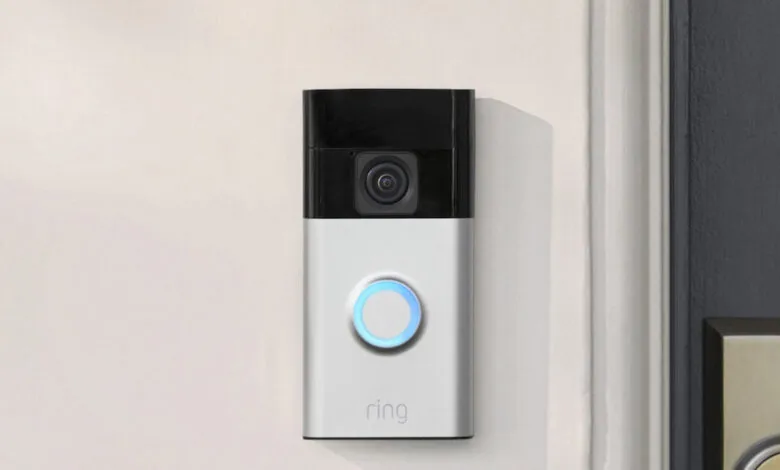
Amazon’s Ring doorbell system has introduced a new capability that allows devices to recognize individual visitors using artificial intelligence. This feature, called “Familiar Faces,” is now becoming available to users in the United States. It enables homeowners to create a personal catalog of up to fifty people, such as family, friends, or regular delivery drivers. Once a face is labeled within the Ring app, the system can then send customized alerts, like “Mom at Front Door,” instead of a generic motion notification.
The tool is designed to give users more control over their alerts. People can choose to silence notifications for specific recognized individuals, which might be helpful for avoiding alerts about their own household members coming and going. The feature is not turned on automatically; owners must actively enable it through their app settings. Faces can be identified and named directly from the device’s event history or a new dedicated library. All labels can be edited, and the system includes options to merge duplicate entries or delete profiles entirely. Amazon states that facial data is encrypted, remains private, and that any unrecognized faces are automatically deleted after one month.
However, this advancement has ignited significant debate around privacy and security. Consumer protection groups and lawmakers have expressed immediate concern. Organizations like the Electronic Frontier Foundation (EFF) and U.S. Senator Ed Markey have criticized the move, citing Amazon’s history with law enforcement partnerships and past security failures. The company has previously allowed police to request user footage through its Neighbors app and partnered with other surveillance technology providers.
Ring’s security record has also faced scrutiny. In 2023, the company paid a $5.8 million penalty after a Federal Trade Commission investigation revealed that employees and contractors had extensive, unchecked access to customer video feeds for years. Additional incidents have included the exposure of user home addresses and the circulation of account passwords on the dark web.
Due to these privacy concerns, the feature cannot be launched in some jurisdictions, including Illinois, Texas, and Portland, Oregon, where stricter biometric privacy laws are in effect. In response to questions, Amazon has asserted that biometric data is processed in the cloud, is not used to train AI models, and that the system is technically incapable of tracking an individual’s movements across different locations, even if requested by authorities. Privacy advocates remain skeptical, noting the existence of other Ring features that can search across neighborhood camera networks.
Mario Trujillo, a staff attorney at the EFF, emphasized the stakes, stating that approaching a home should not necessitate a loss of privacy. He called for state regulators to investigate the rollout and enforce robust biometric privacy protections. Given the combination of Amazon’s collaborative relationships with police and its problematic security history, some experts advise Ring users to exercise caution, suggesting they might avoid using full real names for labels or consider leaving the feature disabled altogether.
(Source: TechCrunch)