U.S. Senators Push Bill to Curb AI Chip Exports to China
▼ Summary
– The proposed SAFE Chips Act would lock current U.S. export controls into law for 30 months, preventing AMD and Nvidia from selling their latest AI accelerators to China and other adversary nations.
– Under the bill, only existing, compliant processors like Nvidia’s H20 and AMD’s MI308 could be sold to these countries without a license, as they meet specific technical performance thresholds.
– The legislation excludes consumer and gaming hardware not designed for data centers, allowing the sale of high-end consumer GPUs to these nations if not otherwise regulated.
– Chinese companies like Huawei have already developed competitive or superior AI accelerators, potentially displacing U.S. technology in the Chinese market if American firms cannot offer newer products.
– Nvidia argues that allowing exports of controlled, downgraded accelerators is more effective than a total ban, as it maintains Chinese dependence on U.S. hardware and standards while preserving American revenue and R&D leadership.
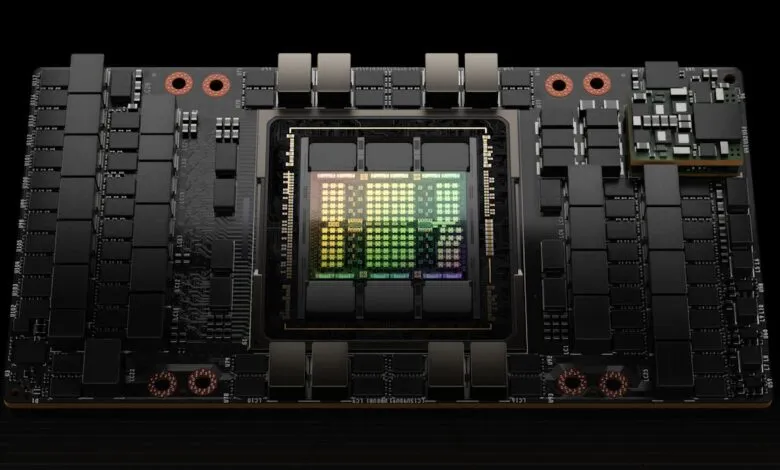
A bipartisan group of U.S. senators has introduced legislation aimed at solidifying current export restrictions on advanced computing chips, a move designed to maintain a technological edge in artificial intelligence. The proposed Secure and Feasible Exports of Chips Act of 2025, known as the SAFE Chips Act, seeks to codify existing rules into law for a period of 30 months. This would effectively prevent companies like AMD and Nvidia from selling their most powerful AI accelerator chips to China and other nations deemed adversaries. Under this framework, the most advanced processors these firms could legally export would be models like Nvidia’s H20 and AMD’s MI308, which were designed in 2023 to comply with earlier performance limits.
The legislation defines an advanced processor by mirroring the technical thresholds established by the U.S. Commerce Department. Any chip requiring an export license under the existing ECCN 3A090/4A090 controls, or one that exceeds specific performance parameters, would be restricted. These parameters include total processing performance, performance density, memory bandwidth, and interconnect bandwidth. For instance, a chip with a total processing performance score of 4,800 or higher would be subject to control. The bill does provide an exemption for consumer-grade hardware, such as gaming GPUs, as long as they are not marketed for data center use.
Both Nvidia and AMD already produce compliant chips, meaning they could continue some level of business in markets like China, Hong Kong, and Macau. However, these sanctioned products, such as the H20 and MI308, are now significantly outpaced by newer AI accelerators developed within China. Huawei’s Ascend 910C, for example, already offers substantially higher performance in key metrics compared to the H20. The next generation of Chinese processors promises even greater leaps, potentially reaching performance levels that challenge global leaders. This creates a competitive dilemma for American firms, which argue that being locked into selling outdated technology could permanently cede the market to domestic Chinese competitors like Huawei, Biren Technologies, and Moore Threads.
Nvidia has reportedly been lobbying the U.S. government for permission to sell slightly downgraded versions of its newest architectures, such as the Blackwell series, to Chinese customers. The company contends that a complete cutoff is counterproductive. Their argument is that allowing controlled exports of capped-performance accelerators actually slows China’s progress more effectively than a total ban. This approach, they suggest, maintains Chinese reliance on U.S. hardware and software standards, whereas an outright prohibition would only accelerate China’s drive for full technological self-sufficiency. Furthermore, Nvidia warns that losing access to the substantial Chinese market could ultimately weaken America’s own leadership in AI by reducing the revenue that funds critical research and development.
If enacted, the law would freeze the technical thresholds for two and a half years. After this period, the Department of Commerce could adjust the parameters, but only with majority approval from the End-User Review Committee. Any proposed changes would also require a detailed assessment of their potential impact on Chinese AI capabilities, including military and cyber applications, to be submitted to Congress at least 30 days in advance. The bill’s sponsors emphasize the strategic stakes, framing the competition in AI as a foundational contest for the 21st century. They argue that maintaining control over advanced semiconductor exports is essential to ensuring that future AI development aligns with American values and technological frameworks, rather than those of geopolitical rivals.
(Source: Tom’s Hardware)