Inside Jeffrey Epstein’s ‘Jmail’ Inbox
▼ Summary
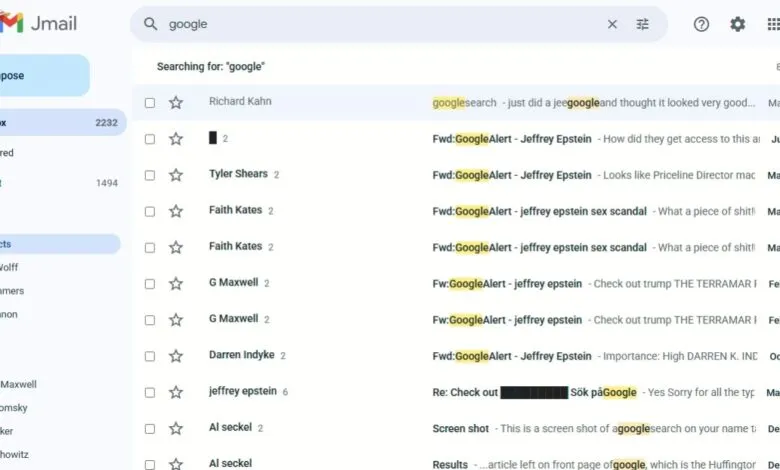
– Luke Igel and Riley Walz have created a website called “Jmail” that reformats the released Jeffrey Epstein emails into a Gmail-like interface for easier access and searching.
– They used Google’s Gemini AI for optical character recognition on the source documents, making the emails more readable and searchable than the original versions.
– The Jmail site allows users to search for specific terms like “Trump” and includes a shortcut to verify the text against the government’s source documents.
– The president has signed the Epstein Files Transparency Act, requiring the Attorney General to release unclassified Justice Department records in a searchable format within 30 days.
– Not all remaining files may be released, as the law allows exemptions for information that could jeopardize active investigations or prosecutions.
The recent release of over 20,000 pages of Jeffrey Epstein’s emails by the House Oversight Committee has sparked further investigations into the convicted sex offender and his associates, including notable figures like former Harvard president and OpenAI board member Larry Summers. To make these documents more accessible, Luke Igel and Riley Walz have transformed the original files into a user-friendly interface modeled after Gmail, calling the platform “Jmail.” This innovative approach allows researchers and the public to navigate the correspondence with greater ease.
Walz, known for previous digital projects such as a site that resurfaced old iPhone videos on YouTube and a fictional Manhattan steakhouse, explained that they employed Google’s Gemini AI for optical character recognition. This technology significantly improved the readability and searchability of the documents compared to the original versions. Users can now enter specific terms like “Trump” or “SEO” to locate relevant email discussions quickly. Additionally, a convenient one-click feature links directly from the Jmail site to the official government-hosted source documents, enabling individuals to verify the content firsthand.
In the weeks following the document release, the president signed the Epstein Files Transparency Act, which mandates that the Attorney General make all unclassified records, documents, communications, and investigative materials held by the Department of Justice available to the public in a searchable and downloadable format within 30 days. However, as CNN has noted, this does not guarantee the disclosure of all remaining files. The legislation includes provisions allowing temporary exemptions for information that could potentially compromise an active federal investigation or ongoing prosecution. Despite these limitations, any newly released materials could be rapidly integrated into the Jmail platform, offering an organized and easily scannable resource for ongoing public scrutiny.
(Source: The Verge)