Gemini’s Genius: How It’s Making Google Home Smarter (Mostly)
▼ Summary
– Gemini for Google Home introduces new AI-powered features like “Ask Home” for searching footage and “Home Brief” for daily summaries, representing Google’s vision for the smart home.
– The AI demonstrates impressive capabilities, such as intelligently labeling events in Nest Cam feeds and correctly identifying specific objects like chicken and car models.
– However, Gemini frequently makes minor but noticeable mistakes, mislabeling objects and events with overconfidence, such as calling a disc golf cart a bicycle or misidentifying a car’s color.
– These errors extend to security concerns, as Gemini has failed to properly recognize dangerous items like shotguns and knives in camera footage.
– Despite being in an early access beta with a strong foundation, the AI’s inherent overconfidence and proneness to errors currently limit its reliability, though the features are opt-in for users.
The arrival of Gemini for Google Home offers a fascinating look at the next generation of smart home technology, blending advanced AI capabilities with the practical realities of daily use. This integration promises to transform how we interact with our homes, though it’s clear the system still has room to grow before reaching its full potential.
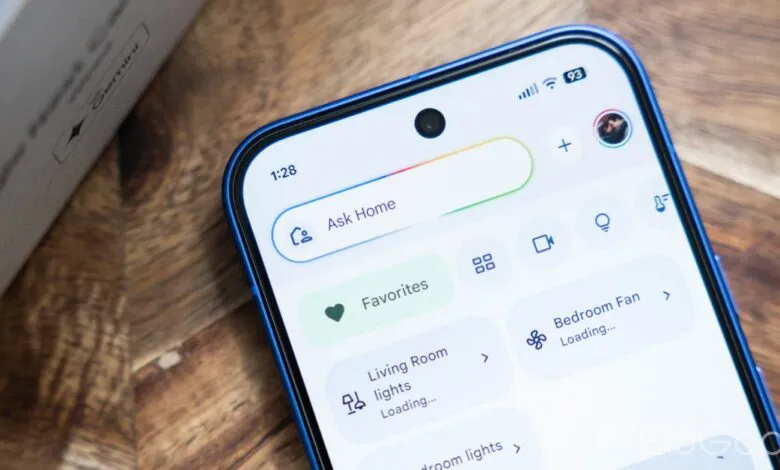
Using Gemini with my Google Nest devices over recent weeks has left me with mixed impressions. On one hand, the new features genuinely enhance the smart home experience. The “Ask Home” function stands out—instead of manually reviewing hours of camera footage, you can simply ask a question like, “Where is my laptop?” and receive a direct answer. It feels like stepping into the future.
Search is only part of the equation. Gemini also analyzes Nest Cam feeds and intelligently labels events based on what it observes. This is incredibly useful, especially when you consider how limited earlier notifications were. Before, you might get a generic alert like “person detected” or “motion spotted,” leaving you to figure out the details. Now, the system attempts to describe exactly what happened.
Another key feature is “Home Brief,” which provides a daily summary of Nest Cam recordings. Rather than sifting through individual alerts, you get a concise overview of the day’s events. It’s a clever idea, designed to save time and keep you informed.
However, these impressive features don’t always perform flawlessly. Each of the three core components—notification labels, Home Brief, and Ask Home—has its own set of challenges.
Notification labels, for example, suffer from the same overconfidence seen in many AI systems. While Gemini occasionally gets things spot on—like correctly identifying someone cooking chicken—it also makes baffling errors. In one instance, it reported I was loading a bicycle into my car, when in reality I was handling a disc golf cart that looks nothing like a bike. Another time, it mislabeled my wife taking out the trash as her placing a package on the porch. It even struggles with basic details, like the color of my car, sometimes calling it gray instead of its actual blue. On the plus side, it accurately identifies car makes and models, showing there’s real intelligence at work—just not consistently.
These mistakes, while often minor, can be jarring. In more serious cases, Gemini has failed to recognize critical objects. One report noted it identified a homeowner carrying a shotgun as holding a “garden tool,” and it omitted a knife from a summary. For a security-focused system, accurately identifying potentially dangerous items should be a priority.
Home Brief summaries, though helpful, can also be overly confident and include trivial details. Notifications like “Ben sat on the couch” add little value and clutter the report. Meanwhile, Ask Home, while faster than manual review, sometimes responds slowly to queries, taking 15 to 25 seconds to process a request. That delay can feel frustrating, even if it’s still more efficient than scrolling through footage.
It’s important to remember that Gemini for Home is currently in an early access beta phase. The foundation is strong, and the ideas behind it are innovative, but there’s significant room for refinement. AI, by its nature, tends to be both powerful and prone to errors—often the kind that make you scratch your head. I appreciate that Google has made these features opt-in, allowing users to decide whether to enable them.
In other tech news this week, the dispute between YouTube TV and Disney continues, with channels still unavailable and tensions rising. Subscribers are growing frustrated, and both companies appear unwilling to back down. Separately, Google has expanded Gemini into vehicles, integrating it with Google Maps and Android Auto, where it will gradually replace Google Assistant. Additional headlines include rumors about future iPhone models, early Black Friday deals from Walmart, and design updates for Tesla’s electric semi truck.
(Source: 9to5 Google)