The Power of Imperfection: Unlocking Nature’s Patterns
▼ Summary
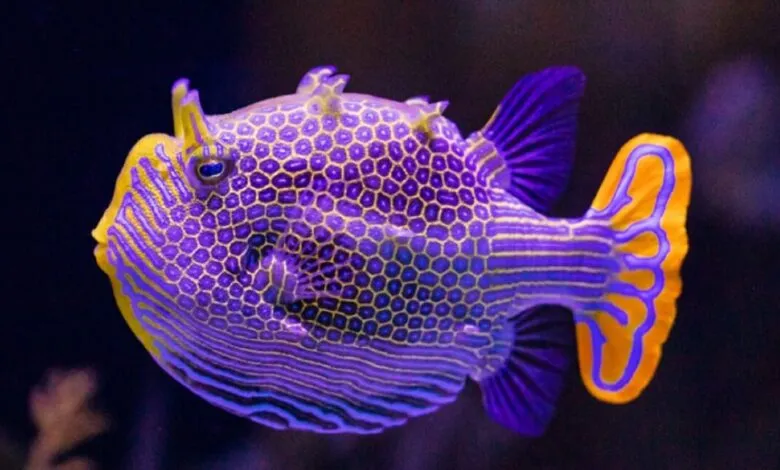
– Two types of pigment-producing cells use diffusiophoretic transport to self-assemble into hexagonal patterns.
– Turing patterns, named after Alan Turing, explain how complex natural designs like zebra stripes or leopard spots emerge.
– A new model from University of Colorado Boulder improves pattern accuracy by incorporating deliberate imperfections.
– Turing’s mechanism involves activator and inhibitor chemicals diffusing at different rates to create spots or stripes.
– Turing patterns have been observed in biological systems like zebrafish, hair follicles, and manipulated E. coli colonies.
Nature’s most captivating designs, from the bold stripes of a zebra to the intricate spots of a leopard, often arise from a hidden mathematical blueprint known as Turing patterns. Named for the visionary mathematician Alan Turing, who first theorized their origin in 1952, these patterns emerge through a delicate interplay of chemical signals. While Turing’s original model offered a compelling explanation, it proved too idealized to fully replicate the rich diversity seen in living organisms. Now, researchers at the University of Colorado Boulder have unveiled a refined model that embraces imperfection, yielding patterns strikingly similar to those found in the wild.
In his groundbreaking work, Turing proposed that two types of diffusing chemicals, an activator and an inhibitor, could generate complex patterns through a process called reaction-diffusion. The activator promotes a specific trait, such as stripe formation, while the inhibitor suppresses it. When the inhibitor spreads more rapidly than the activator, the system becomes unstable, giving rise to spots, stripes, or other motifs rather than a uniform appearance. Think of it like adding a drop of ink to water: under normal conditions, the ink disperses evenly, but with the right imbalance, distinct shapes begin to form.
Scientists have since identified Turing mechanisms at play across a wide spectrum of biological systems. For example, neural activity in the brain, where certain neurons excite and others inhibit their neighbors, may explain the visual patterns experienced during hallucinations. These principles also govern the development of zebrafish stripes, the spacing of hair follicles in mice, the arrangement of feather buds in birds, and even the formation of ridges on a mouse’s palate or the digits on its paw.
Beyond vertebrates, Turing patterns appear in the social behavior of insects. Certain Mediterranean ant species organize their dead into clusters that reflect these mathematical forms, while Azteca ants on Mexican coffee farms arrange their colonies in patterns consistent with Turing’s theory. In a striking laboratory demonstration, a team in Spain genetically modified E. coli bacteria in 2021 to produce branching structures that align perfectly with the reaction-diffusion model.
What sets the new University of Colorado Boulder approach apart is its intentional inclusion of irregularities. Earlier models assumed perfectly uniform conditions, but the real world is messy. By introducing controlled variations into their simulations, such as random fluctuations in chemical concentrations or physical constraints, the team succeeded in generating patterns that look authentically natural. This shift highlights a profound insight: imperfection is not a flaw but a feature essential to recreating the beautiful complexity of life’s designs.
(Source: Ars Technica)