Opera’s Neon Reveals the Confusing State of AI Browsers
▼ Summary
– Opera Neon is a subscription browser featuring three integrated AI agents: Chat for assistance, Do for task automation, and Make for creating web tools.
– Unlike most free competitors, Neon charges $19.90 per month and is currently in early access, positioning itself as a premium AI browser.
– The AI agents have limitations, with Chat providing verbose or inaccurate responses and Do making errors in tasks like shopping without allowing real-time corrections.
– Make enables users to build simple applications, such as a memory game, in a virtual environment that doesn’t clutter their personal computer.
– Neon’s Cards feature offers prewritten prompts for AI interactions, but the current selection is limited and mostly consists of gimmicky or team-created content.
Getting a handle on Opera’s Neon browser means realizing it packs not one, but three distinct AI assistants working in tandem. This setup offers both power and perplexity; while you can accomplish various AI-driven tasks without switching tools, figuring out which assistant handles what often leads to confusion. Neon joins a growing field of AI-enhanced browsers like Google’s Gemini-infused Chrome and Perplexity’s Comet, but stands apart by carrying a $19.90 monthly subscription fee in a category where most alternatives are free.
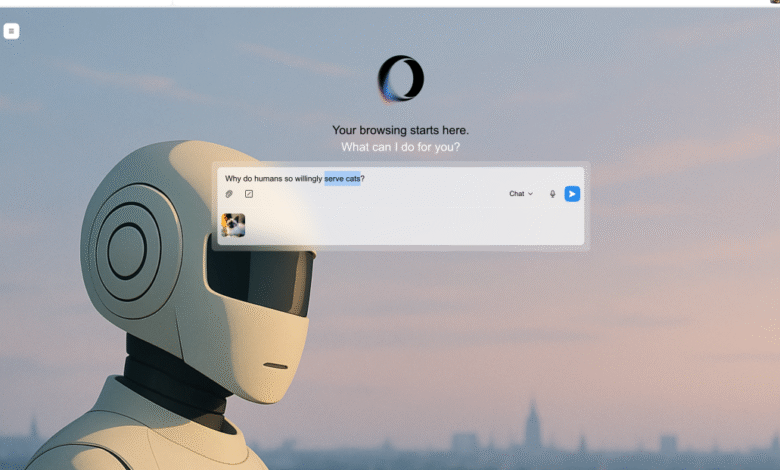
The browser’s layout will feel familiar to Opera users, featuring a built-in ad blocker, VPN, and a sidebar for messaging apps. Its AI capabilities take center stage on the home and new tab pages. Just below the search bar sits a toggle with four modes: standard web search, a chatbot named Chat, a browser-controlling agent called Do, and an AI builder named Make. Opera notes that Neon relies on AI models from OpenAI and Google, though it doesn’t detail which model powers each component.
Chat serves as the most recognizable AI helper, accessible via the search bar or a persistent icon in the browser’s corner. It capably answered our research questions and summarized content from active web pages, like providing an overview of recent quantum computing studies. However, its responses tended toward excessive length, and it occasionally misreported basic facts. When asked to count and summarize comments on recent Verge articles, Chat claimed there were none, despite visible comments, and even speculated about typical remarks on tech sites instead.
According to Krystian Kolondra, Opera’s executive vice president for browsers, we simply used the wrong tool. Chat accurately reads displayed comment counts, he explained, but summarizing them requires expanding the comments section, a task better suited for Do. This more proactive AI agent takes over the browser to perform multi-step activities like booking fitness classes or locating specific PDFs.
During testing, Do successfully found baby romper sewing patterns but proved inflexible once a task began. We couldn’t interrupt it to ask clarifying questions or steer it away from poor choices, like when it bypassed attractive floral arrangements to select a funeral wreath. In another instance, Do incorrectly stated that no theater tickets were available for a January performance, though a quick manual search revealed plentiful options. Such unshakeable but incorrect assertions undermine trust.
Completing tasks with Do generally took longer than doing them manually, though it offered a glimpse of offloading tedious web activities. Users can’t fully disengage, however; the agent sometimes hits snags only a person can resolve, indicated by a subtly flashing red tab.
The third AI, Make, constructs simple web tools within a virtual computer to avoid littering your actual device with files. We requested a Spanish vocabulary matching game, and it delivered a functional, if somewhat awkward, activity where “libro” paired with a book image. Closing the tab erased all associated data, which was convenient.
Neon’s final major feature is Cards, a collection of prewritten prompts Opera describes as “power-ups” for AI interactions. The current selection, mostly created by the Neon team, ranges from whimsical (rewriting sites in Yoda’s voice) to practical (news aggregators). Opera anticipates users will eventually contribute more valuable Cards, but the present offerings feel sparse.
Using Neon sometimes felt like managing an overeager intern rather than leveraging advanced technology. Its AI systems would occasionally request feedback but then proceed without waiting for a response. This overzealous automation risks real-world blunders, like mass-sending LinkedIn invites instead of passive profile viewing. In one case, after we approved its plan, Neon replied “I’m glad you think so!” and then halted entirely. Kolondra mentioned that pausing for feedback is planned but currently disabled.
He openly stated that Neon remains a work in progress, intended for early adopters interested in shaping its development. Yet the $20 monthly price presents a significant hurdle for a product that feels like it requires user adaptation, rather than adapting intelligently to user needs. With robust free alternatives available, Neon must rapidly refine its experience to justify the cost.
(Source: The Verge)