OnePlus OxygenOS 16 Update Integrates Google Gemini AI
▼ Summary
– OnePlus will soon launch OxygenOS 16, which is based on Android 16 and will include many AI features.
– The software update features new Gemini integrations and marks OnePlus’s increased focus on AI after initially being slower to adopt it.
– OxygenOS 16 will have improved animations for smoothness, a PC remote access app, and a more customizable lock screen.
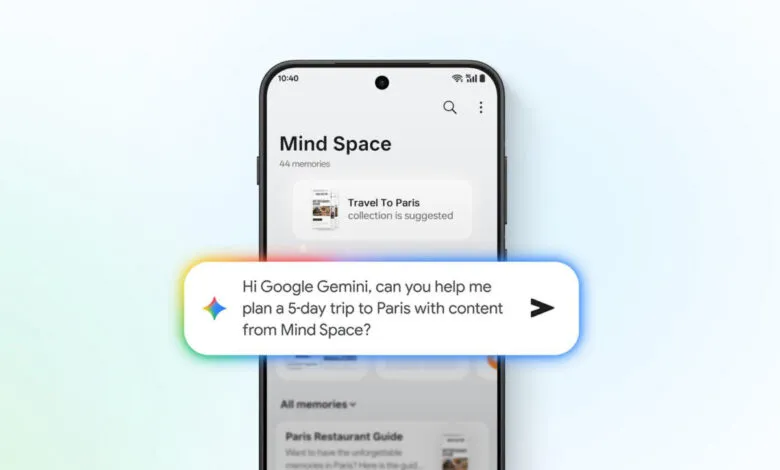
– The AI feature Mind Space, previously limited to the Indian market on the OnePlus 13S, will be available globally with OxygenOS 16.
– Mind Space analyzes screenshots to create calendar entries and also processes brief voice messages.
The upcoming OxygenOS 16 update will bring a significant infusion of artificial intelligence to OnePlus devices, headlined by deep integrations with Google’s Gemini AI platform. While the software will debut on the forthcoming OnePlus 15, it is also slated to roll out to the company’s other supported smartphones, marking a major acceleration in OnePlus’s AI strategy after a relatively slow start compared to competitors.
OnePlus describes its new operating system with ambitious language, calling it “a defiant rebellion for authenticity.” In practical terms, this means users can expect a familiar suite of AI-powered functionalities that are becoming standard across the industry. The update, built upon Android 16, is not solely focused on intelligence; it also promises refined visual animations engineered for a noticeably smoother user experience. A new O+ remote application will provide users with remote access to their Windows and Mac computers directly from their phone. Furthermore, the lock screen is receiving a substantial overhaul, offering greater customization options that align with features already popular on devices from Apple and Samsung.
The company’s serious push into AI began earlier this year with the introduction of a feature called Mind Space on the India-exclusive OnePlus 13S. With OxygenOS 16, this capability and more will become available to a global audience. In its initial form, Mind Space functioned by gathering user-generated content like screenshots and short voice memos. The system would then analyze the screenshots to automatically generate calendar entries, though its functionality was somewhat limited at the time of its first release.
(Source: Ars Technica)