Rivian CEO Reveals Plans for CarPlay, Lidar, and Budget EVs

▼ Summary
– Rivian is transitioning from its premium R1 vehicles to the more affordable R2 model, priced at $45,000, to broaden its market reach beyond expensive electric trucks and SUVs.
– The company has secured a $5.8 billion software licensing deal with Volkswagen, highlighting its advanced in-house technology and electronics as a competitive advantage.
– Rivian is focusing on developing autonomous driving features, with plans for hands-off, eyes-off highway capabilities by 2027 using a foundation model approach and multiple sensors.
– Despite facing supply chain challenges and tariffs, Rivian has built a U.S.-centric supply chain for the R2 to align with domestic manufacturing trends and reduce dependency on China.
– Rivian aims to improve vehicle reliability, which ranked low in early Consumer Reports surveys, by applying lessons from R1 production to enhance quality in the upcoming R2 model.
Rivian is charting an ambitious course toward mainstream electric vehicle adoption, with CEO RJ Scaringe outlining key developments including the forthcoming R2 model, enhanced autonomous driving capabilities, and a deliberate approach to software integration that excludes Apple CarPlay. The company’s strategy focuses on broadening its appeal beyond premium electric trucks and SUVs while navigating complex supply chain and regulatory challenges.
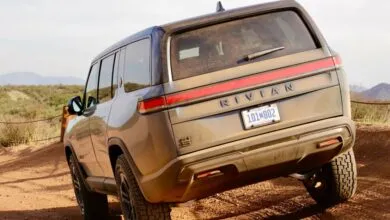
During a recent interview, Scaringe emphasized that Rivian’s goal has always been to build a brand centered on enabling active lifestyles. The R1T truck and R1S SUV served as flagship products to introduce Rivian’s values and design philosophy. Now, the company is shifting toward more accessible options, with the R2 model starting at $45,000, roughly half the price of the R1 series. Scaringe described the R2 as retaining Rivian’s signature quality and adventure-ready features, just in a smaller, more affordable package. Deliveries are slated to begin in the first half of 2026.
Scaringe expressed strong confidence in Rivian’s direction, pointing to the brand’s high appeal and customer loyalty. He noted that in certain markets, such as California and Washington, Rivian leads in premium SUV sales, electric or otherwise. The R2 is expected to help the company compete in a broader segment, going head-to-head with vehicles like the Tesla Model Y and Chevrolet Equinox.
When asked about competition from Chinese automakers like BYD, Scaringe acknowledged their cost and technology advantages but highlighted efforts to build a U.S.-centric supply chain for the R2. He also addressed recent tariff and export policy disruptions, which temporarily impacted production, but expressed optimism about Rivian’s ability to adapt. The company’s vertical integration and domestic manufacturing base, he argued, align with broader political and economic trends favoring U.S. technological independence.
On the topic of profitability, Scaringe admitted that Rivian has faced challenges but is steadily improving. The company achieved positive gross margins in late 2024 and early 2025, though production dipped in the second quarter due to supply constraints. The R2 launch is seen as a critical step toward achieving the scale needed to cover fixed costs and leverage Rivian’s vertically integrated structure.
A significant portion of the discussion centered on technology and software. Scaringe confirmed that Rivian has no plans to integrate Apple CarPlay, opting instead for a unified in-house infotainment system that incorporates popular apps like Spotify, Apple Music, and Google Maps. He argued that this approach allows for a more cohesive user experience, particularly as AI features are rolled out. Rivian recently updated its mapping system in partnership with Google, addressing earlier criticisms.
Looking ahead, Scaringe detailed Rivian’s roadmap for autonomous driving. The company is transitioning from rule-based systems to an AI-driven, “foundation model” approach, which he believes will accelerate development. Current driver-assist features will expand to include hands-off, eyes-on-road capability on all road types by next year, with eyes-off-highway functionality targeted for 2027. Scaringe also indicated that Rivian is open to incorporating lidar alongside cameras and radar, citing the benefits of multi-sensor fusion for accuracy and safety.
Finally, Scaringe addressed reliability concerns after a Consumer Reports survey ranked Rivian last in vehicle reliability. He acknowledged early issues but stressed that quality has improved significantly with later production runs and that R2 will benefit from those learnings. High customer satisfaction, even amid reliability growing pains, suggests strong potential as the company refines its processes.
With the R2 on the horizon and a clear vision for technology and growth, Rivian aims to transition from a niche player to a mainstream automaker, without losing the adventurous spirit that defined its earliest models.
(Source: The Verge)