iRobot Founder’s Fear: Why He Keeps Distance From Walking Robots
▼ Summary
– Robotics expert Rodney Brooks advises maintaining at least 3 meters distance from full-sized walking robots due to safety concerns.
– Brooks argues current humanoid robots are fundamentally unsafe because their stored kinetic energy from walking can cause severe injuries if they fall or strike someone.
– He challenges the belief that humanoids will soon replace human workers by learning dexterity through video observation, stating this capability is further off than commonly thought.
– Despite tech industry hype about humanoid robots generating massive revenue, Brooks emphasizes that hardware development is much harder than software due to physical constraints.
– Brooks identifies the lack of a sense of touch as the critical missing component preventing humanoid robots from achieving dexterous manipulation.
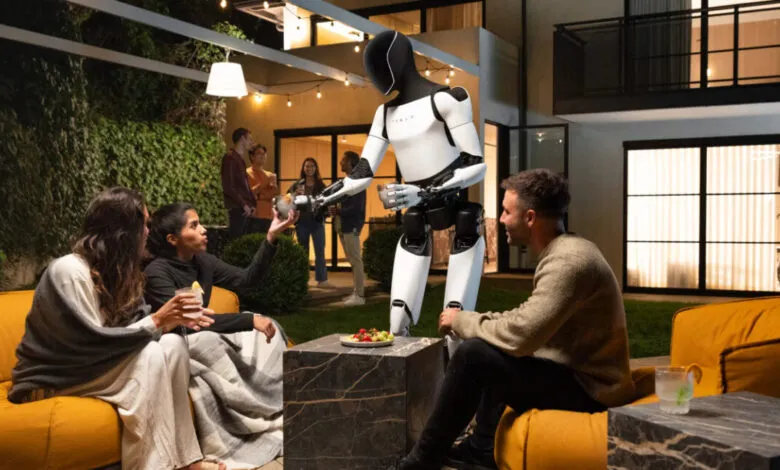
When a leading robotics expert who has dedicated his career to developing humanoid machines advises maintaining a three-meter distance from any full-sized walking robot, it’s wise to heed that warning. Rodney Brooks, the MIT professor emeritus who co-founded iRobot and Rethink Robotics, recently published a technical essay explaining his cautious stance. He emphasizes that current bipedal robots pose significant safety risks due to the immense kinetic energy they generate while walking and balancing. This stored energy could lead to serious injuries if a robot were to fall or accidentally strike a person nearby.
Brooks challenges the widespread assumption that humanoid robots will soon master complex manual skills simply by observing human demonstrations through video. While he acknowledges such advanced robots may eventually become reality, he believes their development timeline extends far beyond current optimistic projections. His decades of experience in robotics manipulation, dating back to the 1970s, inform his perspective that today’s approaches lack crucial elements for true dexterity.
The technology sector has seen escalating excitement about humanoid robots, fueled by recent artificial intelligence breakthroughs. High-profile executives like Tesla’s Elon Musk have projected astronomical revenue potential from their Optimus robots, while Figure’s CEO Brett Adcock imagines humanoids performing millions of workforce tasks. Despite these ambitious visions, Brooks points out that physical hardware presents fundamentally different challenges than software systems.
Unlike virtual environments where software operates, the physical world follows strict physical laws that don’t allow for errors. Safe interaction with real-world objects demands comprehensive sensory capabilities that current systems lack. According to Brooks, the most critical missing component in today’s humanoid robots is the sense of touch, which he identifies as essential for genuine dexterous manipulation. Without this fundamental capability, he suggests, humanoid robots cannot safely operate in shared human environments regardless of their visual learning abilities.
(Source: Ars Technica)