I Tested DoorDash’s AI Gig Work App: A Bleak Future Revealed
▼ Summary
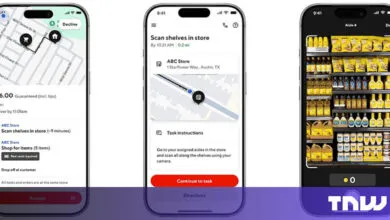
– DoorDash has launched a new gig work app called Tasks, which pays users to record videos of themselves performing specific physical tasks.
– The purpose of Tasks is to gather human video data to train and improve generative AI models and humanoid robots.
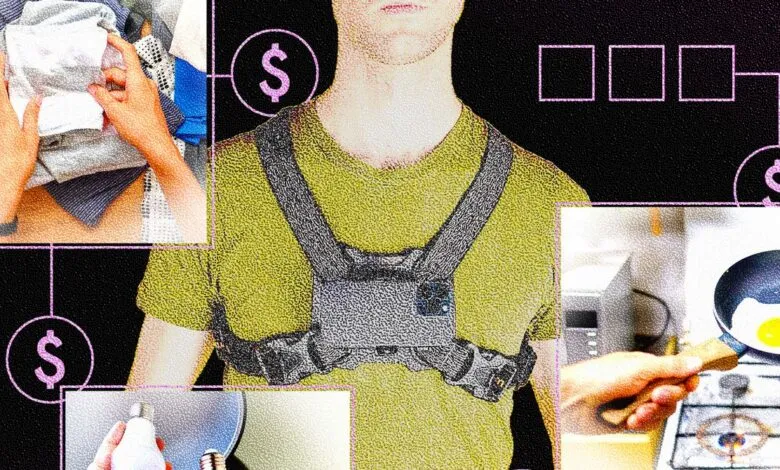
– Users record these tasks by strapping a smartphone to their chest to capture clear footage of their hands in action.
– Available task categories include household chores, handiwork, cooking, navigation, and having conversations in foreign languages.
– The app is not available in all US states at launch, with residents of California, New York City, Seattle, and Colorado explicitly blocked.
The new DoorDash Tasks app represents a significant shift in the gig economy, moving beyond food delivery to harness human activity for training artificial intelligence and robotics. This platform pays users to record videos of themselves completing mundane chores, providing developers with the visual data needed to teach machines how to interact with the physical world. My personal experience with the app revealed a surprisingly intimate and sometimes awkward process of performing everyday actions under the watchful eye of a smartphone camera.
I found myself holding up dirty laundry for the lens, my phone beeping insistently if my hands drifted out of the frame. The objective wasn’t to create niche content, but to meticulously document the process of loading a washing machine. This is the core function of Tasks: capturing clear, instructional footage of human hands performing specific duties. According to the company, this data directly assists AI and robotic systems in understanding real-world environments, with payment offered upfront based on the task’s complexity.
Currently, the app’s availability appears limited. While I accessed it from Kansas, residents in several states, including California, New York City, Seattle, and Colorado, are explicitly blocked from participating. The reasons for this geographic restriction are not publicly clarified by DoorDash.
Signing up was straightforward. The initial onboarding task involved filming myself moving three objects,a coffee cup, a pen, and a laptop,across a desk. Completing this simple test didn’t earn money but did secure a free smartphone body-mount shipped to my door, a necessary tool for the hands-free recording required for most gigs.
With the mount received, the full scope of available work became visible. Jobs are organized into five primary categories: household chores, handiwork projects, cooking, location navigation, and foreign language conversations. The household list is extensive, covering activities from making a bed and loading a dishwasher to repotting plants. Handiwork gigs vary widely in difficulty, from changing a lightbulb to the more involved process of pouring cement.
In the kitchen, the focus is overwhelmingly on eggs, with tasks for frying, poaching, and scrambling them. Navigation assignments might involve exploring a museum or walking around an apartment complex. The language section requests natural conversations in languages like Russian and Mandarin Chinese, likely to train AI in speech recognition and conversational patterns. This expansion into data collection signals a new frontier for gig work, where our ordinary actions become valuable training sets for the machines of tomorrow.
(Source: Wired)