1Password’s New AI Security Tool Tackles Rising Agent Threats
▼ Summary
– AI agents require credentials like passwords and API keys to function, creating a significant new security risk for enterprises as they become more common.
– 1Password has launched a new platform called Unified Access to centrally manage and secure credentials for both human and AI identities across an organization.
– The platform operates by first discovering existing, potentially exposed credentials, then securing them in a centralized vault, and finally providing audit trails for access.
– This approach allows credentials to be retrieved securely at runtime when needed, rather than being embedded in code, and enables centralized credential rotation.
– 1Password is integrating its solution with popular AI developer tools and platforms like Cursor, GitHub, and Vercel to embed security directly into developer workflows.
The rapid integration of AI agents into business workflows is creating a significant new frontier for cybersecurity. These automated systems require access to sensitive data and systems, necessitating credentials like API keys and passwords. The emerging challenge is that traditional methods for managing these digital secrets are inadequate for the scale and autonomy of AI, leading to widespread vulnerabilities. A new category of security tools is now arriving to address this critical gap, aiming to bring order to a landscape where credentials are often embedded unsafely in code and configuration files.
Consider the analogy of hiring a house sitter. You provide a key so they can feed your pet, but a lingering worry remains: will they copy the key or access things they shouldn’t? You’re reliant on trust. This mirrors the predicament companies face with AI agents. To perform tasks, these digital workers need the digital equivalent of keys, passwords and access tokens. The problem has been a lack of proper systems to manage this access. Developers have frequently resorted to pasting API keys directly into code or storing secrets in plaintext files, creating a sprawling, hidden risk.
This security dilemma has not gone unnoticed. 1Password has introduced a platform called Unified Access, designed specifically to manage credentials for both human and AI identities. This tool seeks to discover existing vulnerabilities, secure credentials in a centralized vault, and provide detailed audit trails. Its announcement follows similar moves by other major players, highlighting a trend of parallel innovation as the industry rushes to solve a problem that widespread AI adoption has made urgent.
The core issue is a shift in the threat landscape. As AI tools evolve from experiments to active participants in production environments, they operate using the same credentials as human developers. This creates a massive blind spot. Security teams may not know which automated systems are accessing what data, or where those systems’ credentials are stored. The goal of new solutions is to provide that crucial visibility and control, reducing the risks associated with ungoverned “shadow AI.”
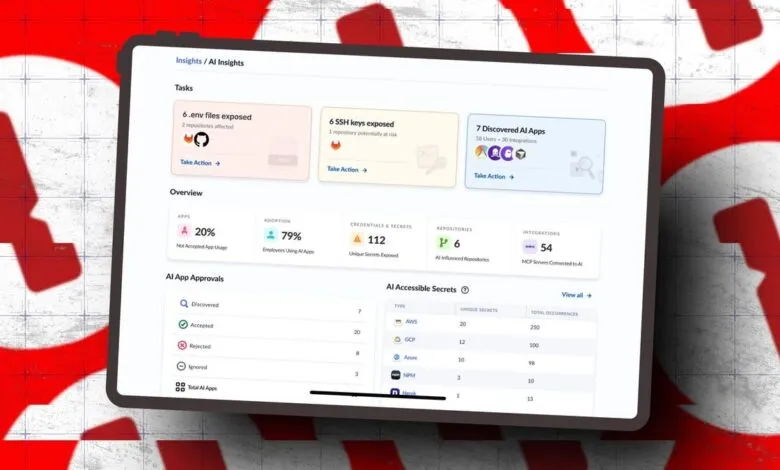
Unified Access operates on a three-phase model: discover, secure, and audit. The discovery process scans an organization’s endpoints and development environments to find exposed credentials, such as unencrypted keys or plaintext files. Of course, granting a security platform this level of deep access across an entire enterprise is itself a substantial decision, but it may be a necessary step to rein in existing vulnerabilities.
The securing phase moves those discovered credentials into a centralized vault. Instead of secrets being embedded permanently in code, agents can retrieve them from the vault only when needed for a specific task. This approach allows for credentials to be rotated or revoked centrally. If an API key needs to be changed, it can be updated once in the vault, and all authorized agents will automatically use the new one, eliminating the need to manually update countless scripts.
For this system to work seamlessly, integration with the tools developers use is essential. 1Password is partnering with platforms like Cursor, GitHub, and Vercel to embed secure credential access directly into developer workflows and CI/CD pipelines. The idea is to make strong security a natural part of the development process rather than an obstacle.
From a user experience perspective, the platform extends 1Password’s familiar interfaces, like its browser extension and command-line tools, into the environments where AI agents operate. The company views agents as a new class of identity that requires managed, auditable access to secrets. In this model, 1Password acts as the single source of truth for credentials, with every access request logged and policed.
The arrival of these tools signals a maturation in AI deployment. As autonomous agents become permanent fixtures, the old, ad-hoc methods of credential management pose too great a risk. Centralized vault systems represent a move toward bringing necessary governance and security to this powerful but potentially chaotic new layer of enterprise software. The question for many organizations will be how quickly they can implement such controls to secure their AI initiatives without stifling the innovation and efficiency those agents promise to deliver.
(Source: ZDNET)