Nvidia DLSS 5: The Motion Smoothing Problem for Games
▼ Summary
– Nvidia’s upcoming DLSS 5 technology introduces an AI-powered visual aesthetic that makes characters and scenes look homogenized and generic, similar to widespread AI-generated art.
– Major game developers like Bethesda and Capcom are endorsing DLSS 5, praising its ability to enhance visual fidelity and artistic detail beyond traditional rendering limits.
– The current demonstration of the technology has faced criticism for replacing carefully crafted character designs with AI-generated versions that exhibit unnatural, uniform features common to AI imagery.
– The spread of this specific AI aesthetic from social media into mainstream games represents a concerning cultural shift, threatening artistic diversity and immersion.
– The adoption of such AI tools is particularly troubling for the game industry, as it raises fears of replacing human artists during a period of widespread layoffs and could reinforce unrealistic beauty standards.
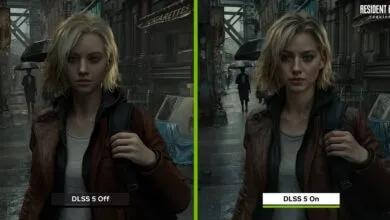
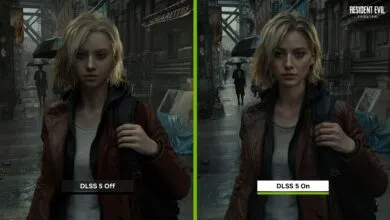
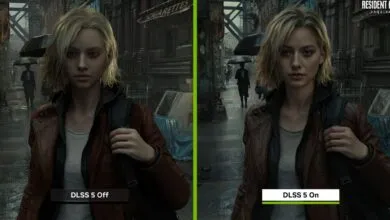
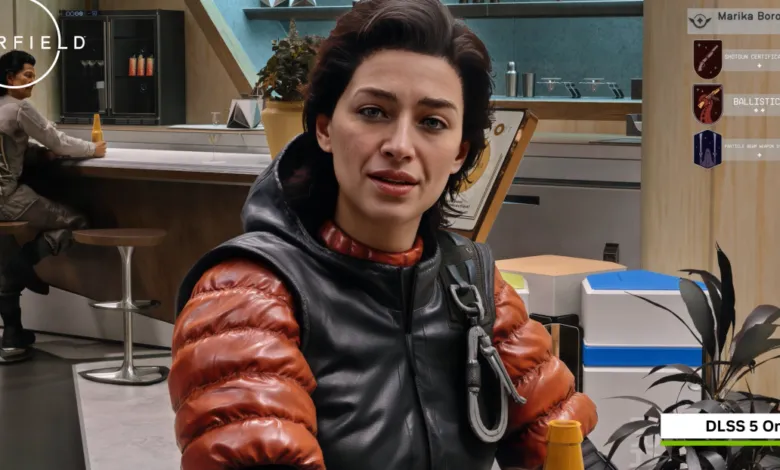
The upcoming release of Nvidia DLSS 5 is sparking significant debate, not just for its promised performance leap but for the distinct visual signature it introduces to gaming. This new AI-powered upscaling technology, while optional and demanding powerful hardware, applies a homogenizing aesthetic that many compare to an advanced form of motion smoothing, subtly altering character models and environments to create a uniform look. Major developers like Bethesda and Capcom are endorsing the feature for titles such as Starfield and Resident Evil Requiem, praising its ability to surpass traditional rendering limits, yet the early demonstrations have raised concerns about artistic integrity and visual diversity.
Prominent figures in the industry have publicly supported the technology. Bethesda’s Todd Howard stated that DLSS 5 allows artistic style to “shine through,” while Capcom’s Jun Takeuchi called it an “important step” for immersion. However, it feels contradictory to hear such praise when the early results show carefully crafted characters being replaced by a generic, AI-generated appearance. Bethesda has clarified that these are early builds and that art teams will fine-tune the final effect for each game, suggesting the fall release may look different. Despite this assurance, the current previews point toward a worrying trend where AI homogenization begins to overshadow unique artistic vision.
The core issue lies in the pervasive aesthetic of AI-generated imagery. This look is characterized by unnaturally smooth skin, uniformly cheerful eyes, perfectly styled synthetic hair, and intense HDR-style lighting. Individually, these are common features, but collectively they create a soulless, homogenized ideal that is instantly recognizable and often unsettling. The reaction to Nvidia’s announcement stems from this sameness; the faces don’t merely look subpar, they look identical to the proliferating AI art found across social media and digital content. DLSS 5 represents the most prominent incursion of this aesthetic into AAA gaming, moving it from online platforms into a primary entertainment medium.
This development is particularly troubling for the video game industry at this moment. Following widespread layoffs and studio closures due to market corrections and a post-pandemic slowdown, the prospect of AI tools replacing human artistic labor is a sensitive subject. Furthermore, gaming is a medium where character design, especially for women, is already a contentious topic. Using AI to make existing characters more generic and cartoonish risks amplifying problematic stereotypes rather than fostering creative expression. The early render of Grace from Requiem serves as a potential preview of a future where this look becomes standard, prompting players who value artistic authenticity to simply disable the feature, much like many already do with motion smoothing on their televisions.
(Source: The Verge)