Future of Search: 5 Key Insights from Google’s Liz Reid

▼ Summary
– Google’s Liz Reid believes AI agents will perform much of the internet’s activity, with agents interacting with each other, but not replacing all human interaction.
– The future relationship between Google’s Gemini and Search is uncertain, possibly converging, diverging, or merging into a new, third product.
– Google accepts AI-generated content but emphasizes the need to prioritize high-quality, original material over repetitive or low-value “slop.”
– Personalization in Search will grow, aiming to prioritize content from sources a user has a direct relationship with, like subscriptions.
– Micropayments for individual content pieces, facilitated by AI and personalization, were suggested as a future possibility to improve access.
The future of online search is poised for a significant transformation, moving beyond simple queries to a more interactive and intelligent ecosystem. Google’s head of Search, Liz Reid, recently shared pivotal insights on this evolution, highlighting the growing role of AI agents, the convergence of search and AI assistants, and new models for content discovery and monetization. Her perspective offers a roadmap for how our digital interactions may fundamentally change.
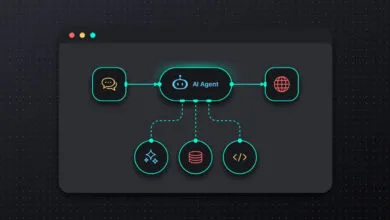
A major theme discussed was the rise of autonomous AI agents. Reid envisions a world where a substantial amount of internet activity will be conducted by agents communicating with each other, not just with humans. This aligns with predictions of a new economic model where software agents negotiate and transact independently. We are already seeing early examples, with companies using AI for tasks like automated coding. This shift suggests the web’s structure will adapt to accommodate this increased machine-to-machine interaction, potentially through protocols like Google’s Agent2Agent.
The relationship between Google’s core Search product and its Gemini AI assistant remains fluid. Reid noted that while the two are converging in some areas, they are diverging in others. The experimental “AI Mode” in Search acts as a testing ground for new AI experiences, with successful features likely migrating to the main search interface. This blurring of lines indicates that traditional list-of-links search is giving way to integrated, conversational answers for quick queries, though direct website discovery will remain important. Reid also suggested a future where neither Search nor Gemini dominates, but rather a third, entirely new product emerges from their convergence.
On the topic of AI-generated content, Reid acknowledged Google’s acceptance of AI as a creative tool while issuing a clear warning about quality. The critical challenge from the search perspective is to surface truly great content amidst potential “slop.” This places a new imperative on creators and journalists to produce genuinely original and engaging work that stands out. For content marketers, this means rigorously evaluating whether their material offers unique value or merely rephrases existing information available elsewhere.
Personalization is set to become far more sophisticated, evolving into what Google terms “Personal Intelligence.” The goal is to intelligently prioritize content from sources with which a user already has a relationship. For instance, if someone subscribes to a cooking service, search could prioritize those accessible recipes over similar but paywalled options from other sites. This user-centric approach aims to reduce friction and deliver more immediately useful results based on individual preferences and existing commitments.
This focus on seamless access naturally leads to questions about monetization. Reid hinted at potential future systems that could facilitate micropayments for individual pieces of content, rather than requiring full subscriptions. Coupled with advanced personalization, AI could make it easier for users to access trusted, premium information on a per-need basis. Underlying this possibility are developments like the Agents Payments Protocol, which would enable AI agents to handle transactions, potentially opening new revenue streams for valued content creators.
(Source: Search Engine Journal)