Unlock Crawl, Render & Index: The 5 Key Infrastructure Gates

▼ Summary
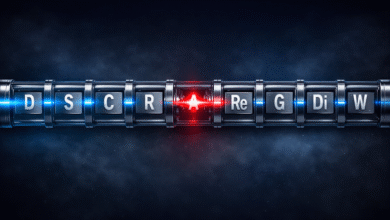
– The DSCRI-ARGDW pipeline consists of ten sequential gates, where the infrastructure phase (DSCRI) involves five absolute tests: Discovery, Selection, Crawling, Rendering, and Indexing.
– A key principle is sequential dependency; failure or signal degradation at any early gate irreversibly handicaps all downstream processes, making the weakest gate the biggest optimization opportunity.
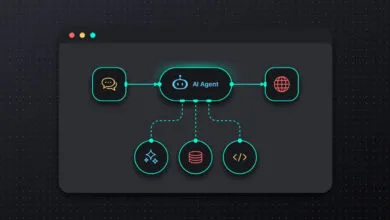
– Rendering fidelity is critical, as many AI agent bots do not execute JavaScript, so content relying on client-side rendering may be completely invisible, necessitating server-side solutions or new pathways like WebMCP.
– The indexing process involves stripping, chunking, and converting content into a proprietary format, where semantic HTML and accurate URL structure are vital for preserving content meaning and context.
– To maximize confidence entering the competitive phase, the biggest opportunity is to skip infrastructure gates entirely using methods like feeds, IndexNow, or MCP connections, which provide cleaner, more complete data to the system.
To ensure your content reaches its full potential in search and AI-driven platforms, you must first navigate a series of critical technical checkpoints. These initial stages form the foundation, determining whether your material is even seen and understood by automated systems before it ever enters a competitive arena. This process is often oversimplified as “crawl and index,” but that misses the nuanced sequence of gates where success or failure is absolute. A weakness at any point degrades the entire journey, leaving your content at a disadvantage no amount of quality can fix.
Think of these infrastructure gates as a chain of dependencies. Each step relies on the output of the previous one. If your content isn’t discovered, efforts to perfect its rendering are pointless. Similarly, a page that crawls but renders poorly passes degraded information forward. The audit must start at the beginning, discovery, and move sequentially. Jumping to a familiar gate like crawling is a common and costly mistake.
The first three gates involve getting your content noticed and fetched. Discovery is an active signal driven by XML sitemaps, protocols like IndexNow, and a robust internal link structure. Your website acts as the primary anchor; content without a clear association to a trusted entity waits at the back of the queue. Selection follows, where the system decides your crawl worthiness. The old belief that more pages equal more traffic is counterproductive here. Fewer, high-confidence pages are crawled faster and more reliably. Every low-value URL you submit is a vote against your own content’s importance. Crawling itself is a mature area with well-understood solutions for server response and robots.txt, making it less of a differentiator.
The fourth gate, rendering fidelity, is where many assumptions break down. This measures how much of your published content a bot actually sees after constructing the page. Content reliant on client-side JavaScript may be completely invisible to many AI agents, creating an irreversible loss. A bot’s willingness to invest in rendering isn’t uniform; it favors common, low-friction patterns like standard WordPress themes over bespoke code. New pathways like WebMCP or Markdown for Agents can bypass traditional rendering entirely, serving a clean, structured version of your content directly to the system.
Next, conversion fidelity determines how accurately the rendered content is preserved during indexing. The system strips repetitive elements like navigation, chunks the core content into segments, and converts it into a proprietary internal format. Semantic HTML5 tags are crucial here, as they tell the system where to cut and what matters. Failure at this stage means your content is stored but may be semantically misclassified, leading to poor performance later.
The industry’s focus has often been on crawl budget, but every gate consumes computational resources allocated based on expected return. The system decides not just whether to process your content, but how much to invest at each stage, from rendering to annotation.
Structured data acts as a low-friction confirmation layer within this infrastructure. It’s not a magic bullet, but it provides explicit, machine-readable declarations that reduce ambiguity and build confidence when consistent with your page’s actual content. Its value is highest where the system’s own inference is weakest.
The most powerful strategy isn’t just optimizing each gate, it’s skipping them altogether. Feeds and direct data connections (like MCP) bypass the traditional infrastructure pipeline entirely. A brand using a product feed might enter the competitive phase with 70% confidence intact, compared to 16.8% for a brand navigating all five gates with moderate scores. This creates a monumental advantage before competition even begins.
These five infrastructure gates, Discovery, Selection, Crawling, Rendering, and Indexing, are absolute tests with documented solutions. They represent the only phase with a complete playbook, making them the cheapest failures to fix. However, they are just the prelude. Once your content is indexed, the scoreboard turns on for the competitive phase, where it must outperform alternatives. What survives these initial gates is the raw material that enters that competition, starting with the critical and often-overlooked process of annotation.
(Source: Search Engine Land)