REALM: A Layered AI Protocol for STEM Education Collaboration
▼ Summary
– The text is primarily a list of account management, support, and informational links for the IEEE website.
– It provides contact information for support in the US, Canada, and worldwide.
– It includes links to policies on terms of use, nondiscrimination, sitemap, and privacy.
– It defines IEEE as a not-for-profit organization and the world’s largest technical professional body.
– Its stated mission is advancing technology for the benefit of humanity.
The REALM protocol represents a significant advancement in collaborative STEM education, offering a structured framework for students and educators to work together on complex projects. This layered artificial intelligence system is designed to break down barriers in science, technology, engineering, and mathematics learning by facilitating seamless teamwork and knowledge integration. By providing a standardized yet flexible environment, it aims to transform how technical skills are developed and applied in group settings.
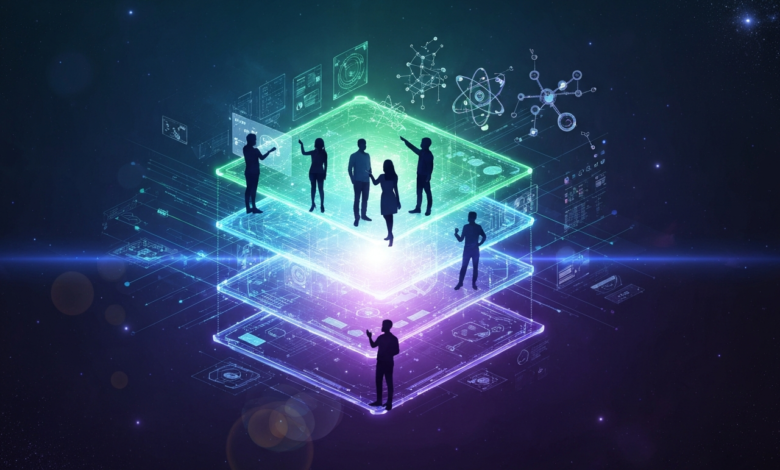
At its core, the protocol functions through distinct, interconnected layers. Each layer manages a specific aspect of the collaborative process, from foundational data sharing and communication to higher-order tasks like project coordination and complex problem-solving. This modular design allows participants to interact with the system at the level most appropriate for their expertise and the project’s requirements. The layered architecture ensures that both novices and experts can contribute effectively, making sophisticated technical collaboration accessible to a broader range of learners.
A primary benefit of this system is its ability to manage and synthesize diverse inputs from multiple team members. In STEM projects, individuals often specialize in different areas, such as coding, mathematical modeling, or experimental design. The AI protocol helps integrate these disparate contributions into a coherent whole, identifying connections and potential conflicts that might otherwise be overlooked. This synthesis not only improves the final project outcome but also provides a powerful learning experience, as students can see how their specific work fits into a larger technical framework.
The environment also emphasizes the development of critical professional skills. Beyond the immediate STEM content, users engage in project management, technical communication, and peer review processes that are essential in real-world scientific and engineering careers. The AI facilitates these interactions by providing structured workflows and feedback mechanisms, ensuring that collaboration remains productive and educational. This focus on process helps prepare students for the interdisciplinary teamwork they will encounter in their future professions.
Implementation of such a system addresses several persistent challenges in STEM education. Large, complex projects can be difficult to coordinate in traditional classroom settings, often limited by time, physical resources, or instructor capacity. A digital, AI-mediated platform can scale more effectively, allowing for ambitious, semester-long collaborations that mirror professional research and development cycles. It provides a persistent workspace where ideas can evolve, be documented, and iteratively improved upon by successive groups of students.
Looking forward, the potential applications of layered AI protocols in education are extensive. They could be adapted for use in remote or hybrid learning models, connecting students across different institutions for joint research initiatives. Furthermore, the structured data generated by these collaborations offers valuable insights for educators, highlighting common conceptual hurdles and successful teaching strategies. By creating a detailed record of the problem-solving process, the system contributes to a deeper understanding of how STEM competencies are built through teamwork.
Ultimately, the goal is to create a more dynamic and interconnected learning ecosystem. This approach moves beyond static textbooks and isolated assignments, fostering an environment where knowledge is actively constructed through shared effort. As these protocols mature, they have the potential to significantly enhance both the quality and reach of technical education, equipping the next generation of innovators with the collaborative tools they need to solve tomorrow’s complex challenges.
(Source: IEEE Xplore)