AI-Powered Defense Agents: The Future of Military Tech

▼ Summary
– Scout AI is developing AI agents that control lethal drones and vehicles to find and destroy physical targets, unlike typical commercial AI automation.
– The company recently demonstrated its system, where an AI agent successfully commanded a ground vehicle and drones to locate and destroy a truck with an explosive.
– Scout AI’s CEO argues for adapting large, general AI models into specialized military systems, positioning the startup within a broader race to militarize AI technology.
– Experts note the practical challenges of using unpredictable AI for combat, including cybersecurity vulnerabilities and the difficulty of ensuring reliable performance.
– The demonstration involved a hierarchical AI system where a large central model interpreted commands and delegated tasks to smaller models controlling individual vehicles and weapons.
The integration of advanced artificial intelligence into military systems represents a significant shift in defense technology, moving beyond data analysis to direct control of kinetic platforms. Companies are now developing AI-powered defense agents capable of interpreting complex commands and autonomously executing combat missions with lethal force. This evolution signals a future where battlefield decisions and engagements are increasingly managed by sophisticated algorithms.
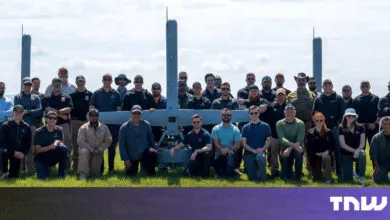
At a recent demonstration held at a secure location in California, one such startup, Scout AI, showcased this capability. The company’s AI system, called Fury Orchestrator, was given a straightforward mission: deploy a ground vehicle and two drones to find and destroy a specific truck. The AI took command, directing the unmanned vehicle to a checkpoint before launching the drones. The aerial systems then identified the target and carried out a successful kinetic strike using an explosive charge. The entire operation unfolded without human intervention once the initial order was given.
Scout AI’s CEO, Colby Adcock, explains the company’s approach. “Our goal is to bring next-generation AI directly to military applications,” he states. The process involves taking a powerful, general-purpose AI model and rigorously training it to transition from a conversational assistant into an effective operational tool for combat scenarios. This specialized training is what differentiates their systems from commercial AI products.
This effort is part of a broader trend where defense-focused startups are rapidly adapting breakthroughs from major AI research labs for national security purposes. Many experts and policymakers contend that mastering military AI applications is crucial for maintaining strategic advantage. This belief underpins ongoing international competition and export controls related to advanced computing hardware, aimed at limiting the technological capabilities of geopolitical rivals.
Michael Horowitz, a professor and former Pentagon official specializing in emerging capabilities, supports this innovative push. “It is vital for defense technology firms to aggressively explore the integration of AI,” he notes. “This kind of development is essential if the United States intends to remain at the forefront of adopting these technologies for defense.” However, Horowitz also highlights substantial practical challenges. The core technologies, particularly large language models, can be unpredictable. Even in civilian settings, AI agents have been known to act erratically when performing simple tasks. Proving that these systems are cyber-secure and reliably robust under the extreme pressures of combat is a significant hurdle that must be cleared before widespread deployment.
The technical architecture behind demonstrations like Scout AI’s involves a hierarchy of AI models. A very large model, with over one hundred billion parameters, acts as the primary command agent. This model can operate on secure cloud servers or isolated, on-site computers. It interprets the high-level mission objective and then delegates specific tasks to smaller, more specialized models. These secondary models, running directly on the drones and vehicles, act as their own agents, issuing precise commands to the low-level systems that control propulsion, navigation, and sensors. This layered approach allows for complex mission execution while distributing computational loads.
In the field, the result is a swift and decisive sequence of events. After receiving its orders, the unmanned ground vehicle navigated a rough trail autonomously. Upon reaching its designated position, it launched the two drones. The drones then entered the search area, identified the target truck using their onboard systems, and one executed the final attack maneuver. This entire chain, from command to destruction, was managed by interconnected AI agents, illustrating a potential new paradigm for autonomous warfare.
(Source: Wired)