Tech Layoffs, AI Hype, and the Future We Left Behind
▼ Summary
– Layoffs in the tech sector remained high in early 2026, with U.S. job cuts in January reaching their highest level for that month since 2009.
– Major companies like Amazon and Salesforce announced significant job cuts, often attributing them to a strategic focus on AI and automation.
– Analysts and journalists are increasingly skeptical, using the term “AI-washing” for attributing layoffs to AI without clear evidence of actual job replacement by the technology.
– Economic factors like financial pressures, market slowdowns, and post-pandemic adjustments are significant drivers of job losses, alongside the AI narrative.
– The trend and accompanying narrative are global, with European firms also announcing layoffs, often due to broader economic slowdowns rather than AI specifically.
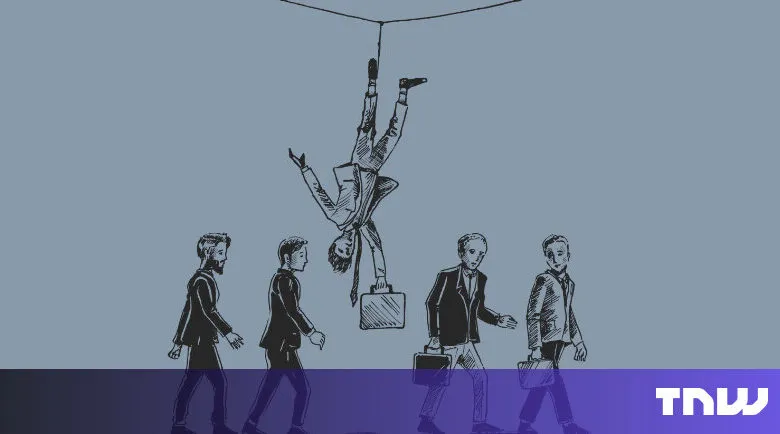
The landscape of technology in 2026 presents a stark paradox, where headlines of widespread layoffs collide with a relentless narrative of AI-driven progress. While companies publicly champion their transformation through artificial intelligence, a closer examination reveals a more complex reality where economic pressures and strategic realignments are often the true catalysts for job reductions. The uncomfortable truth is that people are still losing their jobs, while AI gets most of the credit, serving as a convenient scapegoat that shifts focus from human impact to corporate evolution.
Recent data underscores the severity of the situation. Outplacement firm Challenger, Gray & Christmas reported that U.S. employers announced over 108,000 job cuts in January 2026 alone, marking the strongest January for layoffs since the 2009 financial crisis. This figure more than doubled the total from the same month a year earlier, signaling a significant and troubling trend.
These statistics represent real people and disrupted careers. In late January, Amazon confirmed an additional 16,000 corporate job cuts, extending a series of reductions that began in late 2025. This occurred despite the company reporting high revenue and massive investment in AI infrastructure. Similarly, Salesforce, a vocal proponent of its own AI products, quietly eliminated nearly 1,000 positions across marketing and product teams, including some within the very divisions developing its so-called strategic AI tools. Reports from other giants like Meta and Block, along with various financial and non-tech institutions, paint a picture of widespread retrenchment driven by cost pressures.
A common thread in these announcements is the invocation of AI. Corporate communications frequently frame layoffs as a necessary step to focus on automation and artificial intelligence, a narrative that is both catchy and convenient. However, a growing chorus of journalists and analysts are labeling this practice as “AI-washing.” This term describes the tendency to attribute job cuts to AI without clear evidence that these systems are actually replacing the work of the eliminated teams. In many cases, organizations lack the mature, scalable AI implementations required to genuinely absorb the tasks of entire departments before those cuts are made.
The evidence for AI directly displacing large numbers of workers in a dramatic, robotic takeover remains limited. Research indicates that while AI tools can gradually substitute for some forms of contracted labor, the scale of this substitution is modest and evolutionary, not the explosive replacement often implied. The more prosaic drivers, financial pressures, slower market growth, and corrections from pandemic-era overhiring, account for a significant portion of current job losses. Many layoffs linked to AI appear to be driven as much by economic necessity and managerial optics as by genuine technological automation.
This is not solely an American phenomenon. Across Europe, companies are implementing hiring freezes and job cuts in response to broader economic headwinds. Semiconductor leader ASML announced plans to cut roughly 1,700 positions, while telecom equipment maker Ericsson is trimming about 1,600 roles in Sweden, citing a prolonged downturn in 5G infrastructure spending. Sectors from consumer goods to banking have announced similar reductions, reflecting a widespread economic slowdown that extends far beyond any single technology trend. In these instances, AI is rarely the central talking point, but the human consequences are profoundly felt.
To be clear, the scale of layoffs in 2026 does not yet surpass historical benchmarks like IBM’s cuts of 60,000 jobs in the 1990s or the mass reductions during the 2008 recession. What is distinctly different now is the prevailing narrative. Unlike the blunt force of past economic downturns, today’s job cuts are often framed as a strategic and forward-looking embrace of innovation. This framing can protect executives and satisfy investors, but it provides little consolation to those whose livelihoods are eliminated in the name of efficiency and progress.
Looking ahead, the path forward requires clear-eyed honesty. AI undoubtedly holds the potential to reshape how work is performed, but conflating investment in algorithms with the wholesale replacement of human jobs is a dangerous oversimplification. The lessons of 2026 suggest that layoffs are real, painful events often rooted in economic and strategic decisions that have little to do with machines spontaneously rendering humans obsolete. The rush to blame AI obscures the deeper, more difficult questions about how we value people, work, and community in an age increasingly fascinated by automation.
In summary, job cuts are indeed sweeping across the corporate world. There is not clear evidence that AI has replaced humans en masse. If we allow the dominant narrative to go unchallenged, we risk forgetting that behind every data point is a human being, whose value cannot be measured in lines of code or a machine’s future earning potential. The direction we choose from here hinges on a fundamental choice: will we treat people as expendable assets to be optimized away, or as the very reason innovation should serve society in the first place?
(Source: The Next Web)