Zanskar: 1 TW of Untapped Geothermal Power Is Overlooked
▼ Summary
– The U.S. Department of Energy estimates geothermal power could supply nearly 10% of the nation’s electricity by 2050, but Zanskar’s CEO believes this forecast is too low.
– Conventional geothermal energy has been stagnant, but Zanskar argues its potential is vastly underestimated due to overlooked resources and modern drilling techniques.
– Zanskar uses AI, including machine learning and Bayesian evidential learning, to discover new geothermal sites that lack obvious surface indicators like hot springs.
– The company has successfully identified new resources, reviving a power plant and discovering sites with over 100 megawatts of potential, leading to a $115 million Series C funding round.
– Zanskar aims to confirm at least 10 sites to attract project finance investors and overcome the financial challenges that have hindered other climate tech startups.
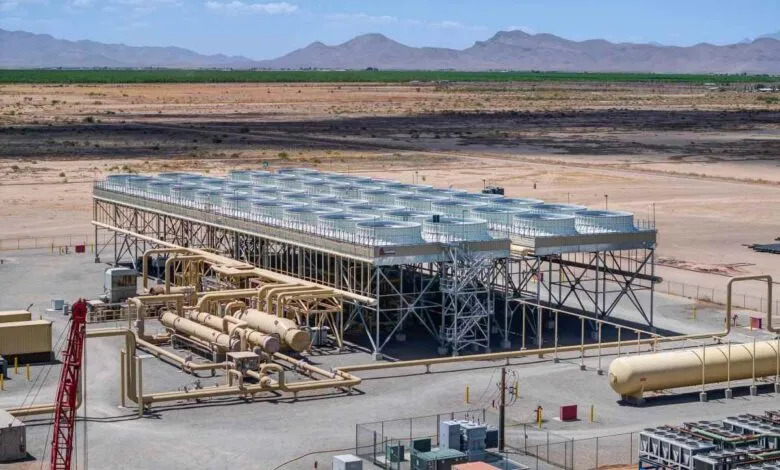
The immense energy stored within the Earth’s crust represents a vast and underutilized resource for clean power generation. While the U.S. Department of Energy projects geothermal could supply nearly 10% of the nation’s electricity by 2050, some industry leaders believe this forecast is far too conservative. The potential of conventional geothermal power, which taps into naturally occurring underground reservoirs of hot water and steam, is being significantly underestimated according to experts. This traditional approach has seen limited growth, overshadowed by newer enhanced geothermal systems that use drilling techniques similar to fracking.
Carl Holland, CEO of the startup Zanskar, argues that outdated assumptions have stifled conventional geothermal’s progress. He suggests that the number of undiscovered viable sites is vastly greater than previously thought, potentially by an order of magnitude. When combined with modern drilling technology, which can extract far more energy from each site, the total opportunity could scale to a terawatt-level resource. This would represent a monumental shift in the clean energy landscape.
Zanskar is leveraging artificial intelligence to breathe new life into conventional geothermal exploration. The company’s methodology addresses a core problem: most geothermal systems lack obvious surface clues like hot springs. By applying supervised machine learning models to diverse geological datasets, including records of past accidental discoveries, Zanskar can identify promising locations that would otherwise remain hidden. Field teams then visit these sites for ground-truth validation.
Once a potential resource is confirmed, the company employs a specialized AI technique known as Bayesian evidential learning (BEL). This process uses existing data to establish initial assumptions, then systematically tests and refines them, generating probabilistic models of the underground resource. To address data gaps, Zanskar has developed its own geothermal simulator. This two-pronged AI approach has already proven successful, leading to the revival of a dormant power plant in New Mexico and the discovery of two new sites with a combined potential exceeding 100 megawatts.
These early wins have attracted significant investment, including a recent $115 million Series C funding round. The capital is fueling further exploration, with the company currently evaluating a pipeline of sites capable of supporting at least one gigawatt of generating capacity. The immediate focus is on the geologically favorable western United States. Holland’s goal is to confirm at least ten sites, a milestone that would help attract project finance investors and provide access to lower-cost capital crucial for scaling.
The journey is not without its challenges, and Holland acknowledges that many hurdles remain. However, he is confident that Zanskar’s data-driven, AI-powered exploration model is a game-changer. By systematically uncovering hidden geothermal resources, the company aims to transform the economics and scalability of this reliable, baseload renewable energy source, potentially unlocking a terawatt of clean power that has been overlooked for decades.
(Source: TechCrunch)