Intel’s Panther Lake Laptop Chips: All the Details Revealed

▼ Summary
– Intel has launched its Core Ultra Series 3 “Panther Lake” mobile processors, built on its new 2nm “18A” node and featuring significant design upgrades focused on AI performance.
– The processors feature a redesigned CPU, a new Xe3 integrated graphics architecture (IGP), and an updated NPU 5 neural processing unit, with the top IGP offering 12 Xe cores for a 50% increase.
– A key model is the Core Ultra X9 388H, which Intel claims delivers over 70% better gaming and up to 60% better multithreading than prior chips, despite having a different core configuration and lower clock speed on paper.
– The new chips emphasize AI capabilities, with the NPU and IGP together capable of up to 170 TOPS of AI processing power, and include support for the latest Wi-Fi 7, Bluetooth 6.0, and Thunderbolt 5 standards.
– Laptops with these processors will begin shipping on January 27, with preorders opening around January 6, though final pricing and availability depend on individual laptop manufacturers.
Intel’s latest mobile processors, the Core Ultra Series 3 “Panther Lake” chips, are now in production on the company’s advanced 18A node. These processors, which recently garnered a major award at CES, are engineered specifically for laptops and mini PCs, bringing a host of architectural improvements focused heavily on boosting AI performance and integrated graphics capabilities. Systems powered by these new CPUs are set to begin shipping by the end of January, with preorders opening imminently for eager early adopters.
Intel has provided a substantial look at the new lineup, revealing significant upgrades across the board compared to the prior Core Ultra Series 2. The changes encompass the central processor, the integrated graphics, and the dedicated neural processing unit, marking a comprehensive generational leap.
Beginning with the CPU, Intel promises gains in both power efficiency and raw processing throughput. The company states it has improved the number of instructions each core can handle per clock cycle. The top configurations feature up to four high-performance P-cores, eight efficient E-cores, and four low-power LPE-cores.
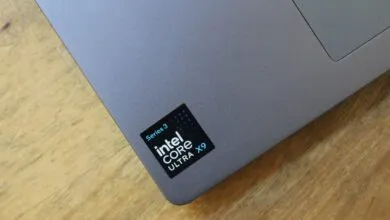
The flagship model is the Intel Core Ultra X9 388H, sporting 16 CPU cores, a peak boost clock of 5.1GHz, and 18MB of L3 cache. On paper, its predecessor, the Core Ultra 9 285H, appears stronger with more L3 cache (24MB) and a higher 5.4GHz clock speed. However, Intel claims the new Ultra X9 388H delivers over 70% better gaming performance and up to 60% superior multithreading compared to similar chips from the last generation. The platform also introduces support for the latest Wi-Fi 7 and Bluetooth 6.0 standards, with Thunderbolt 5 available on select Core Ultra 7 and Ultra 9 models.
A major highlight of Panther Lake is its new integrated graphics. Intel is debuting the Xe3 graphics architecture, derived from its Arc Battlemage desktop GPU design. This represents a substantial advance over the previous XeLPG architecture. The top-tier IGP in the series now packs 12 Xe cores, a 50% increase from before. Processors featuring this more powerful Xe3 graphics will carry an “X” in their model name, such as the X9 388H. Accompanying this is XeSS 3, Intel’s latest AI-powered upscaling and frame generation technology designed to significantly boost in-game frame rates.
AI acceleration is a central theme for this generation. Beyond CPU and GPU improvements, Intel has equipped the chips with its latest NPU 5 neural processor, capable of up to 50 TOPS (trillion operations per second). When combined with the AI processing power of the new Xe graphics, the total platform can achieve up to 170 TOPS of AI performance. This positions Intel’s mobile hardware as a formidable contender for on-device AI tasks, building on the capable AI foundations seen in recent Intel Arc desktop graphics cards.
The launch lineup includes closely related Ultra 9 and Ultra X9 models. The Core Ultra X9 388H boasts the full-power Arc B390 IGP with 12 Xe cores, making it ideal for laptops without a discrete GPU. Its trade-off is a PCIe controller with fewer high-speed lanes. Conversely, the Core Ultra 9 386H pairs a simpler, four-core IGP with a more robust PCIe controller featuring 12 PCIe 5.0 lanes, making it the better choice for systems that will include a separate graphics card from AMD or Nvidia.
This pattern extends to the Ultra 7 tier. The Ultra X7 368H and Ultra 7 366H mirror the specs of their Ultra 9 counterparts, differing mainly in slightly lower clock speeds. It’s crucial to note that Core Ultra 7 models without an “H” suffix, like the 365 and 355, are distinct chips with only eight CPU cores aimed at more mainstream systems.
The Core Ultra 5 family splits into higher-performance “H” models and standard variants. The Core Ultra 5 338H and 336H stand out with 12 CPU cores. Notably, the 338H includes a capable Intel Arc B370 IGP with 10 Xe cores, offering a strong graphics option in this segment. The non-H models, like the Ultra 5 332, feature fewer cores and much simpler integrated graphics with just two Xe cores, targeting budget-friendly laptops.
Laptops featuring these new Panther Lake processors are scheduled to begin shipping on January 27. Preorders for these systems are expected to open around January 6, though availability will depend on Intel’s manufacturing partners. Final pricing will be determined by the laptop vendors themselves and has not yet been announced.
(Source: PC Magazine)