When AI Agents Become Your Customers

▼ Summary
– Agentic AI is shifting decision-making from human consumers to AI systems, with autonomous shopping agents now making purchases and performing tasks on a user’s behalf.
– During the 2025 holiday Cyber Week, AI agents influenced 20% of orders, generating $67 billion in sales and driving significantly faster growth for retailers that deployed them.
– Traffic from third-party AI channels like ChatGPT showed much higher consumer intent and conversion rates than traditional social media, with task completion by agents rising sharply.
– A new focus called Generative Engine Optimization (GEO) is critical, as brands must optimize for AI agent visibility, with spending predicted to far exceed traditional SEO.
– Marketing strategies must fundamentally adapt to target AI agents, requiring investment in GEO, careful governance of agent interactions, and a shift from viewing AI as a basic tool to a strategic concierge.
The rise of autonomous AI agents is fundamentally reshaping commerce, moving beyond simple recommendations to direct purchasing and task completion. This evolution creates a new dynamic where AI agents become the primary customers, interacting with brand systems to make decisions on a human’s behalf. The recent holiday shopping data offers a clear preview of this agentic future and its profound implications for every marketing strategy.
Recent analysis of the peak holiday shopping period reveals that AI has transitioned from a supportive tool to a core commercial engine. AI agents influenced 20% of all orders during this critical sales window, generating an estimated $67 billion in global revenue. For retailers, deploying these systems is no longer just about efficiency; it’s a major growth lever. Brands that implemented their own shopping agents on digital properties saw sales grow 32% faster than competitors who did not.
The quality of traffic driven by AI is particularly noteworthy. Visitors referred by third-party AI platforms like ChatGPT demonstrated significantly stronger buying intent, converting at a rate eight times higher than those arriving from traditional social media. Furthermore, these agents are taking action, not just browsing. The volume of tasks they completed, such as processing returns or modifying orders, surged by 70% year-over-year, handling operational loads that would have overwhelmed many systems in the past.
This shift demands that brands radically rethink their approach. Marketing leaders must move beyond viewing AI as a fancy FAQ tool and start treating it as a personal concierge capable of driving revenue and managing complex customer journeys. The performance gap between early adopters and laggards is widening rapidly, leaving little time for hesitation.
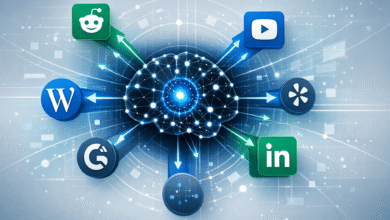
A critical new discipline is emerging alongside this change: Generative Engine Optimization (GEO). As AI agents autonomously search, compare, and purchase, traditional search engine optimization (SEO) becomes less relevant. Visibility must now be engineered for the AI systems that guide these agents. Industry forecasts suggest that corporate investment in GEO could soon dwarf spending on conventional SEO by a factor of five, as brands compete to be prioritized within agent decision-making frameworks.
The autonomous nature of this technology also introduces new considerations. Agentic AI operates as a value maximizer, using advanced techniques like retrieval-augmented generation to access deep institutional knowledge and optimize interactions. This allows a brand’s marketing agent to engage a consumer’s shopping agent with highly tailored offers and information. However, this speed and independence carry risk. A misstep by either a brand or consumer agent can cascade quickly, potentially necessitating human oversight checkpoints to ensure outcomes align with brand values and maintain trust.
Ultimately, the core marketing target is changing. The traditional human consumer is increasingly intermediated by an AI agent making the final selection. This requires a fundamental strategic pivot. Brands must now influence the algorithms and data streams that inform agent decisions, invest aggressively in GEO, and establish governance for agent-to-agent interactions. The landscape is evolving at a breakneck pace; the commerce ecosystem twelve months from now will be unrecognizable compared to today, defined by these new, automated customer relationships.
(Source: MarTech)