ChatGPT’s memory upgrade has a hidden downside
▼ Summary
– ChatGPT’s Dreaming V3 feature builds a profile from past chats, saved memories, and implicit preferences, but can produce inaccurate or outdated assumptions.
– Users can partially disable memory or delete saved memories, but chat history remains and may still be used for safety-related context.
– The feature retains stale or incorrect information, such as claiming the author uses Home Assistant when they have never installed it.
– Dreaming V3 processes old conversations that users may have assumed were private to a single session, raising concerns about consent and privacy.
– The AI’s aggregated profile can miss critical personal priorities (e.g., family) and skew responses based on limited, work-related chat history.
OpenAI recently announced major improvements to how ChatGPT handles user memories. The company seems proud of these updates. I am not. And I suspect many users will share my unease once they understand what’s changed.
ChatGPT memory has evolved dramatically since its introduction in 2024. Originally, it was a simple list of facts the AI could reference across sessions. Today, that capability has expanded to include your entire chat history, explicit instructions, personal constraints, and even implicit preferences the AI infers from your past behavior and casual remarks. The system now builds a comprehensive profile from everything you’ve ever said.
Let me break this down. First, what OpenAI actually announced. Second, how you can control these features. Third, why this development should concern you.
Before 2024, ChatGPT had no memory at all. Each conversation existed in isolation. Then came saved memories, which were essentially fact lists. My own memory still contains items like “Has two Google Workspace accounts” and “Has installed the Kasa smart plug” , details that were relevant for exactly one session years ago and have long since expired.
OpenAI then introduced “dreaming” in 2025. For humans, dreaming helps process emotions and consolidate memories. For ChatGPT, it meant the model could reference your chat history without being explicitly told to look something up. It began curating memories automatically.
Now, in 2026, Dreaming V3 represents a significant leap. The AI doesn’t just scan your chat history in the background. It performs data synthesis, effectively composing a dossier about you. According to OpenAI, factual task recall has jumped from 41% to 82%, and the ability to stay correct over time improved from 9% to 75%. Preference adherence went from 31% to 71%.
The efficiency gains are impressive. OpenAI has reduced compute costs by 5X for this ongoing analysis, making it practical for mass deployment. The AI constantly revises its internal state, attaches timestamps to information, and attempts to track changes alongside you.
But here’s the problem. When I asked ChatGPT about my experience with Kasa smart plugs, it confidently stated I had moved my monitoring setup into Home Assistant. I have never installed Home Assistant. The plug sits in my gear bin. The AI synthesized incorrect information from old conversations and presented it as fact.
OpenAI told ZDNET that what users see is a “high-level memory summary” rather than a complete inventory. That’s precisely the issue. You never truly know what the AI thinks it knows about you.
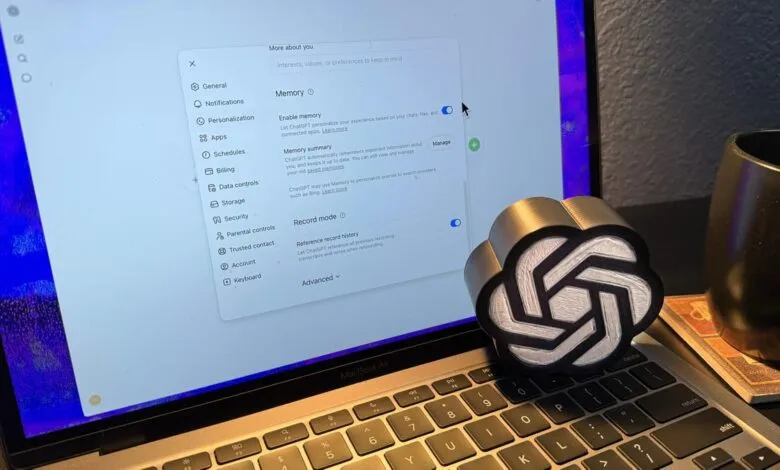
Managing ChatGPT memory is possible through Settings, then Personalization. You can disable the memory capability, but your stored memories and chat history remain. Deleting saved memories doesn’t remove everything , you must delete the actual chat to purge that information. And turning off memory doesn’t disable safety features that may retain context in rare, high-risk situations.
The new Manage button shows ChatGPT’s consolidated profile about you. You can select aspects and mark “Don’t mention this again,” or add comments to personalize how the AI understands you. But this interface only shows its aggregated assumptions, not the full scope of what it remembers.
There are legitimate use cases for AI memory. I have precise memory instructions for Claude Code managing my coding projects. But ChatGPT’s approach feels different. It retains wildly out-of-date information and uses it in responses. Even Dreaming V3, which supposedly evolves with you, can be wrong.
The AI filters everything through a personal lens derived from discussions and preferences. It doesn’t really know who I am , it only knows what I’ve shown it. This is like someone thinking they know me solely from my social media posts, or my great Aunt Sally who still thinks of me as a third grader.
ChatGPT now responds based on old conversations, but not all my conversations are about me. I research articles and projects. Every research question may be interpreted as personal and attached to my dossier, when those questions have nothing to do with my life beyond momentary curiosity.
Dreaming V3 is a technical triumph in breadth, efficiency, and scalability. But I believe it’s an irresponsible feature. It processes old conversations from a time when users believed the AI only knew the current conversation. It’s nearly impossible to prune what the AI recalls about you. And despite OpenAI’s claims, it can’t really keep up with real-life changes.
The cognitive burden increases. Users must now factor their entire history of conversations against every answer. Will the AI conveniently leave out information because its warped view suggests we aren’t interested? Will it modify presentations because it thinks we only want certain formats?
Privacy considerations are monumental. We assume cloud providers store everything, but this level of profiling feels more invasive and troubling.
When I asked ChatGPT, “What is the single most important thing I care about?” the answer was “Preserving your ability to keep doing meaningful, independent work.” The most important thing in my life is my wife and my little dog. The AI missed that completely. It based its assessment on web publishing resilience, newsletter growth, and technology journalism , factors from our conversations, not my actual life.
The AI’s assumptions are skewed, inaccurate, out of date, often highly irrelevant, generalized from specific temporary contexts, and potentially dangerous if used to limit informational responses.
That’s why this new feature should raise the hairs on the backs of your necks. We could never fully trust an AI’s answers. Now, with this fundamentally selective memory capability, we can expect answers to be further skewed to match some aggregate internal representation of who it thinks we are.
Do you prefer an AI assistant that remembers your past conversations or one that treats each chat as a clean slate? The answer matters more than ever.
(Source: ZDNet)