Tim Cook’s Final Keynote: A Signature Performance
▼ Summary
– Tim Cook’s first keynote in 2011 mimicked Steve Jobs’ style and setting, while his final keynote in 2026 was pre-recorded, outdoors at the Spaceship campus, and featured employees as background extras.
– Cook ceded most keynote time to other executives over his tenure, serving as a 15-year audition for a successor; John Ternus was chosen but did not appear in Cook’s final keynote.
– Apple’s approach to AI, led by Craig Federighi, emphasized serving people over pursuing AI for its own sake, with a focus on privacy and practical, easy-to-use features.
– The Siri AI demos targeted everyday users, not tech enthusiasts, by focusing on simple, useful tasks like finding World Cup fixtures and visual features like Spatial Reframing.
– Cook’s strategy reflects Apple’s legacy of making products that “just work,” prioritizing customer satisfaction over short-term investor hype or technical complexity.
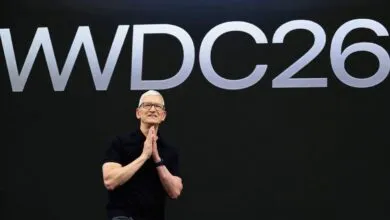
To understand how Tim Cook reshaped Apple over 15 years, and why Siri AI was engineered to win over everyday users rather than thrill investors or tech insiders, compare Monday’s WWDC 2026 keynote , Cook’s final one , with his very first.
That debut keynote took place on October 4, 2011, just weeks after Cook became CEO and one day before Steve Jobs died. Back then, Cook dressed like Jobs (a black shirt instead of a black turtleneck), attempted to mimic Jobs’ authoritative yet conversational tone, and delivered a classic Jobs-style message about Apple Stores and products , including the iPod. The setting was the intimate Infinite Loop campus theater, the same room where Jobs had unveiled his iconic MP3 player a decade earlier.
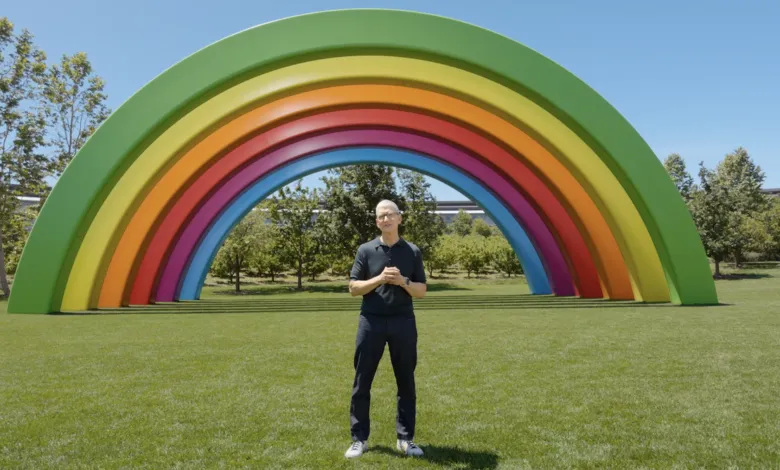
Fast forward to June 8, 2026, and the scene is entirely different. The keynote was held outdoors at the Spaceship campus, the headquarters Jobs fought to build in his final year. It was also pre-recorded, not live. Cook shifted Apple keynotes to virtual formats during the pandemic, and after audiences returned to campus, he addressed them in person only once , for the original launch of Apple Intelligence.
Cook was never fully at ease on stage. Even before the pandemic, he had handed most of the keynote duties to other executives. This turned out to be a smart strategy on multiple levels. Not only did it spare Cook from the impossible task of sounding conversational (he could manage authoritative, but barely), it also functioned as a 15-year audition for a CEO with solid but not flashy stage presence.
John Ternus, the apparent winner of that audition, didn’t appear during Cook’s keynote at all. For the first time, Apple employees , or possibly extras , filled the background of every scene, which felt especially odd during shots of the real-life campus coffee bar, where they sat motionless like mannequins. You could be forgiven for thinking everyone except Ternus was on camera.
This, too, seems like a deliberate choice from Cook: let the new leader keep his powder dry and avoid being tied to what might be Cook’s riskiest keynote gamble since he took the stage in 2011.
The Tim Cook approach to AI has always been cautious. Apple has never indulged in the technobabble or dubious AGI predictions common at Google I/O or Microsoft Build. You could make a drinking game out of an Apple keynote, but you’d be taking shots for Craig Federighi jokes, not mentions of “tokens” or “superintelligence.”
Cook chose Federighi, the veteran executive and keynote joker, to unveil the much-anticipated Siri AI. Federighi did this right after introducing the new MacOS name, Golden Gate, via an incense-filled VW bus with his own bobblehead on the dashboard.
If the order of events wasn’t clear enough, Federighi delivered Apple’s most pointed take on AI yet: “Some appear to be racing forward, seemingly pursuing AI for the sake of AI, without clear regard for the people , all of us , that it’s ultimately meant to serve.”
That line was not designed to please consensus-driven investors on Wall Street, where no amount of AI jargon is too much. But Apple is now a $4 trillion company, 16 times larger than it was in 2011. Wall Street can wait. Apple built its fortune by delighting customers repeatedly, not by hyping stock prices for a short-term bump.
And for anyone inside the AI bubble who hasn’t noticed, backlash against AI is growing across America , against AI in everything, and against data centers. Even within the bubble, cracks are appearing. Federighi’s “AI for the sake of AI” line echoed almost verbatim an email from an Amazon executive last month, pleading with employees to stop wasting tokens: “don’t use AI just for the sake of using AI.”
The Siri AI demos that followed were relatively simple by tech standards. But Apple repeatedly emphasized the privacy and security of Apple Intelligence (translation: competitors profit from your data). They also made sure every use case felt practical. Searching for World Cup fixture details is a hassle, and Siri’s instant lineup looked genuinely useful to this soccer fan.
Meanwhile, Visual Intelligence , specifically Spatial Reframing, which lets users move a photo around as if it were in 3D space , may not impress the technically savvy, but it’s exactly the kind of feature parents and grandparents could play with for hours.
This is, in short, AI for your mom. Apple is betting that boomers, Gen Xers, and even most 40-plus millennials don’t want to think about prompts, hallucinations, or tokens. They don’t care whether they’re using ChatGPT or Gemini, or what the model number is. They just want to pick up their phone, press a button, ask Siri a question, and trust that the answer will be easy and pleasant.
And that is how Tim Cook has truly carried forward Steve Jobs’ legacy from that dark day in October 2011. Apple, then and now, is at its best when it makes products that follow Jobs’ mantra: they just work.
(Source: Mashable)